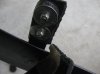
This forum thread is dedicated to user experiences with DOL-Fin hydrofoil monofin products. It is a public place where individuals can exchange information, learning tips and techniques. This thread is an offshute of the thread “Extreme Dolfinism” which is intended to tell the development story of the DOL-Fin Orca.


Guest viewing limit reached
- You have reached the maximum number of guest views allowed
- Please register below to remove this limitation
- Already a member? Click here to login
-
Welcome to the DeeperBlue.com Forums, the largest online community dedicated to Freediving, Scuba Diving and Spearfishing. To gain full access to the DeeperBlue.com Forums you must register for a free account. As a registered member you will be able to:
- Join over 47,943+ fellow diving enthusiasts from around the world on this forum
- Participate in and browse from over 531,990+ posts.
- Communicate privately with other divers from around the world.
- Post your own photos or view from 7,455+ user submitted images.
- All this and much more...
You can gain access to all this absolutely free when you register for an account, so sign up today!
You are using an out of date browser. It may not display this or other websites correctly.
You should upgrade or use an alternative browser.
You should upgrade or use an alternative browser.
DOL-Fin Information Exchange
- Thread starter REVAN
- Start date
Thread Status: Hello
, There was no answer in this thread for more than 90 days.
It can take a long time to get an up-to-date response or contact with relevant users.
It can take a long time to get an up-to-date response or contact with relevant users.

Ok, I will resume my 4th day of testing and trying to master this fin....resuming from the thread called "Extreme Dolfinism"
So far i see good possibilities with this in freediving, unfortunately for me it seems they are ideal for DYNAMIC-style freediving in a stable water environment known as a swimming pool where where one does not actually DIVE and TURN to surface.
But I hope to be proved wrong since I want to use these for pure recreational deep-freediving (where i dive down often and spend much of the time at the surface to breath up)....and also for CWT freediving in maximum attempts.
So far i see good possibilities with this in freediving, unfortunately for me it seems they are ideal for DYNAMIC-style freediving in a stable water environment known as a swimming pool where where one does not actually DIVE and TURN to surface.
But I hope to be proved wrong since I want to use these for pure recreational deep-freediving (where i dive down often and spend much of the time at the surface to breath up)....and also for CWT freediving in maximum attempts.
Revan, this thread is a good idea.
Considering the very small surface area of your fins, compared to a normal mono, am I off base in thinking that your fins(in the hands of the mono-inexperienced) will be more susceptible to slicing sideways, the kind of problems that Speao reports, and therefore require a bit higher level of skill to make them work decently?
Connor
Considering the very small surface area of your fins, compared to a normal mono, am I off base in thinking that your fins(in the hands of the mono-inexperienced) will be more susceptible to slicing sideways, the kind of problems that Speao reports, and therefore require a bit higher level of skill to make them work decently?
Connor
Revan, this thread is a good idea.
Considering the very small surface area of your fins, compared to a normal mono, am I off base in thinking that your fins(in the hands of the mono-inexperienced) will be more susceptible to slicing sideways, the kind of problems that Speao reports, and therefore require a bit higher level of skill to make them work decently?
Connor
The DOL-Fin’s support struts are like small rudders on the fin that probably give it more resistance to pure sideslip than most other monofins. However, lacking the dihedral effect of the deep delta-wing shape of other monofins, it is more likely to end up skewed with one fin tip higher than the other. If this happens and the swimmer does not compensate for it correctly, the fin may end up being stroked with a side-slip component that may exacerbate the amount of skew with each fin stroke. Without proper technique to bring it back into alignment the swimmer will find they have become twisted. I’m assuming that this is the problem Spearo is having.
From my experience and comparing to the DOL-Fin, I’ve found that traditional monofins can be quite squirreley feeling and can sideslip easily. However, there are key differences when it comes to correcting a misaligned fin. For one, traditional monofins are flexible and will yield to being forced into a certain position. The DOL-Fin wing is rigid and although it has very small surface area, its long span tends to increase its resistance to rotations. When moving forward with speed, the hydrodynamic loads on the fin will give it a high roll damping coefficient, meaning that it will resist being forced into position much more so than other monofins.
Trying to force roll rates into any monofin can be energy taxing and not an ideal form or technique, but many divers do it anyway, and they can get away with it with other fins. The DOL-Fin does not really let you get away with bad form and most divers that use it find they need to modify how they approach controlling the fin. To date, I’ve only seen two divers strap on a DOL-Fin and have perfectly straight form right off the starting block and they were some of the world’s best freedivers (Natalia and Herbert). Most monofin users need a couple hours of practice to work out bad habits that lead to problems.
The trick is learning to lead the fin, angling it to get it to fly into the orientation you want it to be in. This makes the fin work for you instead of against you and is a far more efficient method of controlling any monofin than trying to use brute force. Furthermore, some of the user’s instincts for trying to brute force a misaligned fin into position have actually resulted in them angling the fin backwards from the appropriate corrective motions making the correct technique hard to discover. Eventually they realized that whenever they tried to straighten the fin out it kept getting worse, so they decided to try to make it worse instead and, like magic, it snapped right into position for them.
I’m hoping that through these discussions on this thread, we will be able to solve Spearo’s problems and also make it easier for others to learn how to DOL-Fin without experiencing his levels of frustration. When I have some time, I’ll put together some videos that will hopefully be useful. Until then, I’ll do what I can through text.
Ron
Ok Day 4 today (con't from EXTREME DOLFINISM thread)
I had a much better day today...no cussing at the fish and reef...only good vibes and lots of swimming with the sea turtles welcoming me back to my winter retreat and also they were quite curious as to my new fins...despite the knocking noise it makes when you kick (when the trailing edge hits against the base plate curves) But i really feel i finally improved majorly today on my 4th day with them.
After 2 hours no need to give up on them and grab my bifins. So, i decided to take these down where i am normally comfortable going about 50% my max...i was surprised to be already at 20M and just dropped down to my favorite cave at 25M...this time no thoughts of Davy Jones' Locker but nice ORTHOGONAL kicks for the ascent.
I'm getting the hang of these finally and am happy with how they perform so far. I think i'm about 65% mastered them at this point. I still need to better drop vertically with them because then seem to twist on the freefall....also it is a bit tricky going from Vertical fall to Vertical ascent...so i will be working on that.
You can't to that in a pool!
By the way...what about the heel issue?
I had a much better day today...no cussing at the fish and reef...only good vibes and lots of swimming with the sea turtles welcoming me back to my winter retreat and also they were quite curious as to my new fins...despite the knocking noise it makes when you kick (when the trailing edge hits against the base plate curves) But i really feel i finally improved majorly today on my 4th day with them.
After 2 hours no need to give up on them and grab my bifins. So, i decided to take these down where i am normally comfortable going about 50% my max...i was surprised to be already at 20M and just dropped down to my favorite cave at 25M...this time no thoughts of Davy Jones' Locker but nice ORTHOGONAL kicks for the ascent.
I'm getting the hang of these finally and am happy with how they perform so far. I think i'm about 65% mastered them at this point. I still need to better drop vertically with them because then seem to twist on the freefall....also it is a bit tricky going from Vertical fall to Vertical ascent...so i will be working on that.
You can't to that in a pool!
By the way...what about the heel issue?
Last edited by a moderator:
By the way...what about the heel issue?
Take a look at my video from post #2 above at about 2:45. Notice how when tightening the strap over the top of the foot, I rock the strap fore and aft while applying tension. This will help the strap work itself tight which should make a big difference in getting the straps snug fitting. Of course, the straps should be wet when they are tightened as the straps shrink slightly when they dry. Also, another effective trick you can use to keep them feeling snug when you are diving deep is to do a short dive to about 7 meters depth, lift the top straps and tighten them again. Depending on the amount of crushable neoprene in your shoe this can make a big difference in maintaining a snug fit when diving deep. If the straps are snug, you should have very little heal-lifting.
Also, you can adjust your foot placement on the base-plate. One of the things I like about the design of the straps you have on your fin is that you can easily make any adjustment to the fit while out in the water. You can tighten it, loosen it or change your foot placement all independently of each other. The other strap design with side clips is not so easy to adjust foot placement independently of snugness without getting out of the water to do it. The most secure fit will place the strap almost centered between the toes and the ankle. So if you are still experiencing an unacceptable amount of heal lifting, you can try moving your foot a little deeper into the foot strap and see if that feels better to you. For hydrodynamic efficiency, you will want to keep as large an open space as possible between the fin blade and the end of your toes, but get a good fit first, and then worry about finding your personally optimum foot placement for performance and comfort combined when you are more experienced with the device.
Please try to make mental notes of what things changed as you make incremental breakthroughs in learning how to use the DOL-Fin. Those things may lead to training tips that will help others in the future. The most important would be if you discover something and find yourself thinking, ‘this would have been so much easier if someone had only told me …’. That is the kind of information we don’t want to lose.
Anyway, I’m glad to hear that things are starting to improve for you.
Good luck,
Ron
Last edited:
OH trust me...i have plenty of mental notes while DOLfinning!
Yeah...breakthroughs are just around the corner....you can count on it. But hmmmm to keep it secret?....ehhee
Yeah...breakthroughs are just around the corner....you can count on it. But hmmmm to keep it secret?....ehhee
Day 5,
I had two dives today...the first a morning dive with the DOLfins....fine diving easy getting to 20M probably as easy as the fins if I could get not to twist on the initial stroke cycles. Over feel is pretty good and easy on all body parts.
I was never sore using these as one may expect from using a new sports equipment, which uses new and unfamiliar movements. So it works well i think with the body as it is smooth feeling.
DIVE 2 today was with my bifins.....yes good to compare with a dive recently in. So I noticed go DOWn easier with the bifins but come up about the same IF NOT faster with the DOLfins.
So at this point I appreciate the possibilities of the Smith Aerospace concept and now need to determine the best technique for ME....and what style works best with the most important ASCENT....Snake style i wonder?
I had two dives today...the first a morning dive with the DOLfins....fine diving easy getting to 20M probably as easy as the fins if I could get not to twist on the initial stroke cycles. Over feel is pretty good and easy on all body parts.
I was never sore using these as one may expect from using a new sports equipment, which uses new and unfamiliar movements. So it works well i think with the body as it is smooth feeling.
DIVE 2 today was with my bifins.....yes good to compare with a dive recently in. So I noticed go DOWn easier with the bifins but come up about the same IF NOT faster with the DOLfins.
So at this point I appreciate the possibilities of the Smith Aerospace concept and now need to determine the best technique for ME....and what style works best with the most important ASCENT....Snake style i wonder?
Here is a new training video with some exercises that I think may be useful regarding roll position control. These are steps that are probably important for someone who is transitioning from bi-fins and has not had prior experience with monofin systems. This is basically a video example of training exercises that are suggested in the DOL-Fin Owner’s Manual.
[ame="http://www.youtube.com/watch?v=UK-HlxwVLzg"]YouTube - DOL-Fin Training Video - Balance and Control Part 1.wmv[/ame]
[ame="http://www.youtube.com/watch?v=UK-HlxwVLzg"]YouTube - DOL-Fin Training Video - Balance and Control Part 1.wmv[/ame]
Great......I wanted to express some suggestions that may be helpful.
I was thinking that perhaps on the forekick, upkick or whatever that the tail edge should not smash into the struts of the device....i think it is wasting some kinetic energy, u think? Perhaps if the rubber was so much tighter or less flexible. Also that rubber already looks like it is starting to crack just a hair where it bends fore and aft.
Otherwise the diving in going good. Liking the feel of it now.
One main thing that i think could really help......to have the toes pointed inward.
I feel will do 2 things:
1. this triangle position of the feet will allow for the best total calf movement and flex for that mystery kick instead of how it is now only seems to involve the anterior portions of the calf rather than the main part of them.
2. how about making the actual hydro-foil blade wider and perhaps get more jet action?
I was thinking that perhaps on the forekick, upkick or whatever that the tail edge should not smash into the struts of the device....i think it is wasting some kinetic energy, u think? Perhaps if the rubber was so much tighter or less flexible. Also that rubber already looks like it is starting to crack just a hair where it bends fore and aft.
Otherwise the diving in going good. Liking the feel of it now.
One main thing that i think could really help......to have the toes pointed inward.
I feel will do 2 things:
1. this triangle position of the feet will allow for the best total calf movement and flex for that mystery kick instead of how it is now only seems to involve the anterior portions of the calf rather than the main part of them.
2. how about making the actual hydro-foil blade wider and perhaps get more jet action?
I was thinking that perhaps on the forekick...that the tail edge should not smash into the struts of the device....i think it is wasting some kinetic energy, u think? Perhaps if the rubber was so much tighter or less flexible. Also that rubber already looks like it is starting to crack just a hair where it bends fore and aft.
Otherwise the diving in going good. Liking the feel of it now.
This device does not rely on storing and releasing energy in blade flexure like a traditional monofin. The energy required for actuating the blade rotation is minimal so there really isn’t any significant energy to worry about recovering. It is much more important to control the fin’s angle-of-attack to the free stream flow to maintain efficient operation and that is what the mechanical stop does.
The rubber strap will develop a rub mark where it meets the mounting tab. It is not a crack and those straps should easily last for several years.