

Guest viewing limit reached
- You have reached the maximum number of guest views allowed
- Please register below to remove this limitation
- Already a member? Click here to login
-
Welcome to the DeeperBlue.com Forums, the largest online community dedicated to Freediving, Scuba Diving and Spearfishing. To gain full access to the DeeperBlue.com Forums you must register for a free account. As a registered member you will be able to:
- Join over 47,943+ fellow diving enthusiasts from around the world on this forum
- Participate in and browse from over 531,990+ posts.
- Communicate privately with other divers from around the world.
- Post your own photos or view from 7,455+ user submitted images.
- All this and much more...
You can gain access to all this absolutely free when you register for an account, so sign up today!
You are using an out of date browser. It may not display this or other websites correctly.
You should upgrade or use an alternative browser.
You should upgrade or use an alternative browser.
GeckoSub Mirage Evo - And Adventures in 3D Printing Speargun Parts
- Thread starter Diving Gecko
- Start date


Giving Up - Sort Of (Or How To Make a Mirage Pumping Barrel)
So, after yet another round of fiberglass and epoxy, the two carbon reservoirs still leak.
My latest theory is that I actually may have cracked the CF tubes at the very ends when I chucked them in the lathe a while ago. Yes, stupid, I know - and I have then been chasing my tail ever since. I should have known better and should have made some custom soft jaws. Well, should've, could've and all that.
Anyways, giving up on them for now. Will try to shorten them for another gun later on and perhaps then they will stop leaking. But since I want this gun to work, I am back to using the alu reservoir. Only until the new CF tubes arrive - they have been ordered and shipped already.
The alu tube is 46mm shorter than the CF one, but I don't want to cut down the shooting barrel. So, I will make a Delrin extender for the muzzle and only make a new, shorter pumping barrel.
For the one-way valve at the rear of the pumping barrel I am using the "Zahar Valve" with an o-ring instead of a rubber sleeve as is used on the original Mirage. And I have fine tuned how I drill the small transverse relief holes.
Here's a video showing a test run:
Afterwards, I cut the groove on the lathe:
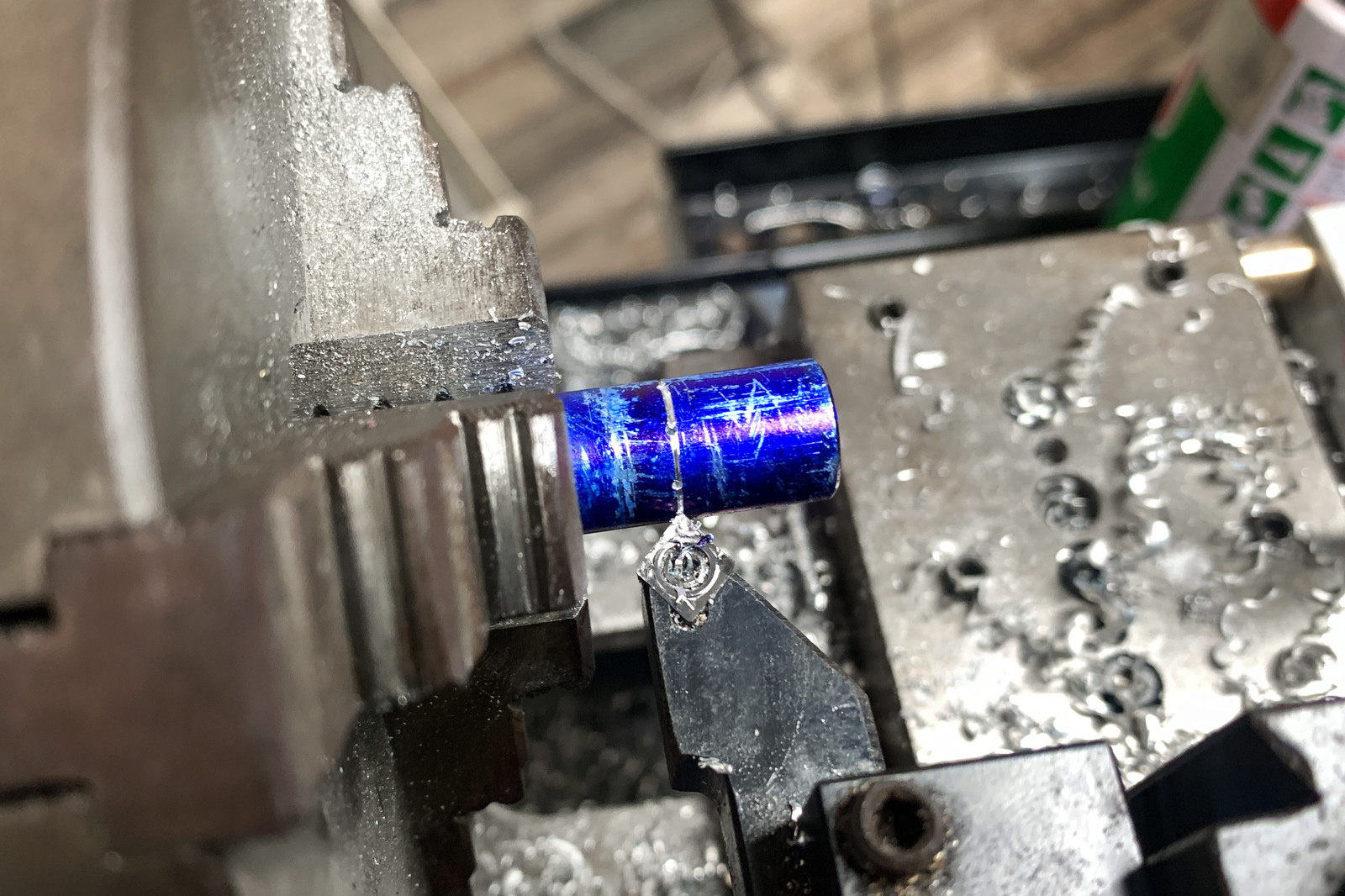
Here's a pic of the finalized groove:
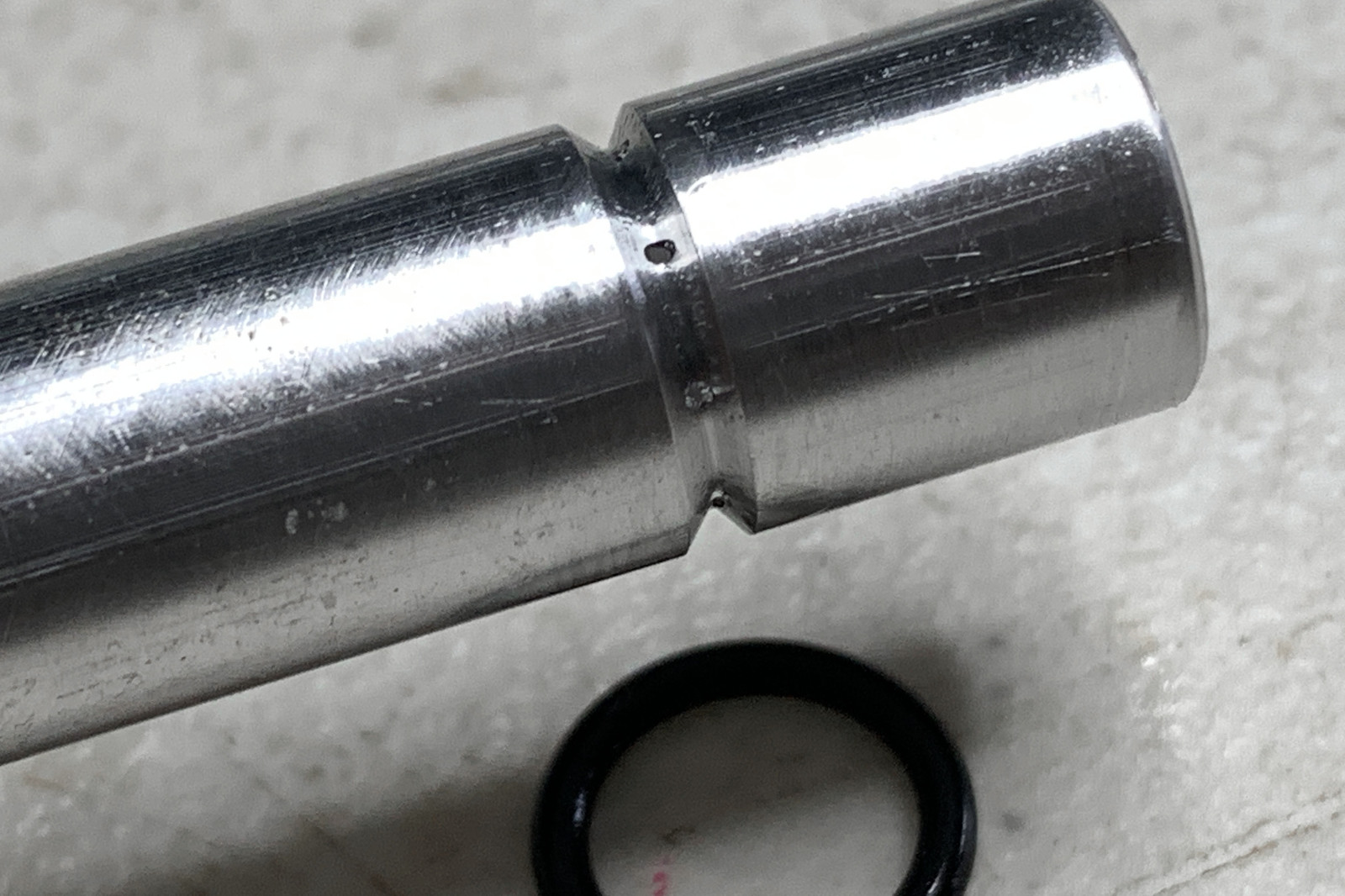 It has eight 0.8mm holes and I cut the V-groove to a depth of 1mm which works with a 1.5mm thick o-ring. I know it would be more forgiving if I used a thicker o-ring but I don't have much room in that area. The shooting barrel is right on top of this o-ring valve and the inside wall of the reservoir is right under it. Perhaps this next picture shows that better:
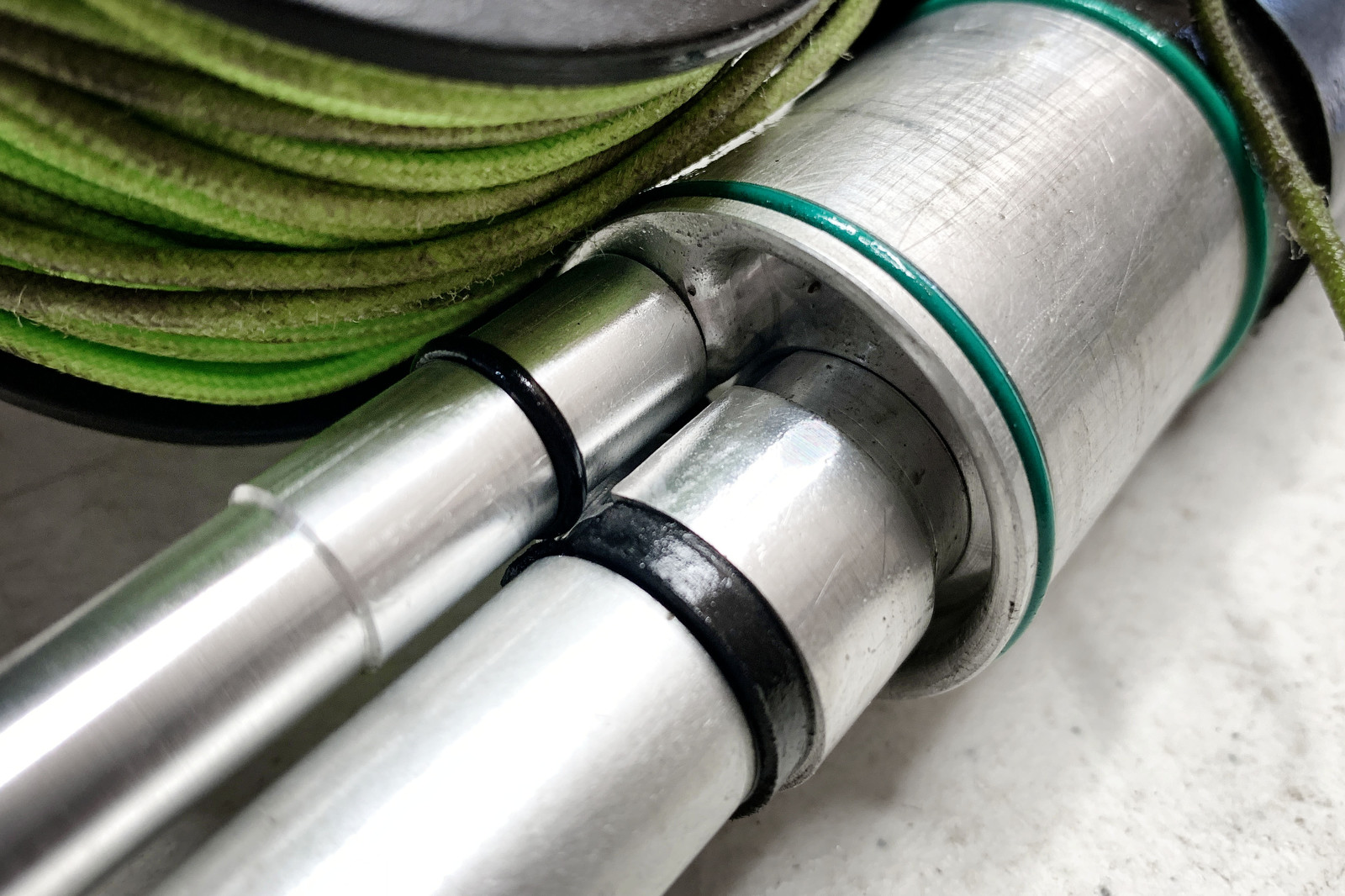
Actually, I realized there's more space around this tube than there "normally" would be as I am using a slightly thinner 9x12mm tube rather than the 10x13mm I used previously. The 10mm ID is the Mirage standard, I downsized to 9mm to make loading even easier. More on that later.
Also, I cut double o-ring grooves at the front:
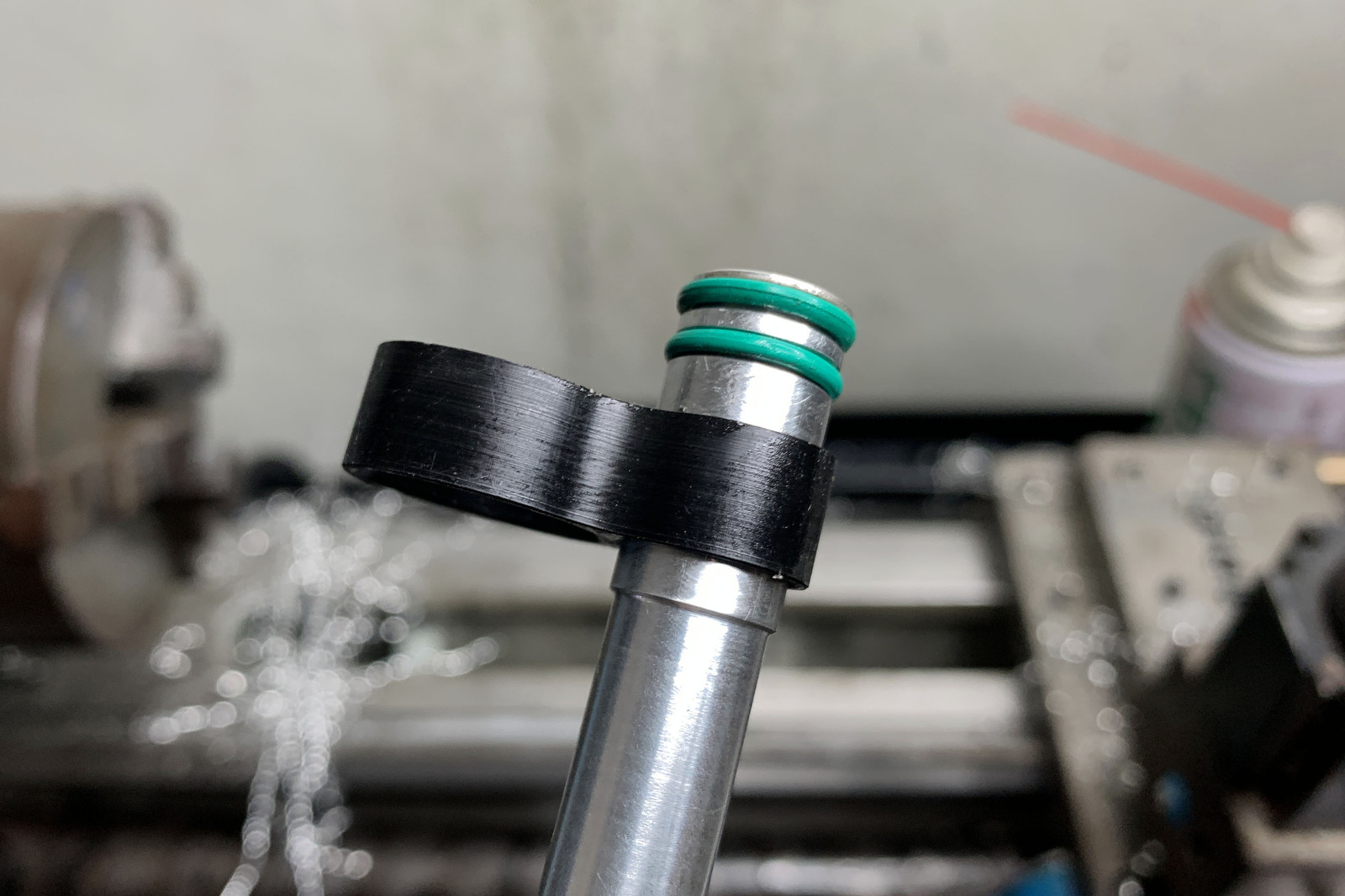
And you may be able to tell that I have cut down the OD of the barrel a bit, too apart from at the ends. I used a follower rest though mine sits to the right of the cutting tool, so I used it cutting away from the chuck:
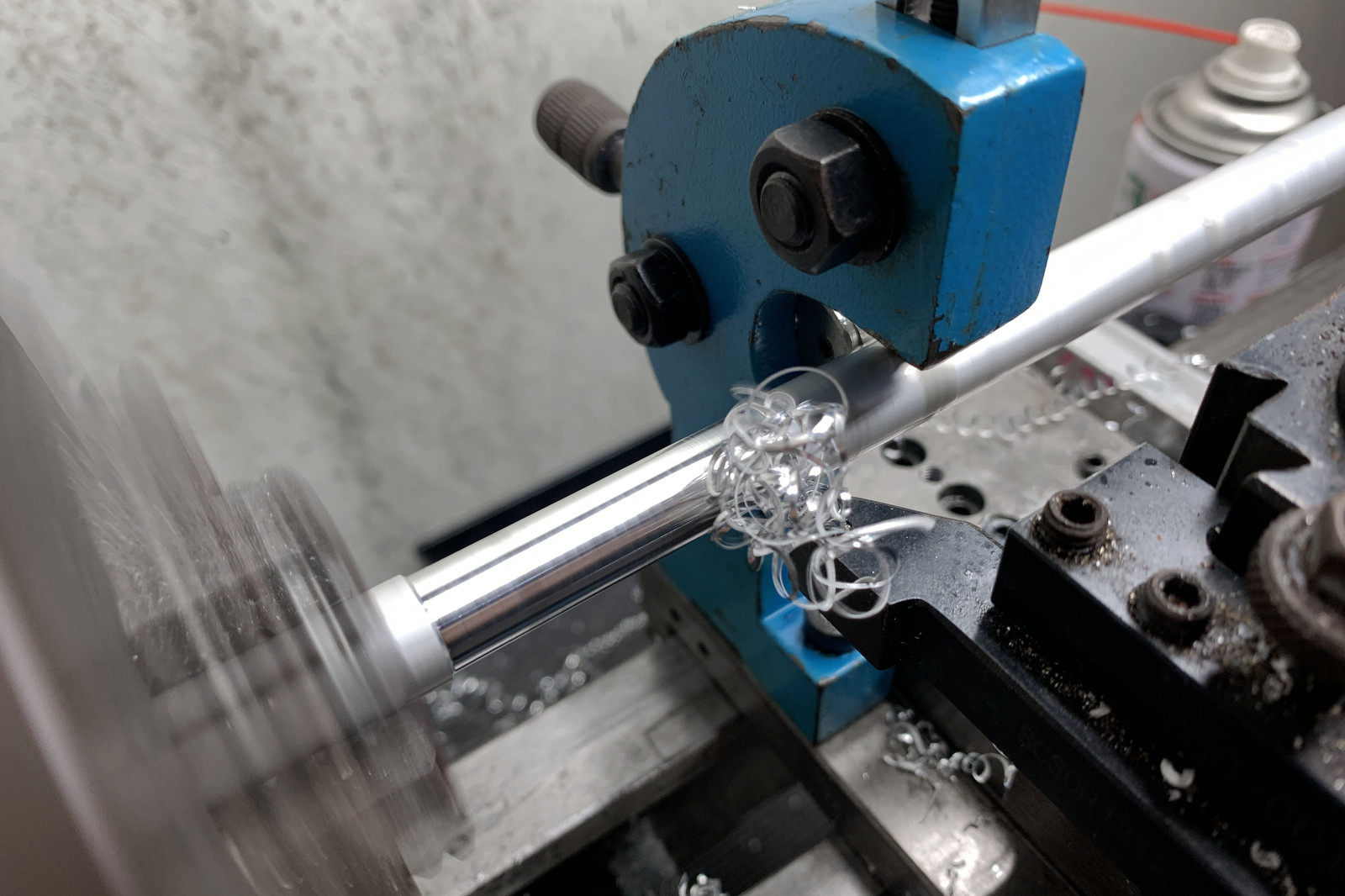
It worked OK'ish but I need more practice with it. The main thing to watch out for is whipping of the tube. If that happens, the cutting tool digs in deeper and/or you get a wavy surface which happened in a few places but nothing too bad. It helps to run the lathe quite slow because this tube is pretty thin so it'll whip easier than a thick one.
All in all, it was a nice exercise and I finally got to use the follower rest (I've had it for years). I will likely do the same on a shooting barrel some day soon as there's quite a lot of weight to be shaved off on those.
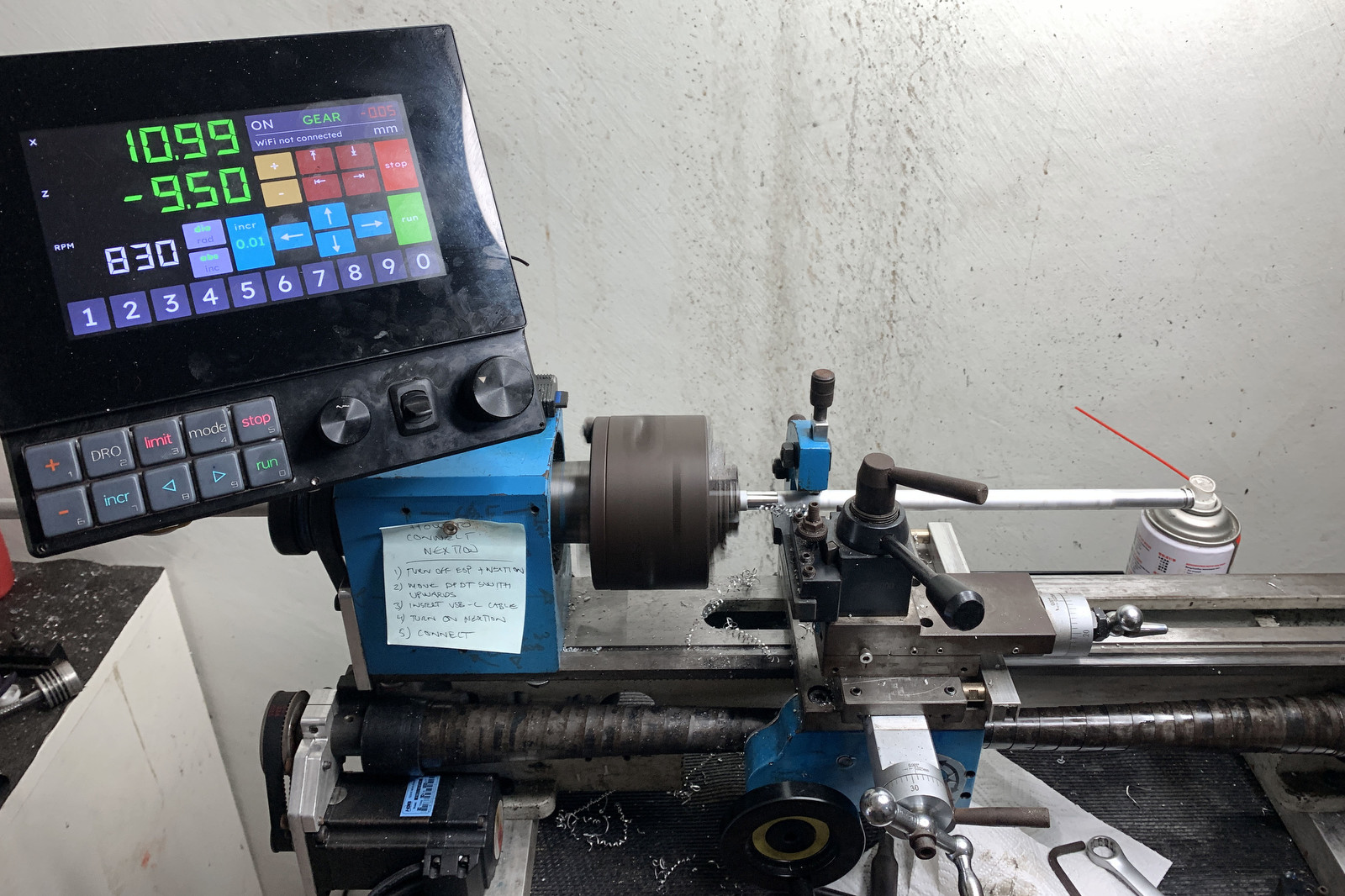
Also, the new ELS/DRO makes these operations so much easier. Just use the DRO to hit a repeatable depth as I have to take these cuts in sections (the lathe is not long enough to do it in one go). And then the ELS offers "powerfeed" so, I don't have to do much other than adjust the RPM and when the tube is the most extended, put a bit of pressure on the outer end of the tube to counter whipping. Here's the setup:
Here's the pumping barrel after thinning down the OD:
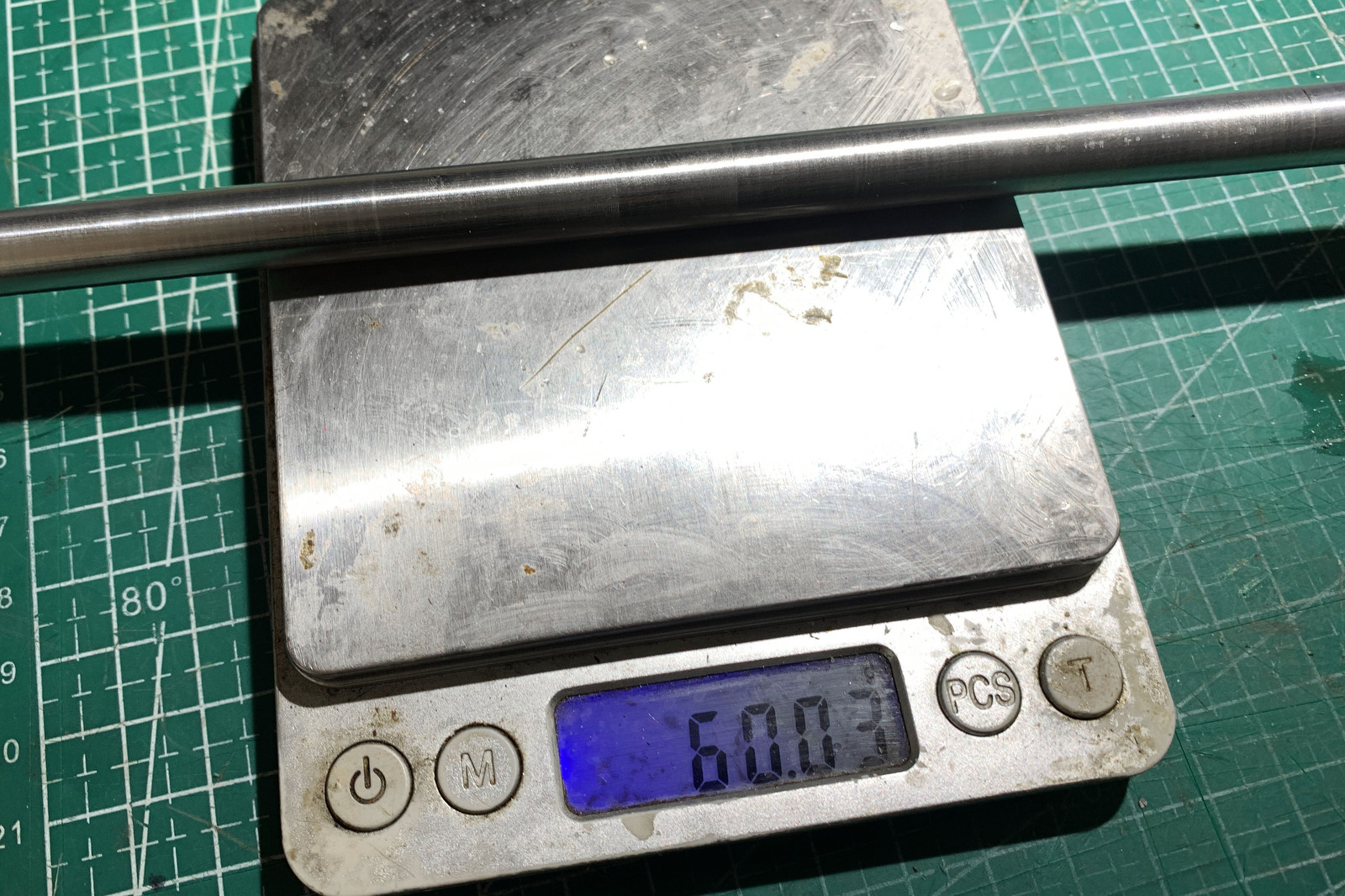
I forgot to weigh it before the weight saving operation, but the CAD says it would be ~96g and so does some math I did on an off cut of the same tube. So, 36g saved or roughly 40%. Not too bad.
The Delrin spacer was easy. So easy in fact, I forgot to take pics of machining that part:
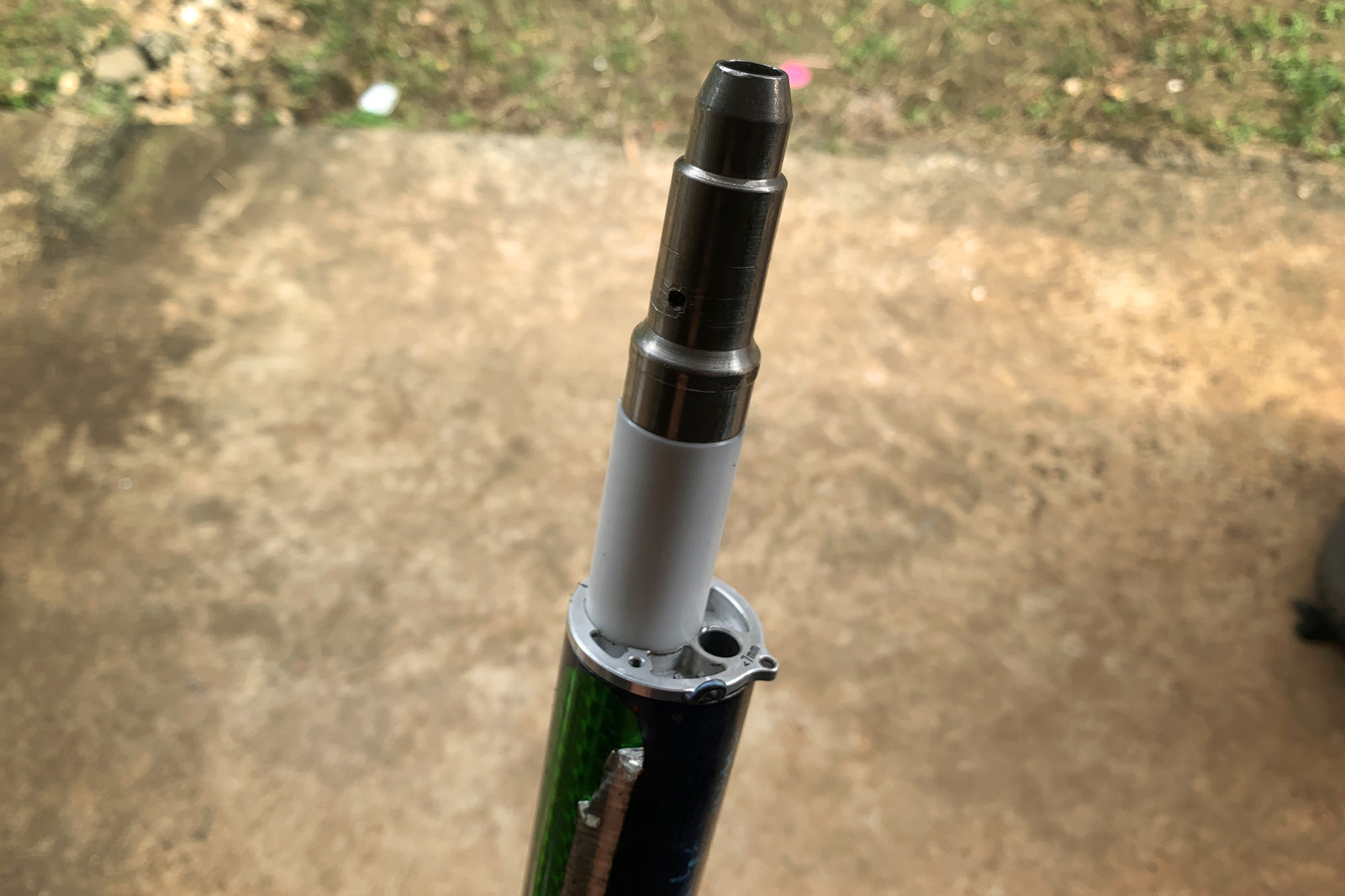
At least I finally pushed the cut harder and made the Delrin chip instead of just making long stringy chips as I am often guilty of.
And more importantly, the gun finally holds air again. So, while the handle is indeed a bit oval, it's not bad enough that it wont seal on a perfectly round and smooth alu reservoir.
The gun is sitting with 30bar in it right now. I also left it in the "intermediate loaded state" where I have pumped the air out of the rear chamber (and shooting barrel) but haven't yet cocked the gun nor opened the pressure regulator valve to equalize the pressure. So, if by tomorrow, I can still cock it super easy it means the internal Mirage system is also 100% leak free. I did two tests in the workshop already and I couldn't tell a difference in final loading effort after 5 and 10 mins which is a good sign. But overnight is a much bigger test.
(I don't actually latch the piston in the trigger fully, I go most of the way and that's enough to get a sense of whether the Mirage system is working or not).
[EDIT] It's the next day and the gun held air even in the "intermediate state". So, there are zero internal leaks: The Zahar o-ring valve is 100% airtight and so is the spring loaded one-way valve in the bulkhead as well as the power regulator bushing and the bulkhead main seal itself .
.
As mentioned, this Mirage has a 9mm pumping barrel instead of the normal 10mm. This reduces the max force needed during the pre-pumping by ~19% which will be much appreciated since I injured my wrist earlier in the year and it's still not back to full strength. It's also the reason I haven't just wanted to grab any of my classic band guns. I don't want to deal with the loading nor the recoil.
The only downside to the smaller pumping barrel is that it limits me to only using 7mm shafts but that's ok for this reef gun. And I have to do a few more pump strokes. But whether I have to do 5 or 10 doesn't really matter, either.
Another way to look at it, is that I can load a regular, non-Mirage gun at ~22 bar and with this gun, if I also kept that at 22bar, it would take less than half the max force to load it. Originally, I was drawn to Mirages because of the power potential but they should also be considered as a very good option for people who have shoulder or wrist injuries or spearoes who just have less strength overall.
Next up is to go shoot some fish. The gun will be fairly negative and possibly nose heavy with the shorter, heavier alu tube, but it will have to do for now. And the brand new CF tubes are on the way though the cargo ships have been really slow lately so not sure when I will actually receive them.
So, after yet another round of fiberglass and epoxy, the two carbon reservoirs still leak.
My latest theory is that I actually may have cracked the CF tubes at the very ends when I chucked them in the lathe a while ago. Yes, stupid, I know - and I have then been chasing my tail ever since. I should have known better and should have made some custom soft jaws. Well, should've, could've and all that.
Anyways, giving up on them for now. Will try to shorten them for another gun later on and perhaps then they will stop leaking. But since I want this gun to work, I am back to using the alu reservoir. Only until the new CF tubes arrive - they have been ordered and shipped already.
The alu tube is 46mm shorter than the CF one, but I don't want to cut down the shooting barrel. So, I will make a Delrin extender for the muzzle and only make a new, shorter pumping barrel.
For the one-way valve at the rear of the pumping barrel I am using the "Zahar Valve" with an o-ring instead of a rubber sleeve as is used on the original Mirage. And I have fine tuned how I drill the small transverse relief holes.
Here's a video showing a test run:
Afterwards, I cut the groove on the lathe:
Here's a pic of the finalized groove:
Actually, I realized there's more space around this tube than there "normally" would be as I am using a slightly thinner 9x12mm tube rather than the 10x13mm I used previously. The 10mm ID is the Mirage standard, I downsized to 9mm to make loading even easier. More on that later.
Also, I cut double o-ring grooves at the front:
And you may be able to tell that I have cut down the OD of the barrel a bit, too apart from at the ends. I used a follower rest though mine sits to the right of the cutting tool, so I used it cutting away from the chuck:
It worked OK'ish but I need more practice with it. The main thing to watch out for is whipping of the tube. If that happens, the cutting tool digs in deeper and/or you get a wavy surface which happened in a few places but nothing too bad. It helps to run the lathe quite slow because this tube is pretty thin so it'll whip easier than a thick one.
All in all, it was a nice exercise and I finally got to use the follower rest (I've had it for years). I will likely do the same on a shooting barrel some day soon as there's quite a lot of weight to be shaved off on those.
Also, the new ELS/DRO makes these operations so much easier. Just use the DRO to hit a repeatable depth as I have to take these cuts in sections (the lathe is not long enough to do it in one go). And then the ELS offers "powerfeed" so, I don't have to do much other than adjust the RPM and when the tube is the most extended, put a bit of pressure on the outer end of the tube to counter whipping. Here's the setup:
Here's the pumping barrel after thinning down the OD:
I forgot to weigh it before the weight saving operation, but the CAD says it would be ~96g and so does some math I did on an off cut of the same tube. So, 36g saved or roughly 40%. Not too bad.
The Delrin spacer was easy. So easy in fact, I forgot to take pics of machining that part:
At least I finally pushed the cut harder and made the Delrin chip instead of just making long stringy chips as I am often guilty of.
And more importantly, the gun finally holds air again. So, while the handle is indeed a bit oval, it's not bad enough that it wont seal on a perfectly round and smooth alu reservoir.
The gun is sitting with 30bar in it right now. I also left it in the "intermediate loaded state" where I have pumped the air out of the rear chamber (and shooting barrel) but haven't yet cocked the gun nor opened the pressure regulator valve to equalize the pressure. So, if by tomorrow, I can still cock it super easy it means the internal Mirage system is also 100% leak free. I did two tests in the workshop already and I couldn't tell a difference in final loading effort after 5 and 10 mins which is a good sign. But overnight is a much bigger test.
(I don't actually latch the piston in the trigger fully, I go most of the way and that's enough to get a sense of whether the Mirage system is working or not).
[EDIT] It's the next day and the gun held air even in the "intermediate state". So, there are zero internal leaks: The Zahar o-ring valve is 100% airtight and so is the spring loaded one-way valve in the bulkhead as well as the power regulator bushing and the bulkhead main seal itself
.As mentioned, this Mirage has a 9mm pumping barrel instead of the normal 10mm. This reduces the max force needed during the pre-pumping by ~19% which will be much appreciated since I injured my wrist earlier in the year and it's still not back to full strength. It's also the reason I haven't just wanted to grab any of my classic band guns. I don't want to deal with the loading nor the recoil.
The only downside to the smaller pumping barrel is that it limits me to only using 7mm shafts but that's ok for this reef gun. And I have to do a few more pump strokes. But whether I have to do 5 or 10 doesn't really matter, either.
Another way to look at it, is that I can load a regular, non-Mirage gun at ~22 bar and with this gun, if I also kept that at 22bar, it would take less than half the max force to load it. Originally, I was drawn to Mirages because of the power potential but they should also be considered as a very good option for people who have shoulder or wrist injuries or spearoes who just have less strength overall.
Next up is to go shoot some fish. The gun will be fairly negative and possibly nose heavy with the shorter, heavier alu tube, but it will have to do for now. And the brand new CF tubes are on the way though the cargo ships have been really slow lately so not sure when I will actually receive them.
Last edited:

Making A New Trigger (And How I Adjust Triggers)
I decided to make a new trigger - for two reasons. I broke one of the resin printed ones not long ago. They are actually strong but they are brittle. I think the spare resin printed one I had would have been fine but I also wanted some more practice in machining plastic so a new trigger could be a nice little project (which I still managed to mess up at the end...).
But let's start with an "after picture" so here are two plastic triggers just before the final op:
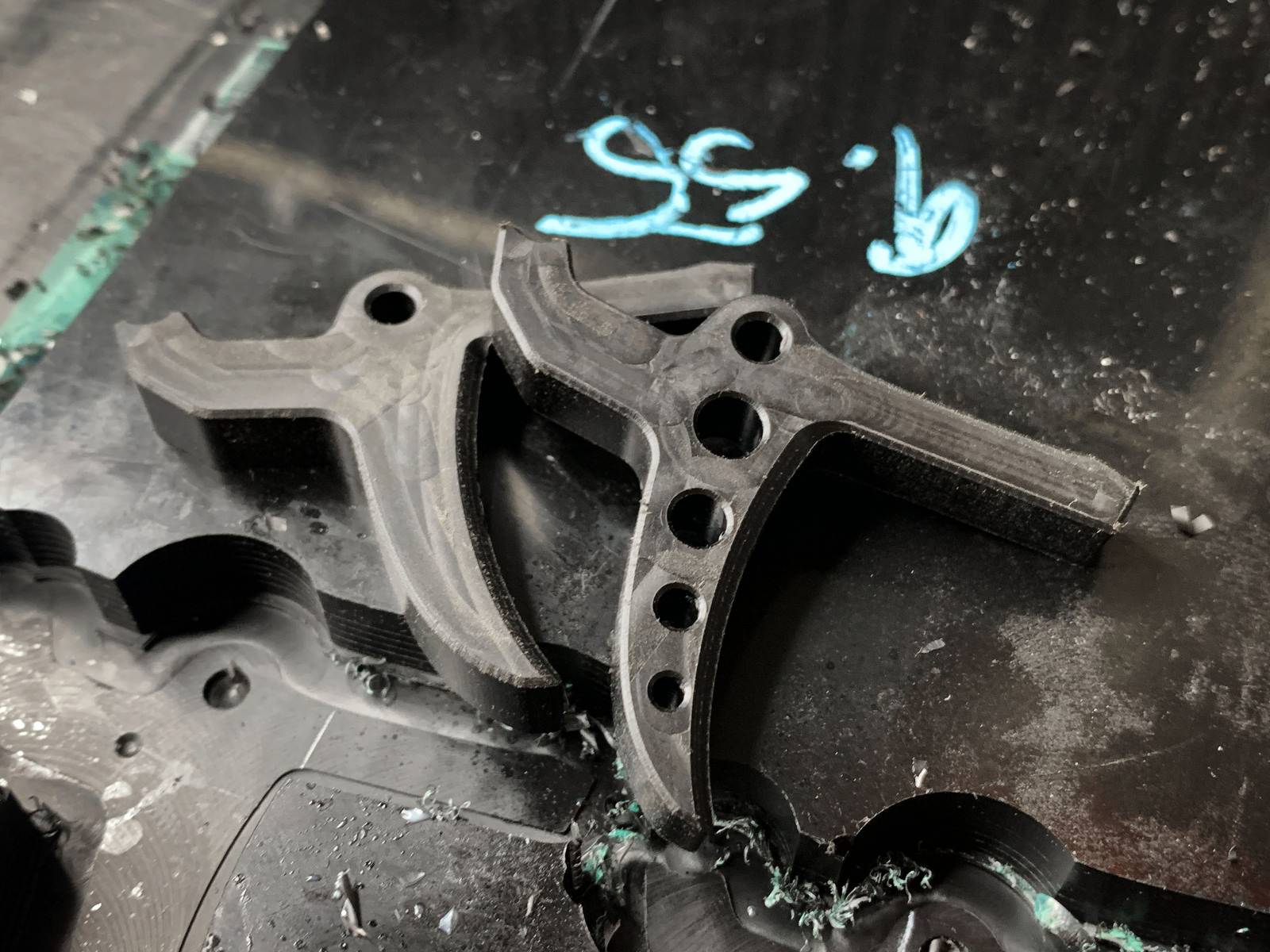
I actually wanted to make these a while back but I am still waiting on some Delrin plate which I think would be a good material for this. I assumed the polypropylene (PP) that I do have would be too soft but I grew impatient and gave it a try - so these are made in PP. And they actually feel plenty strong. It also helps that I can make these 8mm thick and beef them up wherever possible.
I am still new to machining plastic and it's not as easy as alu. I think I haven't been pushing the cutters enough but today went fine except for not having the right chamfer tool.
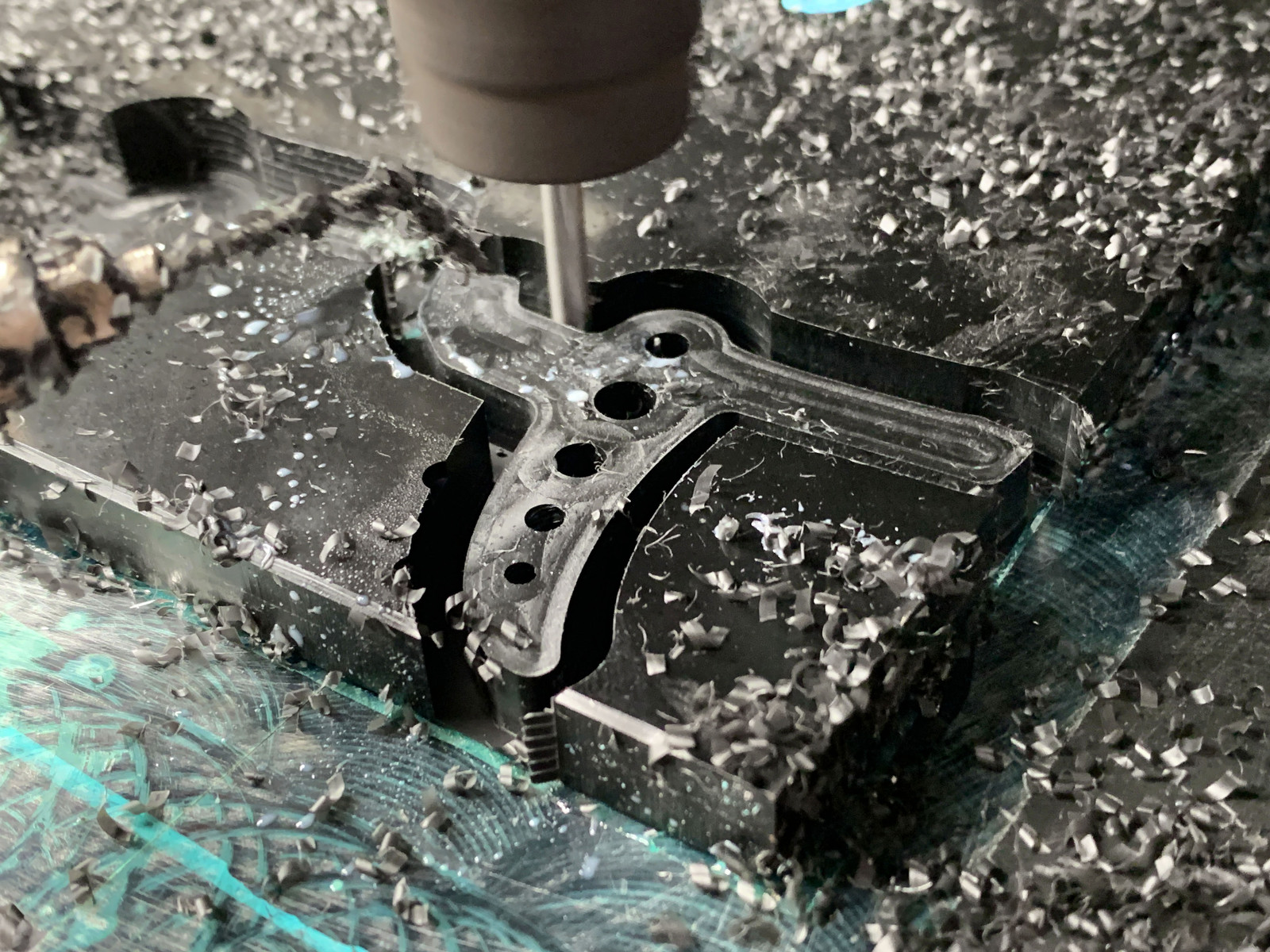
Here's a pic of slotting the outside contours after having faced the top off and drilled and bored the hole for the transverse pin as well as three lightening holes:
As you can see from the first pic, I have chamfers pretty much everywhere. Easy enough on the first side, but to do the backside I made a quick little "female fixture" that I could press the part into to get to the other side:
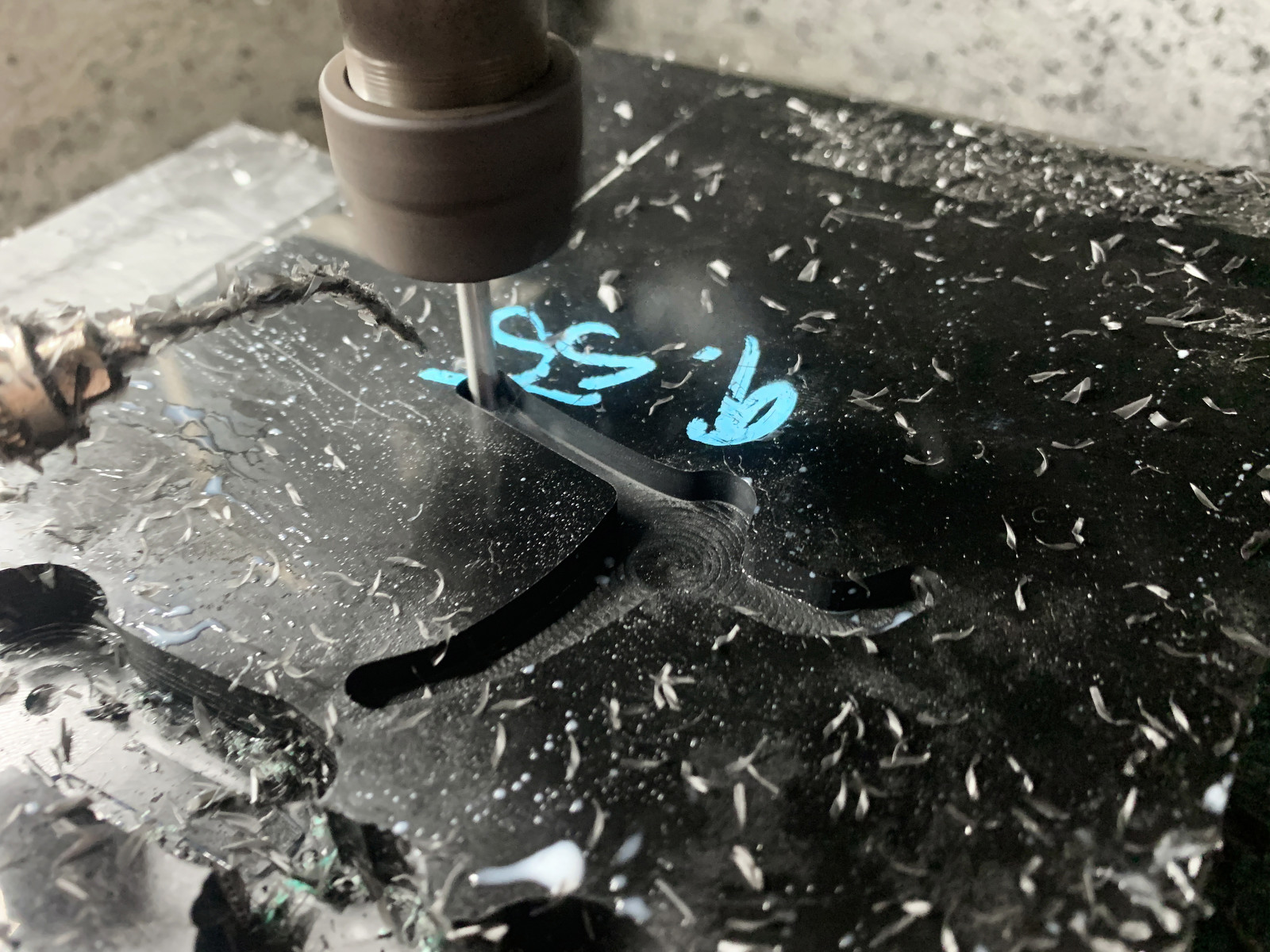
I also made some threaded bores in this fixture to hold the trigger down with some screws but ended up not even needing that, the part was fine just being pressed into the fixture. Forgot to snap a pic of this second op, though.
The third and last op was drilling and threading the hole for the trigger pin adjustment screw so here's a pic just before the thread milling started:
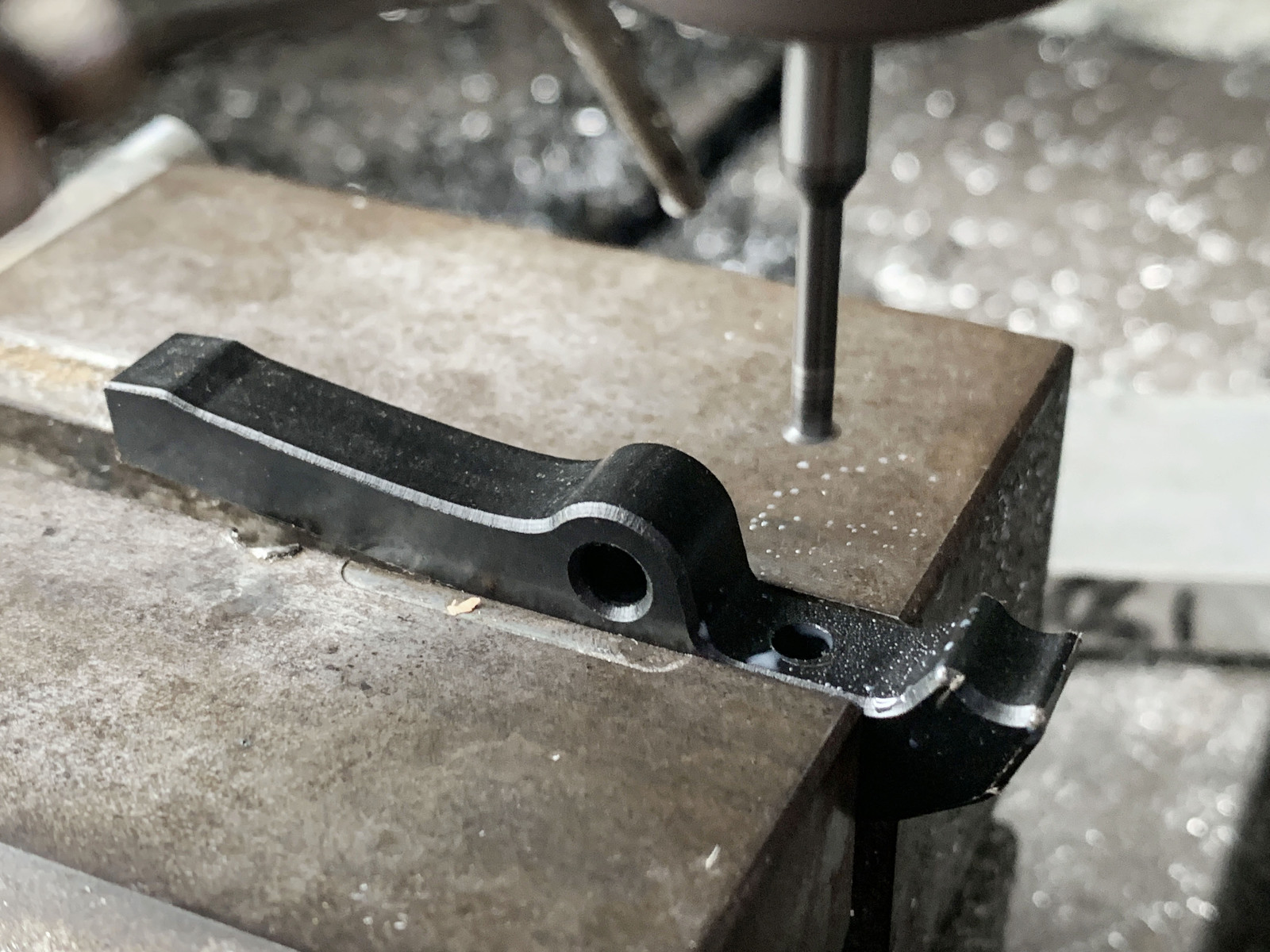
One of the cool things about thread milling is that you can adjust how "deep" or tight a thread is. The pitch of course will have to be correct, but you can oversize or undersize the fit of the thread - how deep you cut into the side of the material. I took advantage of this and made the thread a bit tighter so that the adjustment screw wouldn't risk wobbling out of adjustment.
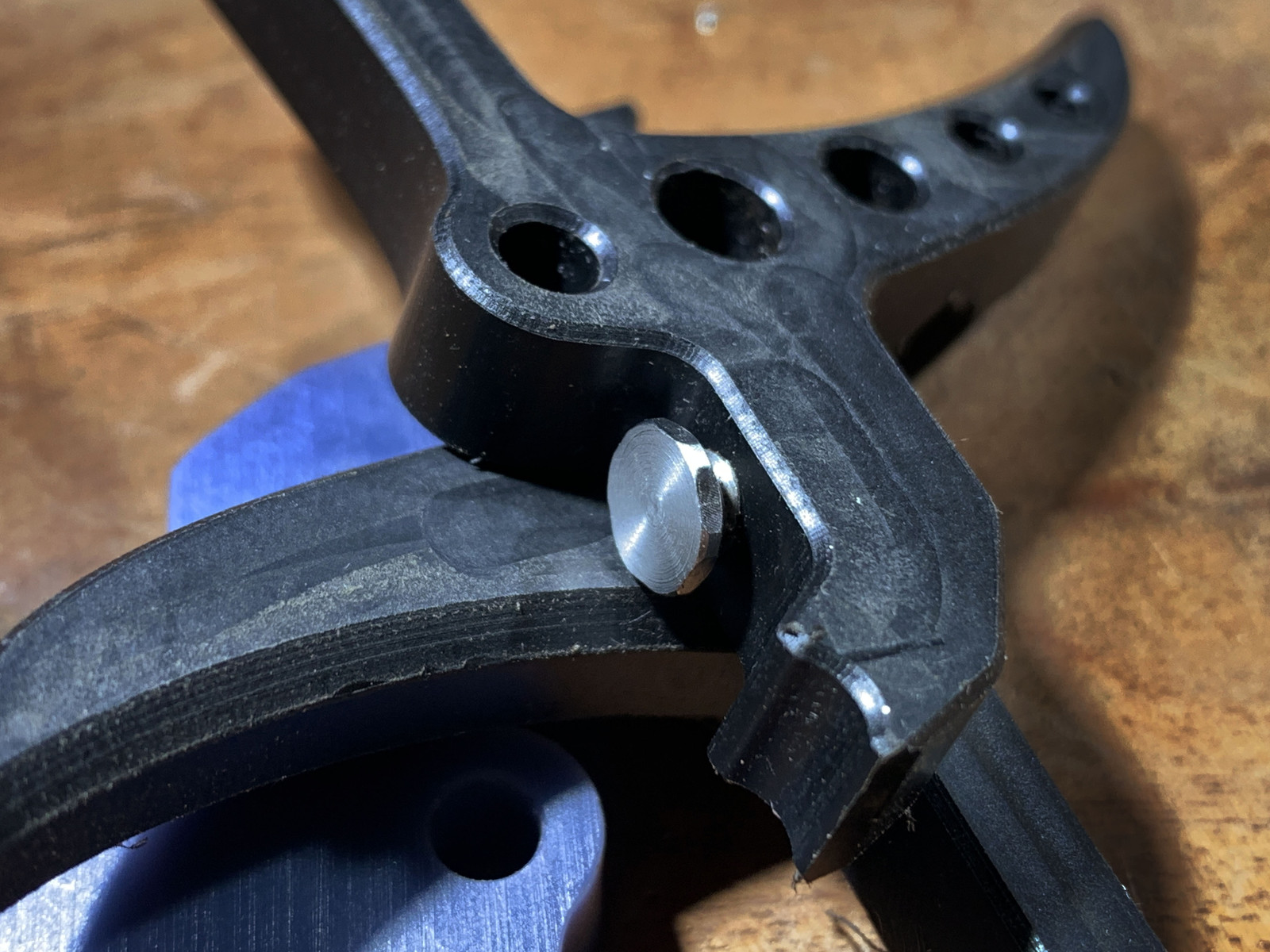
The chamfers raise a bit of a burr, I don't have a dedicated tool for chamfering plastics so will order some and they should be better in the future.
But the final trigger ended up looking pretty good on this old mongrel of a handle:
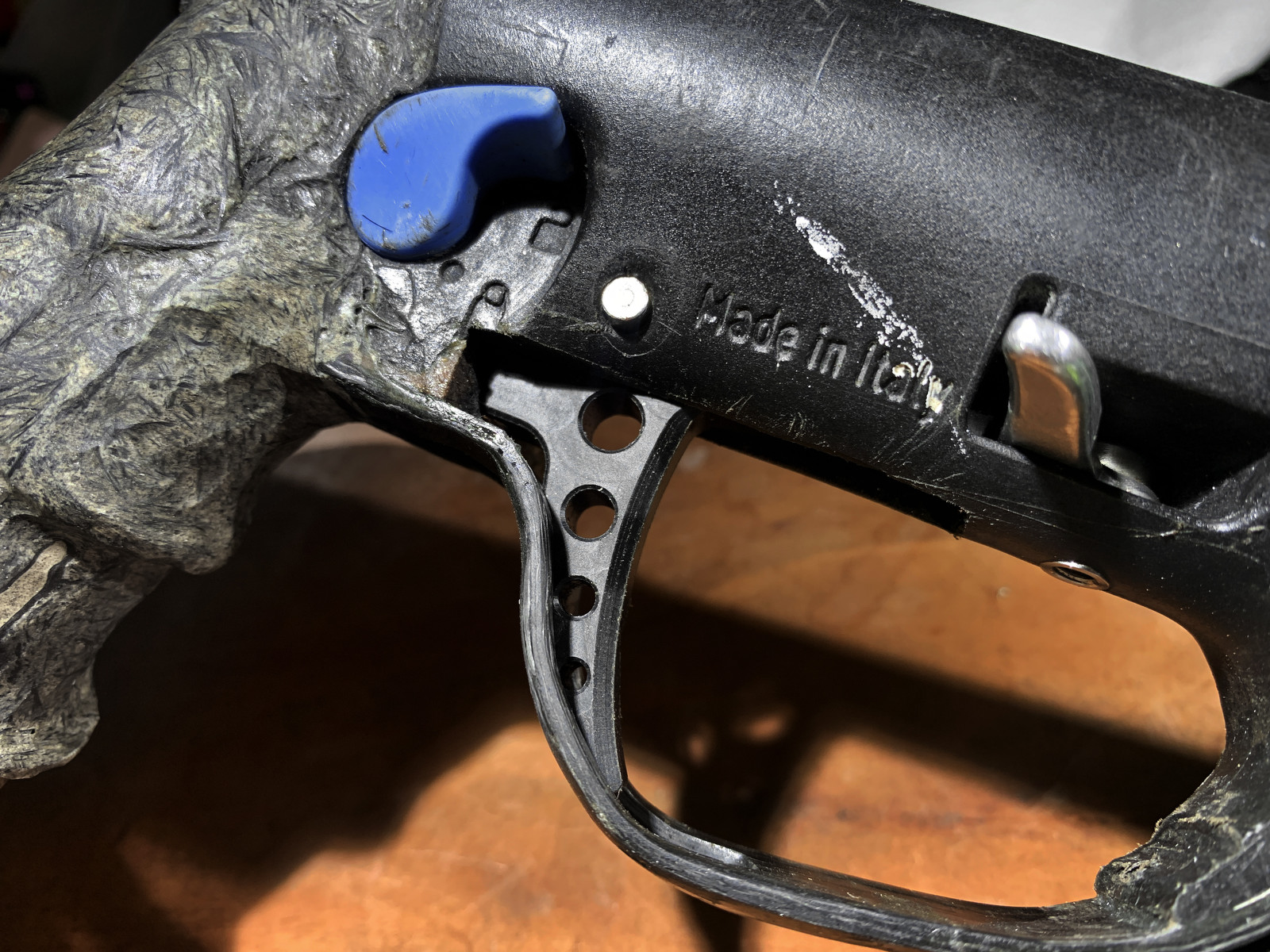
That is if we ignore this...:
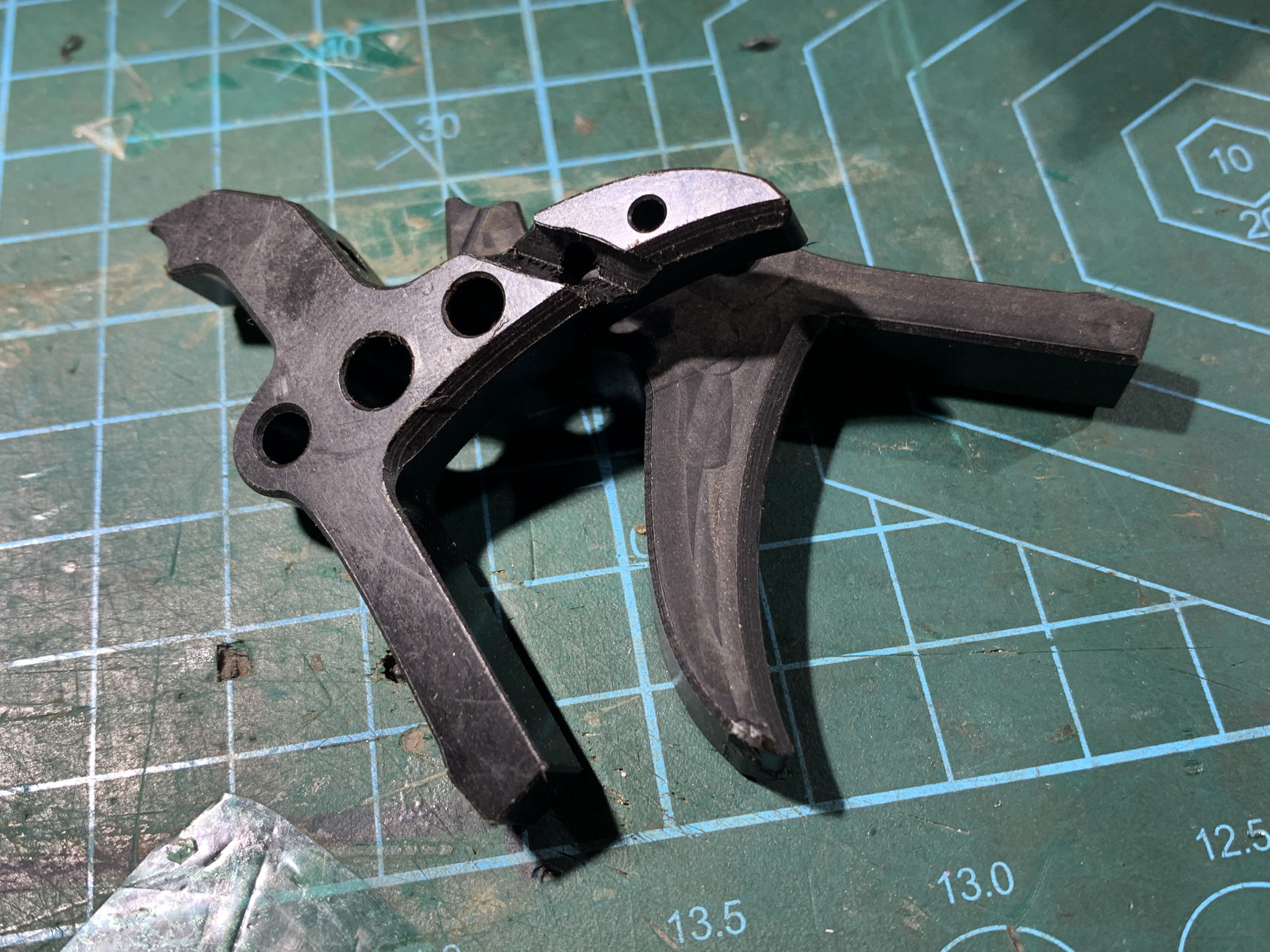
Yes, I totally messed up the part on the second op when I was doing the backside chamfer in the fixture. I simply forgot to raise the tool when I started the program and it transversed straight across the part but not above it...
Honestly, couldn't be bothered to redo it as I still want to make it in the better Delrin once I get my hands on some. And this part is still strong enough even with that gouge in it.
Anyhow, the trigger geometry seems spot on (mostly the same as the proven resin trigger) but this material is even smoother than the resin which is a benefit as the trigger interacts with the stainless steel line release and the lower the friction, the smoother a trigger pull. When I had the original stainless Mares trigger in this handle the trigger pull was horrendously bad. The friction between the two steel parts, even after a lot of polishing, was so bad it affected the pull and thus the accuracy. Making sure the line was barely tensioned when wrapped was super important with the stock parts. But it shouldn't be this way.
I guess that's what you get when bling becomes a factor in how to design functional parts. Anyhow, it's nice enough now.
One thing the Mares engineers did get right on this handle though is the safety. It's honestly the best I have ever seen on an airgun. Of course, I hardly ever use it, but it's very cleverly done: When it's engaged it pokes into your hand, so there's a very tactile indicator that it's on and then when it's off, it kinda disappears and lies flush in the handle and you no longer feel it. It's also a pretty sturdy mechanism in the way that it blocks the rear of the trigger.
Finally, here's a video on how I go about adjusting the trigger pin screw to make sure the line release gets released before the piston. Simple stuff, you guys probably do it the same way:
I decided to make a new trigger - for two reasons. I broke one of the resin printed ones not long ago. They are actually strong but they are brittle. I think the spare resin printed one I had would have been fine but I also wanted some more practice in machining plastic so a new trigger could be a nice little project (which I still managed to mess up at the end...).
But let's start with an "after picture" so here are two plastic triggers just before the final op:
I actually wanted to make these a while back but I am still waiting on some Delrin plate which I think would be a good material for this. I assumed the polypropylene (PP) that I do have would be too soft but I grew impatient and gave it a try - so these are made in PP. And they actually feel plenty strong. It also helps that I can make these 8mm thick and beef them up wherever possible.
I am still new to machining plastic and it's not as easy as alu. I think I haven't been pushing the cutters enough but today went fine except for not having the right chamfer tool.
Here's a pic of slotting the outside contours after having faced the top off and drilled and bored the hole for the transverse pin as well as three lightening holes:
As you can see from the first pic, I have chamfers pretty much everywhere. Easy enough on the first side, but to do the backside I made a quick little "female fixture" that I could press the part into to get to the other side:
I also made some threaded bores in this fixture to hold the trigger down with some screws but ended up not even needing that, the part was fine just being pressed into the fixture. Forgot to snap a pic of this second op, though.
The third and last op was drilling and threading the hole for the trigger pin adjustment screw so here's a pic just before the thread milling started:
One of the cool things about thread milling is that you can adjust how "deep" or tight a thread is. The pitch of course will have to be correct, but you can oversize or undersize the fit of the thread - how deep you cut into the side of the material. I took advantage of this and made the thread a bit tighter so that the adjustment screw wouldn't risk wobbling out of adjustment.
The chamfers raise a bit of a burr, I don't have a dedicated tool for chamfering plastics so will order some and they should be better in the future.
But the final trigger ended up looking pretty good on this old mongrel of a handle:
That is if we ignore this...:
Yes, I totally messed up the part on the second op when I was doing the backside chamfer in the fixture. I simply forgot to raise the tool when I started the program and it transversed straight across the part but not above it...
Honestly, couldn't be bothered to redo it as I still want to make it in the better Delrin once I get my hands on some. And this part is still strong enough even with that gouge in it.
Anyhow, the trigger geometry seems spot on (mostly the same as the proven resin trigger) but this material is even smoother than the resin which is a benefit as the trigger interacts with the stainless steel line release and the lower the friction, the smoother a trigger pull. When I had the original stainless Mares trigger in this handle the trigger pull was horrendously bad. The friction between the two steel parts, even after a lot of polishing, was so bad it affected the pull and thus the accuracy. Making sure the line was barely tensioned when wrapped was super important with the stock parts. But it shouldn't be this way.
I guess that's what you get when bling becomes a factor in how to design functional parts. Anyhow, it's nice enough now.
One thing the Mares engineers did get right on this handle though is the safety. It's honestly the best I have ever seen on an airgun. Of course, I hardly ever use it, but it's very cleverly done: When it's engaged it pokes into your hand, so there's a very tactile indicator that it's on and then when it's off, it kinda disappears and lies flush in the handle and you no longer feel it. It's also a pretty sturdy mechanism in the way that it blocks the rear of the trigger.
Finally, here's a video on how I go about adjusting the trigger pin screw to make sure the line release gets released before the piston. Simple stuff, you guys probably do it the same way:
Last edited:

Fantastic work, I am also intrigued in maybe modifying some old mares release systems to the new convention like the new cyrano and the salimar predathor, ths is because the old line release system interferes with the lgsub reel. Any idea if there are some threads about this mod ?
I also wanted to add, the video is very informative and I have actually never tried it but will give it a try on my guns. On the new cyrano with both metal trigger and line release i also have felt the problem of them 'sticking' unless like you said very carefully do the loops of shooting line, I may have to make a new trigger i guess
Hey Cas,Fantastic work, I am also intrigued in maybe modifying some old mares release systems to the new convention like the new cyrano and the salimar predathor, ths is because the old line release system interferes with the lgsub reel. Any idea if there are some threads about this mod ?
Great to see you here and thanks for the help and ideas off of the forum
. You will certainly see some of it make its way into my builds this yearThere might be someone who did what you are looking to do. Personally, I managed to put a Predathor "star release" in one of my old Mirage handles. It depends on how much material is left in the handle. I will see if I can find some images (some of us lost a lot of images from years back when we used external image hosting services and linked to here).
[EDIT]
Found them, old by now, haha.
First a pic of a slightly modified Mirage handle. No active line release on this one, I think I used a magentic Palengas on this gun. But the pic shows why the Predathor release worked - the safety used to be in that thick-walled area in front of the trigger:
So, on a later handle I could mill that out and make it work for a Predathor release. Maybe one of your old Mares handles have enough material there, too?
Come to think about it, I think that handle with the Predathor release was the best of the modified ones back when I used original Mirage parts. But I never got to use it much. I think possibly the original nose cone or bulkhead was leaking - or maybe the trigger bushing. The old Mirage parts are hard to keep alive. But at least I now have designed a working Mirage type nose cone and bulkhead so I just need to get on with finalizing my own handle...

I still have a lot of these old Mirage parts but they are in storage in another country. Maybe I will get to them this year. Would be fun to resurrect some of them.
Last edited:
Hi Gecko,
I'm happy I could help contribute to your work.
Thanks for the images, my idea was to modify those white handle sten/ old generation cyrano... not sure the predathor system would work here, need to see but thanks for the inspiration. Was this work done on the mill ?
I'm happy I could help contribute to your work.
Thanks for the images, my idea was to modify those white handle sten/ old generation cyrano... not sure the predathor system would work here, need to see but thanks for the inspiration. Was this work done on the mill ?
It would be very generous calling it a "mill", haha...Hi Gecko,
I'm happy I could help contribute to your work.
Thanks for the images, my idea was to modify those white handle sten/ old generation cyrano... not sure the predathor system would work here, need to see but thanks for the inspiration. Was this work done on the mill ?
From memory, it was done on this cheap Chinese bench drill with a "milling table". Either that or on the lathe, so my money is on it being done on this setup:
I still don't have a manual mill. I skipped that part and went straight to CNC
If you need to hold a handle for milling, I found that making an arbor that clamps on the flange where the inlet valve normally goes is a good solution. And then possibly add some support at the front of the handle, too. Probably a bit easier on a non-Mirage Mares as everything is concentric on those:
Last edited:
Great idea, I do have a small emco compact 5, milling attachment so it might be tricky aswell..... cnc sometimes is just way easier, just hit go and wait for the ready part

Thoughts on making a pneumatic arbalete like Dreamair or Velair? Theoretically you can use a larger piston since you're using both hands for loading and achieve significantly more power. Not sure how easy it would be to get your hands on something like that to convert or build from scratch though
Thoughts on making a pneumatic arbalete like Dreamair or Velair? Theoretically you can use a larger piston since you're using both hands for loading and achieve significantly more power. Not sure how easy it would be to get your hands on something like that to convert or build from scratch though
So, there's a short answer which is, I don't know enough about them and I am still too focused on the Mirage system.
And then there's a long and possibly uneducated take which starts with not having looked into those platforms for some years, but my gut feeling honestly was - and I may be totally wrong - that they may not offer much power wise over a classic optimized pneumatic gun...
Not sure what you mean with "two hands for loading"? Do you mean, they load like a band gun, two hands on the wishbone/band? If so, keep in mind that on a classic airgun, depending on the length you can actually engage a lot of muscle groups including your legs. I think I use two hands on all my airguns at the end of the loading stroke where you need the most power. In the beginning, one hand and then once the shaft is better supported in the barrel, you can switch to two. A lot of us pump them up to where the limit is that you can just barely load it. Which should mean the most energy stored (for a single loading "stroke" gun). On a longer gun, if you're using an extended loader, you can actually use two hands for the pull at the beginning too as the lower hand would be holding the lower handle as well as supporting the shaft so it doesn't banana.
But.. all that becomes easier on a Mirage which can be thought of as the airgun equavalent of a multibanded gun with a bunch of 12-13mm bands. So, each loading "stroke" is much easier but the sum total of energy stored is larger than you could get from a single band/single loading motion at your limit.
Not sure if the Dream/Velair can do that, partition the loading effort? I don't think they can, right? I know the Dreamair supposedly gets some of the way by tailoring how the energy input feels during the loading but not sure how much is gained from that. I think the Velair is simpler.
So, that's why I am thinking they may not even be as efficient as a classic airgun as they got to have more losses with the pulleys. What they do have is the ability to use "normal" shafts and a nice sightline plus a higher handle which is better for recoil control - but I am working on the latter for my custom handle
. Also, they may very well be made to be less draggy than not only bandguns but even most airguns. One thing I haven't talked about much is how the flow over a 40mm reservoir on a standard airgun can stall and make the gun wobble if you try to track fast moving fish... Not often an issue, but in certain scenarios it can be.I do like the idea and the engineering that goes into them is impressive, but part of me feels like they are airguns for people who can't let go of bandguns, hehe. And nothing wrong with that, they are cool "machines". I wouldn't mind owning one but I don't think I am the right one to take up the challenge of making one. My Mirage obsession has still not died out and there's still untapped performance in that platform - more to come this year, stay tuned...
Again, I could be talking out of my butt about the energy/power/efficiency differences but that's basically why I am still leaning pretty hard into the classic and Mirage guns.
Actually, all this talk about two hands and loading have me doubt how I even load my airguns, haha. I know I explained how I do it, but I will try to really notice it next time I am in the water and report back.
What I do feel is true is that I load them almost to the max of my loading capability and I do feel like I am using a lot of muscles.
Also, what's anecdotally proven at least to myself that any airgun I have will outshoot my bandguns. E.g. my 100 (which shoots a 105cm shaft) will shoot with more power than my Pathos 100 (130cm) shaft with two fairly hot 14mm Small ID bands. I have shot both in the pool, including penetration tests at 4/5m.
Maybe time to redo that test back to back. I have working guns and I have pool access. Just have to get fit again, haha.
Last edited:
I think if just one of the parts, either the release or the trigger is plastic it can really help reduce this issue. So, perhaps start with a plastic line release, I think it would be an easier part to replicateI also wanted to add, the video is very informative and I have actually never tried it but will give it a try on my guns. On the new cyrano with both metal trigger and line release i also have felt the problem of them 'sticking' unless like you said very carefully do the loops of shooting line, I may have to make a new trigger i guess
. And good to hear I am not the only one who noticed. I missed on a big fish in Indo because of this until I realized I had to gently wrap the shooting line...
Dreamair has CVT rollers at the muzzle, so loading is 120kg right at the muzzle and 60kg at the sharkfin in order to load it easier. There are also some pulleys for loading.So, there's a short answer which is, I don't know enough about them and I am still too focused on the Mirage system.
And then there's a long and possibly uneducate take which starts with not having looked into those platforms for some years, but my gut feeling honestly was - and I may be totally wrong - that they may not offer much power wise over a classic optimized pneumatic gun...
Not sure what you mean with "two hands for loading"? Do you mean, they load like a band gun, two hands on the wishbone/band? If so, keep in mind that on a classic airgun, depending on the length you can actually engage a lot of muscle groups including your legs. I think I use two hands on all my airguns at the end of the loading stroke where you need the most power. In the beginning, one hand and then once the shaft is better supported in the barrel, you can switch to two. A lot of us pump them up to where the limit is that you can just barely load it. Which should mean the most energy stored (for a single loading "stroke" gun). On a longer gun, if you're using an extended loader, you can actually use two hands for the pull at the beginning too as the lower hand would be holding the lower handle as well as supporting the shaft so it doesn't banana.
But.. all that becomes easier on a Mirage which can be thought of as the airgun equavalent of a multibanded gun with a bunch of 12-13mm bands. So, each loading "stroke" is much easier but the sum total of energy stored is larger than you could get from a single band/single loading motion at your limit.
Not sure if the Dream/Velair can do that, partition the loading effort? I don't think they can, right? I know the Dreamair supposedly gets some of the way by tailoring how the energy input feels during the loading but not sure how much is gained from that. I think the Velair is simpler.
So, that's why I am thinking they may not even be as efficient as a classic airgun as they got to have more losses with the pulleys. What they do have is the ability to use "normal" shafts and a nice sightline plus a higher handle which is better for recoil control - but I am working on the latter for my custom handle
I do like the idea and the engineering that goes into them is impressive, but part of me feels like they are airguns for people who can't let go of bandguns, hehe. And nothing wrong with that, they are cool "machines". I wouldn't mind owning one but I don't think I am the right one to take up the challenge of making one. My Mirage obsession has still not died out and there's still untapped performance in that platform - more to come this year, stay tuned...
Again, I could be talking out of my butt about the energy/power/efficiency differences but that's basically why I am still leaning pretty hard into the classic and Mirage guns.
Actually, all this talk about two hands and loading have me doubt how I even load my airguns, haha. I know I explained how I do it, but I will try to really notice it next time I am in the water and report back.
What I do feel is true is that I load them almost to the max of my loading capability and I do feel like I am using a lot of muscles.
Also, what's anecdotally proven at least to myself that any airgun I have will outshoot my bandguns. E.g. my 100 (which shoots a 105cm shaft) will shoot with more power than my Pathos 100 (130cm) shaft with two fairly hot 14mm Small ID bands. I have shot both in the pool, including penetration tests at 4/5m.
Maybe time to redo that test back to back. I have working guns and I have pool access. Just have to get fit again, haha.
Velair is definitely simpler, not sure about the pulley system. In theory pneumatics are much stronger than the equivalent arbalete and are close to rollers and invert rollers, main advantage of pneumatics is large amount of work done on the shaft (=energy) with little loading effort because it is cumulative whereas a band speargun will drop sharply from lets say 100 to 0 or 80 to 20 if there is preload.
A pneumatic arbalete like Dreamair or Velair theoretically allows for a much greater load, much greater than 30 or 35kg for example. It has more losses due to friction and other things but it can be very powerful, and it's easier to use a bit of a "thinner" shaft like 7,2 or 7,5. Adding pulleys has more to do with chamber length I think (Dreamair has no pulleys there while Velair does). Maybe my terminology is off here since I don't use pneumatics (yet), I mean the air tank that the piston compresses the air within
2x14,5mm bands at ~3,6-3,8 are around the power of 2x16mm at ~3,1. Similar energy output but a bit easier to load. So if the shaft is heavy they're not super powerful. Almost all pneumatics can shoot significantly better than that with less loading effort so your observation is correct!
Ah, yes, true - Dreamair added that pulley loader later in the development. I think with a 2:1 ratio from memory.Dreamair has CVT rollers at the muzzle, so loading is 120kg right at the muzzle and 60kg at the sharkfin in order to load it easier. There are also some pulleys for loading.
Velair is definitely simpler, not sure about the pulley system. In theory pneumatics are much stronger than the equivalent arbalete and are close to rollers and invert rollers, main advantage of pneumatics is large amount of work done on the shaft (=energy) with little loading effort because it is cumulative whereas a band speargun will drop sharply from lets say 100 to 0 or 80 to 20 if there is preload.
A pneumatic arbalete like Dreamair or Velair theoretically allows for a much greater load, much greater than 30 or 35kg for example. It has more losses due to friction and other things but it can be very powerful, and it's easier to use a bit of a "thinner" shaft like 7,2 or 7,5. Adding pulleys has more to do with chamber length I think (Dreamair has no pulleys there while Velair does). Maybe my terminology is off here since I don't use pneumatics (yet), I mean the air tank that the piston compresses the air within
2x14,5mm bands at ~3,6-3,8 are around the power of 2x16mm at ~3,1. Similar energy output but a bit easier to load. So if the shaft is heavy they're not super powerful. Almost all pneumatics can shoot significantly better than that with less loading effort so your observation is correct!
As a side note, I actually tried something similar for an airgun and it worked. It was thought up as a backup system in case the Mirage system inside the gun failed on a trip to Indonesian - which it did, haha. So, I did get to use my pulley loader but on a long BW airgun the challenge is keeping the shaft from banana'ing during the loading. There should be ways to overcome that by wrapping the loader around the shaft a few times or adding some hooks to clip the loader line onto the shaft.
But I went back to focusing on the internal Mirage system.
(I just found the original thread on that loader and I even speculated that it might be finessed enough for me to abandon the Mirages altogether. Well, it seems I hadn't fully counted in my own Mirage OCD when I wrote that...)
Btw, I know that almost every time I mention the Mirage it comes with a "but then it failed", haha.
Most of that comes from the fact that until recently, I have been using 40 year old original, modified parts that were fragile and often leaked even when brand new - which was the bane of the gun and likely why it was ultimately discontinued. Also, my manufacturing capabilities were limited.
The reason I am giving the whole system another go is that I still think it's a pretty genius way of getting a ton of power into a small gun that can still be neutral in the water (there are hydropneumatic guns that are crazy powerful but they are mostly sinkers).
And over the last year or so I have gained more machining capabilities with the CNC and I feel like I know the system so intricately now that I can finally do it justice. I can finally build the parts the way Mares ideally would have been able to do back in the 80s. With some added small improvements of my own
Anyhow, let's move on
As for the shaft thicknesses, many airguns can almost interchangeably switch between 6.5-8mm shafts. On some systems like STC's muzzle system you would have change an alignment bushing and possibly the vacuum seal for different sizes of shafts. But e.g. on a Vuoto style muzzle (or the UBL that it's supposedly based on), the lipped oil-type seal should work on pretty much that whole range and the shaft slider (or washer) should handle the alignment.
Interesting to hear that it should be possibly to store more energy in those types of gun than in classic airguns. Still not fully sure why but will try to read your explanations a few more times and think it over some more.
The CVT is a nice idea, but what I don't know is if we really have that much less power at the end of the loading pull when our hands are closer to the chest? I guess the designer must have done some tests in the gym and "mapped" this power curve and then designed the CWT to balance it accordingly.
That said, the fact that the pulley loader came later, might point to the gun initially not satisfying the power needs of some. But that could also just be sales stuff. Like it might have been fine without it, but the pulley loader may have been needed to convince some that were on the fence. They may then have found that they don't even need it.
But in effect, and this is the crux of it all, if we ignore the pulley loader and the CVT or just look at the Velair, isn't it strictly speaking a single-stage loaded gun? So, to be compared to a single banded gun or a classic airgun? Which is why I feel like that especially the Velair will be at a power disadvantage compared to many multi-banded guns whether they are classics, rollers, inverters, etc. The question then becomes if the losses in the Velair are so reduced compared to rubber guns that it makes up for being a single-stage loaded gun.
All that said, it's also a horses for courses thing. Many people still only need or prefer one rubber on a fast moving gun that's instinctive to shoot and aim. So, all this talk of how much power can be stored may be doing the gun a disservice. Maybe enough can be stored quite easily and it's strong sides are elsewhere.
What I did forget to add is that I wish I had just 1/10th of the industrial designer skills of the Dreamair guy. There are some very pretty parts in that whole gun.
I admittedly have never done any energy storage calculations but it's supposedly fairly easy to do with the airguns as we can measure the pressure and estimate the compression ratios quite accurately. Maybe I will find time to do a spreadsheet of it this year. Pete and Tromic have done it over the years and there are examples of it in the forum, I think. My gut feeling is that our total storaged energy could possibly be surprisingly low compared to bandguns but that we benefit from much lower losses.
Btw please don't try an (optimized) airgun - you may get hooked and abandon the roller world, haha
Last edited:
From a search I did on how much load power is required for pneumatics, I found that the larger pistons can go up to 30kg. Which is very low compared to even 14mm bands on classic guns but because they do steady work on the shaft from trigger to muzzle the overall energy is cumulatively larger than a classic or even a light roller or invert roller.
Think of
30+30+29+29+28+28+27+27+26+26+25+25
and
100+90+80+70+60+50+40+30+20+10+5+0
on paper the airgun has around 2/3 the load but in the bandgun the energy depletes quicker from the bands so it's more like
100+90+75+60+50+35+30+20+15+10+5+0
so it's a bit closer, but most importantly the pneumatic has FAR fewer losses. Classic bandguns have very important jerk and shaft vibration during firing because of the very explosive acceleration which wastes a lot of energy. Rollers and invert rollers on the other hand have very few energy losses so they retain energy better and do not get depleted hence the better shots with less power load.
Pneumatics are theoretically even better, smooth acceleration and continuous work leading to more work done leading to more energy. So yes it is lower, albeit not much lower, but with very little losses exactly as you said
so it would come down to how much energy can be achieved at the start of the shot and at the muzzle. theoretically at least.
It would be very interesting to measure those since then we'd get a better picture. Maybe it's still something we're missing.
the theoretical advantage of having an airgun in invert roller style is not only better aiming but being able to pull much bigger loads (the shaft doesn't bend). So imagine similar performance to a pneumatic with a 18-20mm piston at 25atm theoretically
The Dreamair's maker has the following numbers:
1000mm² - 35mm piston at 8.5atm
500mm² - 25mm piston at 8.5atm
I don't know the exact math behind it but that's the concept behind it, being able to have much more power on the shaft because it loads like an invert roller. Using pulleys like Velair or not would depend on the chamber's length and how much rope is pulled, just like in an invert roller where pulleys are needed to double the distance the bands cover because they start at 50% of the barrel so 1:1 is impossible as the wishbone would stop halfway through the shaft
Think of
30+30+29+29+28+28+27+27+26+26+25+25
and
100+90+80+70+60+50+40+30+20+10+5+0
on paper the airgun has around 2/3 the load but in the bandgun the energy depletes quicker from the bands so it's more like
100+90+75+60+50+35+30+20+15+10+5+0
so it's a bit closer, but most importantly the pneumatic has FAR fewer losses. Classic bandguns have very important jerk and shaft vibration during firing because of the very explosive acceleration which wastes a lot of energy. Rollers and invert rollers on the other hand have very few energy losses so they retain energy better and do not get depleted hence the better shots with less power load.
Pneumatics are theoretically even better, smooth acceleration and continuous work leading to more work done leading to more energy. So yes it is lower, albeit not much lower, but with very little losses exactly as you said
so it would come down to how much energy can be achieved at the start of the shot and at the muzzle. theoretically at least.
It would be very interesting to measure those since then we'd get a better picture. Maybe it's still something we're missing.
the theoretical advantage of having an airgun in invert roller style is not only better aiming but being able to pull much bigger loads (the shaft doesn't bend). So imagine similar performance to a pneumatic with a 18-20mm piston at 25atm theoretically
The Dreamair's maker has the following numbers:
1000mm² - 35mm piston at 8.5atm
500mm² - 25mm piston at 8.5atm
I don't know the exact math behind it but that's the concept behind it, being able to have much more power on the shaft because it loads like an invert roller. Using pulleys like Velair or not would depend on the chamber's length and how much rope is pulled, just like in an invert roller where pulleys are needed to double the distance the bands cover because they start at 50% of the barrel so 1:1 is impossible as the wishbone would stop halfway through the shaft
Actually, you do raise a point about bending shafts. But first some numbers from meFrom a search I did on how much load power is required for pneumatics, I found that the larger pistons can go up to 30kg. Which is very low compared to even 14mm bands on classic guns but because they do steady work on the shaft from trigger to muzzle the overall energy is cumulatively larger than a classic or even a light roller or invert roller.
Think of
30+30+29+29+28+28+27+27+26+26+25+25
and
100+90+80+70+60+50+40+30+20+10+5+0
on paper the airgun has around 2/3 the load but in the bandgun the energy depletes quicker from the bands so it's more like
100+90+75+60+50+35+30+20+15+10+5+0
so it's a bit closer, but most importantly the pneumatic has FAR fewer losses. Classic bandguns have very important jerk and shaft vibration during firing because of the very explosive acceleration which wastes a lot of energy. Rollers and invert rollers on the other hand have very few energy losses so they retain energy better and do not get depleted hence the better shots with less power load.
Pneumatics are theoretically even better, smooth acceleration and continuous work leading to more work done leading to more energy. So yes it is lower, albeit not much lower, but with very little losses exactly as you said
so it would come down to how much energy can be achieved at the start of the shot and at the muzzle. theoretically at least.
It would be very interesting to measure those since then we'd get a better picture. Maybe it's still something we're missing.
the theoretical advantage of having an airgun in invert roller style is not only better aiming but being able to pull much bigger loads (the shaft doesn't bend). So imagine similar performance to a pneumatic with a 18-20mm piston at 25atm theoretically
The Dreamair's maker has the following numbers:
1000mm² - 35mm piston at 8.5atm
500mm² - 25mm piston at 8.5atm
I don't know the exact math behind it but that's the concept behind it, being able to have much more power on the shaft because it loads like an invert roller. Using pulleys like Velair or not would depend on the chamber's length and how much rope is pulled, just like in an invert roller where pulleys are needed to double the distance the bands cover because they start at 50% of the barrel so 1:1 is impossible as the wishbone would stop halfway through the shaft
As for force on the piston at the start of the loading stroke (the force will go up due to the compression as the stroke progresses), I can indeed load a classic airgun at about 30kgf. Others can probably do closer to 35kgf, a few can do a little bit more and some a bit less. But many can do 30kgf in a single stroke, I think. Now, on my Mirage, that number ends up being closer to 50kgf (piston force at beginning of loading stroke). Not that I can load at 50kgf or have to. The whole idea about the Mirage is that it has a smaller loading piston that has less force on it than the shooting piston. But in effect, I can fairly easily get 50kgf "at the muzzle" (end of the shot).
But anyhow, back to bending shafts. On one hand I am sure I can build an airgun with enough power that it will wobble a shaft at which point of course, we have too much power - same as on any band gun. BUT the one thing that I always feared could let an airgun down is that the shaft is only supported at the rear and then at the muzzle. Most of the shaft hangs in "thin air" inside the shooting barrel. My worry was always that the very slight bend in the middle of the shaft, due to gravity, might make the shaft wobble start earlier - at lower powers - than bandguns where the shaft is fully supported... I hope it isn't so, but it might be a limiting factor at some point.
Duh, disregard all of the above, I just realized, you are probably talking about how the shaft bending during loading can be a limiting factor for loading airguns... haha
Now, back to the pneumo-pulley-hybrid guns: I may be missing something and I may be simplifying a lot, but basically we can't get more energy out of a gun than we put into it, pulleys or not, right? So, let's ignore the CVT and the external pulley loader for the Dreamair. Let's say it's a single stage gun in terms of loading, same as the Velair or the same as any band gun with just one rubber. Then it doesn't matter if has internal pulleys or externals pulleys or any pulleys for that matter, right? I mean, it might have a 2:1 reduction but that just means the piston can be made twice as big and travel half as long. You would still pump a Velair up to the the point where you could just about load it.
So, unless you somehow can exert more force when pulling a wishbone towards you than you can pulling a shaft into an airgun, we aren't actually storing more energy in one gun over the other.
The end result (bar losses) is still the same - the amount of energy you put into the single stage loading is the amount you get out during the shot. The CVT may help a bit to better match how are muscles work, but I don't think it's that much.
I checked the Dreamair numbers. Those two pistons have a force on them of 43kgf and 86kgf. But I would have to dive pretty deep into that thread to see what ratio is between the wishbone and the piston force - on their own, those numbers don't mean much.
What can people normally pulll when they load a band gun? Because you mentioned Dreamair earlier needed 120kg at the start and 60kg at the end. To me that sounds like you' need the pulley loader for that which halves the force needed. But even a Dreamair set up with 60kg at the start and 30kg at the end, I don't know that I could load that (without a loader). Is that common? It sounds like he made the assumption that human beings lose about 50% of their pull strength when their hands get close to the chest.
[EDIT] I just plugged some numbers into a speargun calculator and it seems a 14.5mm rubber at x3.6 is +45kgf (perhaps even more, the calculator was a bit simple and not sure it accounted for the band being small ID). And I can load that when I am fit. So, that's pretty crazy as I can't load more than 30kgf (start) on an airgun. I actually don't know the compression ratio of my airguns, so not sure how much more the peak is above the starting of 30kgf. But it's not going to be a lot higher, perhaps roughly around 10% more, so let's be very generous and call it 35kgf at the trigger. Either way, it does indeed seem that at least for me, I am able to exert more peak force when loading a "wishbone gun" than when loading a classic airgun. If that's the general picture then I begin to see howcome the hybrid guns may actually have something going for them in the power department, too.
But again, I think I can still build a Mirage that has more power potential than a Dreamair - even a Dreamair with a 2:1 pulley loader
BTW, sorry for being so wordy and going off on all sorts of tangents. I am sure I am repeating myself by now, too

Last edited:
Haha dont worry I like reading in depth about this stuff. So please don't shorten your posts
With bending I was referring only during the shot. I think there are two different terms here, "vibration" often from jerk during firing, and "whip/buckling". Shaft whip basically never happens because it needs a very very powerful setup, something like 4x16 with a 6,5mm shaft. And as shafts become thicker, stiffness increases rapidly so even a 7,2mm shaft can handle the same 4x16 setup. I have seen at least two people here in Greece talking about 3x16 with 6,75mm shaft and one has a few videos of that setup and it has great shots. of course the rubbers are at ~3,1 and not ~3,6
In summary, even if the shaft has no whip during flight, it will deform upon firing due to huge loads on it applied in a very sharp acceleration curve.
The major advantage of the roller and invert spearguns (as well as airguns) is that they do not have this jerk during firing and the exact same load on the shaft produces dramatically fewer vibrations and so there is no energy loss. Combined with more work from preload and extra active barrel length, and energy that the shaft retains is significantly higher. This is why many rollers and invert rollers will have slightly lower total kinetic energy and thus slightly lower maximum velocity and muzzle velocity in general but will shoot better (=will reach a target that is farther away, faster than a traditional gun and with better accuracy/less drop). Of course as I have said before most rollers and invert rollers are underpowered, so a 2-band or 3-band classic can shoot about the same if it has enough mass to absorb the recoi.
Oh and recoil is another major one. A lot of energy is lost there. Rollers/invert rollers and airguns do not have this issue.
you raise a good point with airguns basically being like bandguns with no shaft guide. But even classic guns with 1x19 and 6,25 or 6,5 shafts shoot fine with it and possibly with fewer friction losses and they definitely had vibrations despite having excellent accuracy. So I think it's worth taking a toll for that, if a toll exists at all, because it will be a small one and there is a lot to gain.
But yes I was also talking about banana bending during loading haha.
"So, unless you somehow can exert more force when pulling a wishbone towards you than you can pulling a shaft into an airgun, we aren't actually storing more energy in one gun over the other."
Yes that is correct. The objective of using an invert roller configuration is to pull a bigger load. Say you use 3mm dyneema, with gloves this is not hard to pull even 50kg which would be impossible on a classic pneumatic
Dreamair CVT was based on some physiology where humans can pull about double the load with extended arms. When the arms are too bend the muscles are at a disadvantage. this is true during loading as well, hip loading thick bands can be quite more difficult than if you brought the stock to your chest and leaned backward (assuming open water) instead of forward.
CVT allows to have a force of 120kg at some point on the shaft. Can't be in the traditional way where loading is 60kg at start and it increases, so it had to be the other way. Not sure how much of this is translated to energy in a similar way rubbers are, maybe it is less or more efficient, this goes for all airguns (piston). The dreamloader is to just load it more easily at the beginning and it is then removed before firing. Personally I find this complicated
60kg is around a typical 17,5mm band so it's not that difficult as it sounds. I have loaded 40kg with thin 1,8mm dyneema before and it's doable. Yes 14,5mm at ~3,6 has about 45kg, and 40kg at 3,2 or so.
Comparing Mirage to Dreamair and Velair would come down to shaft energy I guess. If one can make a shaft have X amount of energy after it leaves the muzzle and the other reaches 1,5X or 2X then that's a big difference.
I am now intrigued in an arbalete version of the Mirage, with smaller piston. Would that work? In the Velair way so that it can load like an invert roller or one of those full invert rollers from Triton (which are classic rollers at the muzzle) where there are no pulleys and the loading begins from right in front of the trigger like with Velair
30kg at the muzzle can deliver a very big amount of work done by the way, which translates to very high KE. In terms of before-losses numbers it is 20-30% lower than a classic gun with 90kg on it so kind of like the short 2x14,5 you mentioned. If we assume same barrel pull, the airgun will shoot better because it has far fewer energy losses.
So in terms of raw numbers we can say that an airgun will roughly shoot better than a classic, longer gun that has 3x the force.
For rollers and invert rollers it would be more balanced. at 80kg with let's say little prestretch so 10kg at muzzle the difference would be similar and a bit higher at 30-35% but the losses are smaller. Still, I think it would be safe to guess that a pneumatic can shoot better than a roller or invert roller that has 2x the force (so 60kg, close to 1x17,5mm roller or 3x14,5mm invert roller). Elsewhere I saw anecdotal numbers from a pneumatic user who tried a 115cm invert roller with 8mm shaft and 1x19+3x16 bands which gives around 110-115kg and said that it was much more powerful than his 110 Mares which someone calculated at around 30kg piston force. So I think that
pneumatic = 3x the power of a classic gun of longer length
pneumatic = 2x the power of a roller or invert roller of similar length
is a good rule of thumb for now.
With bending I was referring only during the shot. I think there are two different terms here, "vibration" often from jerk during firing, and "whip/buckling". Shaft whip basically never happens because it needs a very very powerful setup, something like 4x16 with a 6,5mm shaft. And as shafts become thicker, stiffness increases rapidly so even a 7,2mm shaft can handle the same 4x16 setup. I have seen at least two people here in Greece talking about 3x16 with 6,75mm shaft and one has a few videos of that setup and it has great shots. of course the rubbers are at ~3,1 and not ~3,6
In summary, even if the shaft has no whip during flight, it will deform upon firing due to huge loads on it applied in a very sharp acceleration curve.
The major advantage of the roller and invert spearguns (as well as airguns) is that they do not have this jerk during firing and the exact same load on the shaft produces dramatically fewer vibrations and so there is no energy loss. Combined with more work from preload and extra active barrel length, and energy that the shaft retains is significantly higher. This is why many rollers and invert rollers will have slightly lower total kinetic energy and thus slightly lower maximum velocity and muzzle velocity in general but will shoot better (=will reach a target that is farther away, faster than a traditional gun and with better accuracy/less drop). Of course as I have said before most rollers and invert rollers are underpowered, so a 2-band or 3-band classic can shoot about the same if it has enough mass to absorb the recoi.
Oh and recoil is another major one. A lot of energy is lost there. Rollers/invert rollers and airguns do not have this issue.
you raise a good point with airguns basically being like bandguns with no shaft guide. But even classic guns with 1x19 and 6,25 or 6,5 shafts shoot fine with it and possibly with fewer friction losses and they definitely had vibrations despite having excellent accuracy. So I think it's worth taking a toll for that, if a toll exists at all, because it will be a small one and there is a lot to gain.
But yes I was also talking about banana bending during loading haha.
"So, unless you somehow can exert more force when pulling a wishbone towards you than you can pulling a shaft into an airgun, we aren't actually storing more energy in one gun over the other."
Yes that is correct. The objective of using an invert roller configuration is to pull a bigger load. Say you use 3mm dyneema, with gloves this is not hard to pull even 50kg which would be impossible on a classic pneumatic
Dreamair CVT was based on some physiology where humans can pull about double the load with extended arms. When the arms are too bend the muscles are at a disadvantage. this is true during loading as well, hip loading thick bands can be quite more difficult than if you brought the stock to your chest and leaned backward (assuming open water) instead of forward.
CVT allows to have a force of 120kg at some point on the shaft. Can't be in the traditional way where loading is 60kg at start and it increases, so it had to be the other way. Not sure how much of this is translated to energy in a similar way rubbers are, maybe it is less or more efficient, this goes for all airguns (piston). The dreamloader is to just load it more easily at the beginning and it is then removed before firing. Personally I find this complicated
60kg is around a typical 17,5mm band so it's not that difficult as it sounds. I have loaded 40kg with thin 1,8mm dyneema before and it's doable. Yes 14,5mm at ~3,6 has about 45kg, and 40kg at 3,2 or so.
Comparing Mirage to Dreamair and Velair would come down to shaft energy I guess. If one can make a shaft have X amount of energy after it leaves the muzzle and the other reaches 1,5X or 2X then that's a big difference.
I am now intrigued in an arbalete version of the Mirage, with smaller piston. Would that work? In the Velair way so that it can load like an invert roller or one of those full invert rollers from Triton (which are classic rollers at the muzzle) where there are no pulleys and the loading begins from right in front of the trigger like with Velair
30kg at the muzzle can deliver a very big amount of work done by the way, which translates to very high KE. In terms of before-losses numbers it is 20-30% lower than a classic gun with 90kg on it so kind of like the short 2x14,5 you mentioned. If we assume same barrel pull, the airgun will shoot better because it has far fewer energy losses.
So in terms of raw numbers we can say that an airgun will roughly shoot better than a classic, longer gun that has 3x the force.
For rollers and invert rollers it would be more balanced. at 80kg with let's say little prestretch so 10kg at muzzle the difference would be similar and a bit higher at 30-35% but the losses are smaller. Still, I think it would be safe to guess that a pneumatic can shoot better than a roller or invert roller that has 2x the force (so 60kg, close to 1x17,5mm roller or 3x14,5mm invert roller). Elsewhere I saw anecdotal numbers from a pneumatic user who tried a 115cm invert roller with 8mm shaft and 1x19+3x16 bands which gives around 110-115kg and said that it was much more powerful than his 110 Mares which someone calculated at around 30kg piston force. So I think that
pneumatic = 3x the power of a classic gun of longer length
pneumatic = 2x the power of a roller or invert roller of similar length
is a good rule of thumb for now.
Thanks, happy to hear thatHaha dont worry I like reading in depth about this stuff. So please don't shorten your posts
"So, unless you somehow can exert more force when pulling a wishbone towards you than you can pulling a shaft into an airgun, we aren't actually storing more energy in one gun over the other."
Yes that is correct. The objective of using an invert roller configuration is to pull a bigger load. Say you use 3mm dyneema, with gloves this is not hard to pull even 50kg which would be impossible on a classic pneumatic
Ah, finally, I get it. I never knew there was indeed a difference between the two loading "methods" in terms of power. Maybe the gap can be closed a little more with better technique for loading airguns or going to thicker shafts, but still, it does seem the difference is real.
Hmm, I think it's tricky. The thing is, a Mirage needs two diffent barrels to work. One smaller diameter one for the "loading piston" besides the main one. And having a shaft with sharkfins will really limit how small you can make that secondary barrel. A notched shaft would work, I guess. But the real "next level" that I am also dreaming off someday is to not have the secondary barrel but instead a little lever type pump built into the gun. But it becomes a bit complicated and it's hard to find a good place to put it if you want to keep the gun from getting bulky. The secondary barrel really is the simplest, lightest way to do this. And it moves quite a lot of air compared to what a lever pump would. But it's an idea I revisit from time to time.I am now intrigued in an arbalete version of the Mirage, with smaller piston. Would that work? In the Velair way so that it can load like an invert roller or one of those full invert rollers from Triton (which are classic rollers at the muzzle) where there are no pulleys and the loading begins from right in front of the trigger like with Velair
But not only will it need that loading barrel or a pump of sorts, it will certainly need a bulkhead to partition the air chamber into a tiny one and the main one. And some way of closing and opening that bulkhead. So, it's doable but a lot of extra parts, some more complexity and maybe also some space constraints.
I like thispneumatic = 3x the power of a classic gun of longer length
pneumatic = 2x the power of a roller or invert roller of similar length
is a good rule of thumb for now.
. And I will have to agree - it's a good rule, haha
Last edited:
Now, To Something A Little Different...
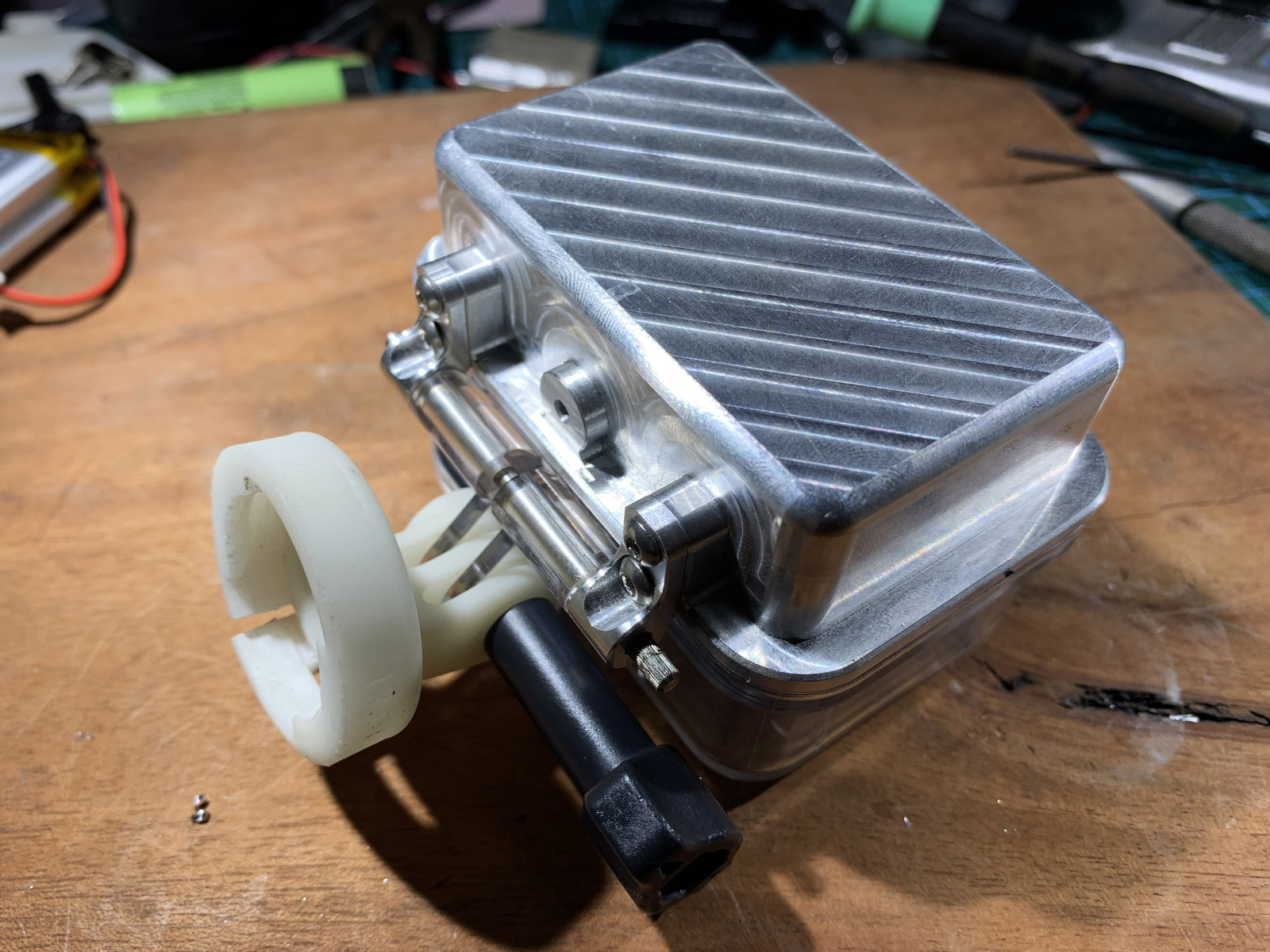
Not a gun, but kinda spearing related. An extended back for an Osmo Action housing so as to be able to have a bigger battery - so I don't run out of battery on longer sessions:
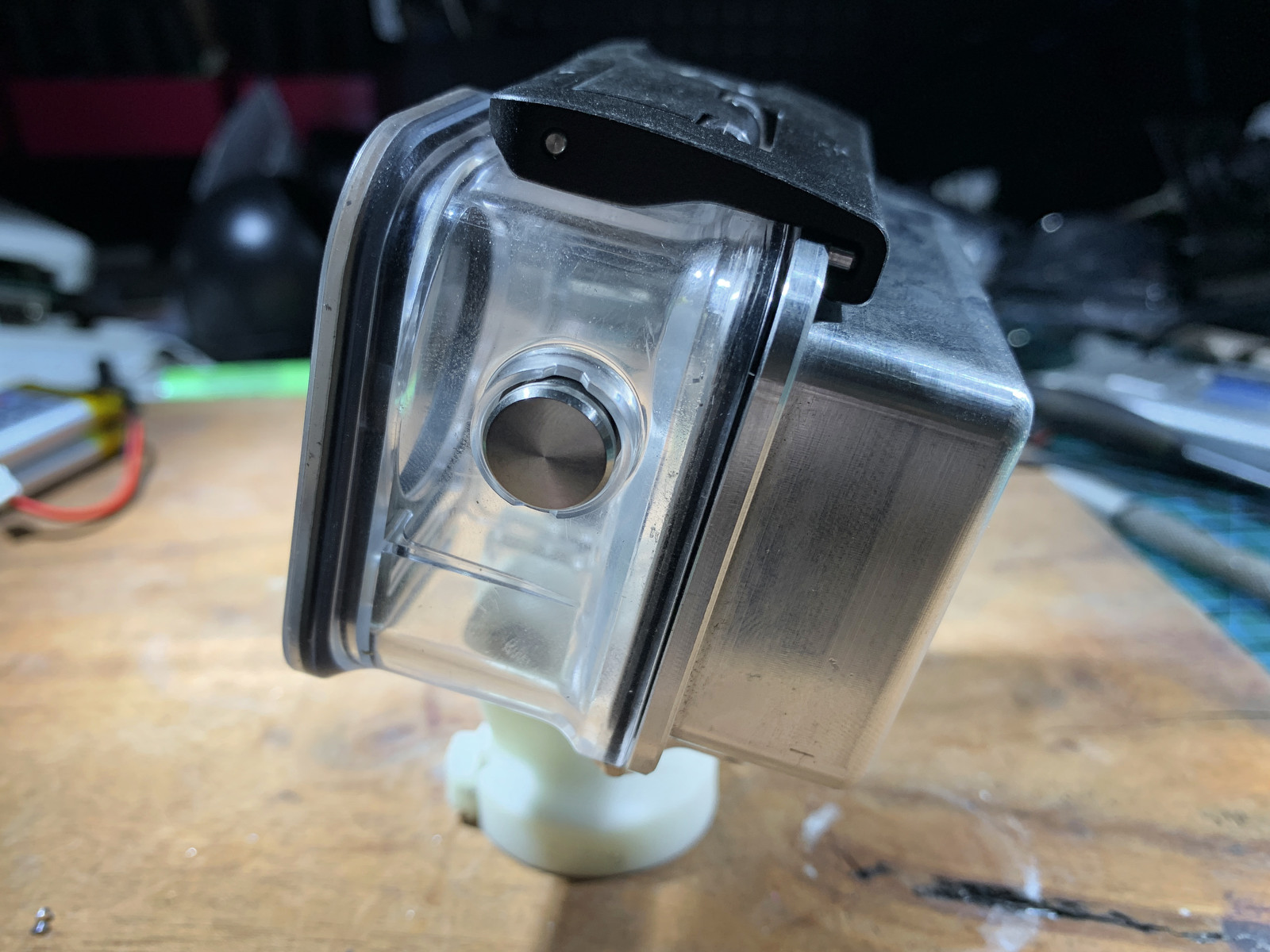
This is something I have wanted to do for years. I might even have been able to sell a few of them if it was not for the fact that the lastest Osmo 5/6 have really good battery life so this isn't really as needed as it might have been a year or two ago, haha.
But I don't have an Osmo 5/6 so this will be a handy upgrade as I often run out of battery during a day in the water. As for DJI's actioncams, I actually switched from GoPros when the very first orignal Osmo Action came out. Better colors, better battery life, a bit cheaper too. Same with the Osmo 3 and the equivalent GoPro of the time. I did comparison tests between those and Paralenz during the pandemic. And the GoPro colors fell apart in shallower water than the Osmo.
Anyways, enough about that. Use what works for you
This was a cool project and I didn't mess anything up at all, haha (well almost not). I did do a test print in resin to check that I had gotten the dimensions correct, especially on the seal groove (I am using the original seal from the housing).
I have a ton of pics from the machining but it's not that interesting, basically it was made from a small billet of marine grade alu and I should probably send it off for anodizing but this particular grade holds up super well even without it.
The hinge lugs were made as separate pieces. Actually dictated by the fact that the billet wasn't big enough to make them integral. But I think it would have been smart anyways as it also lets me fine tune the geometry/gaps between the front and back half of the housing by just making new lugs. That said, this first set does seem to be spot on.
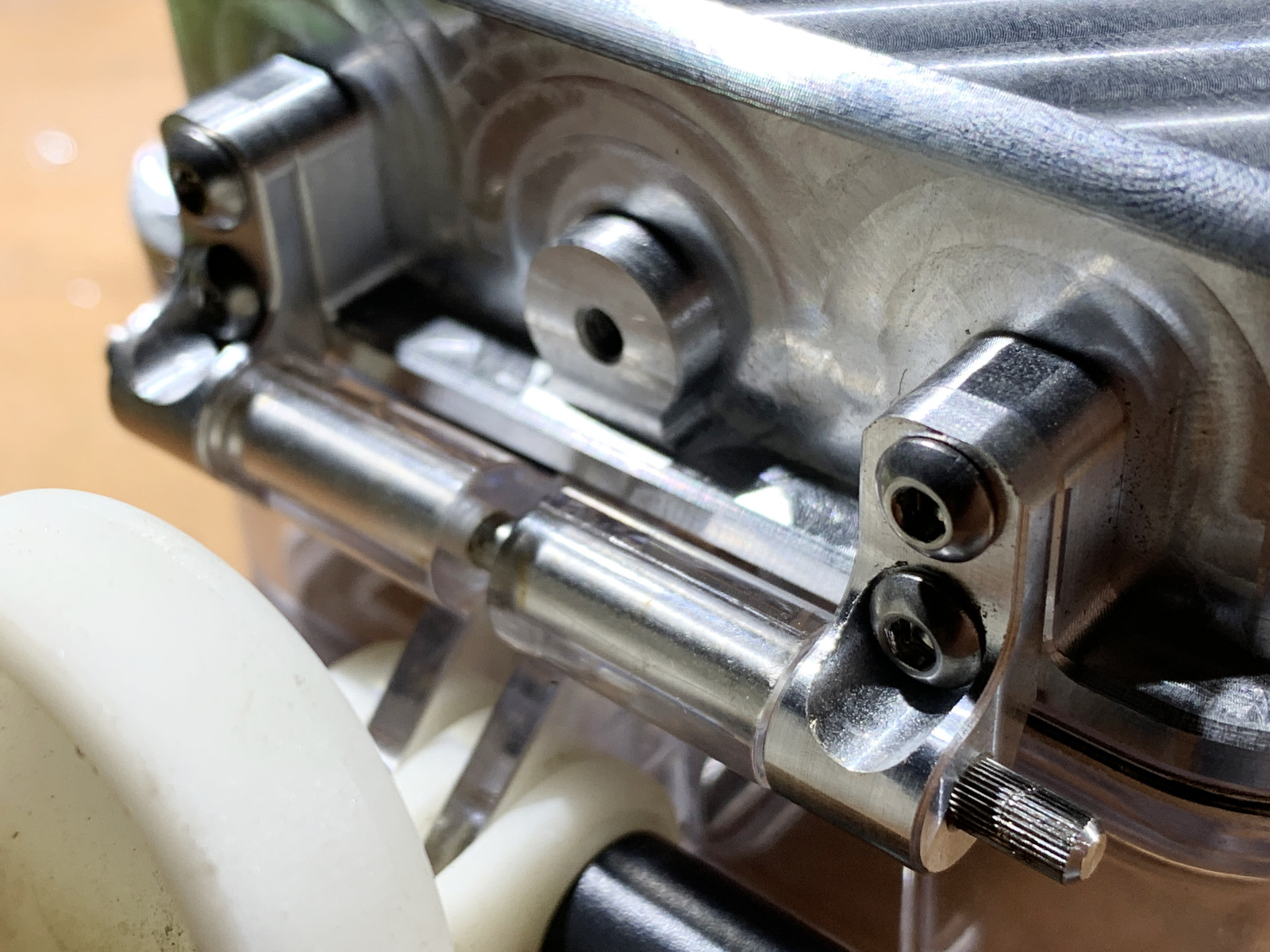
That unoccupied boss in the middle is a for a little sacrificial zinc anode. Will turn it on the lathe tomorrow and then that's all the machining done.
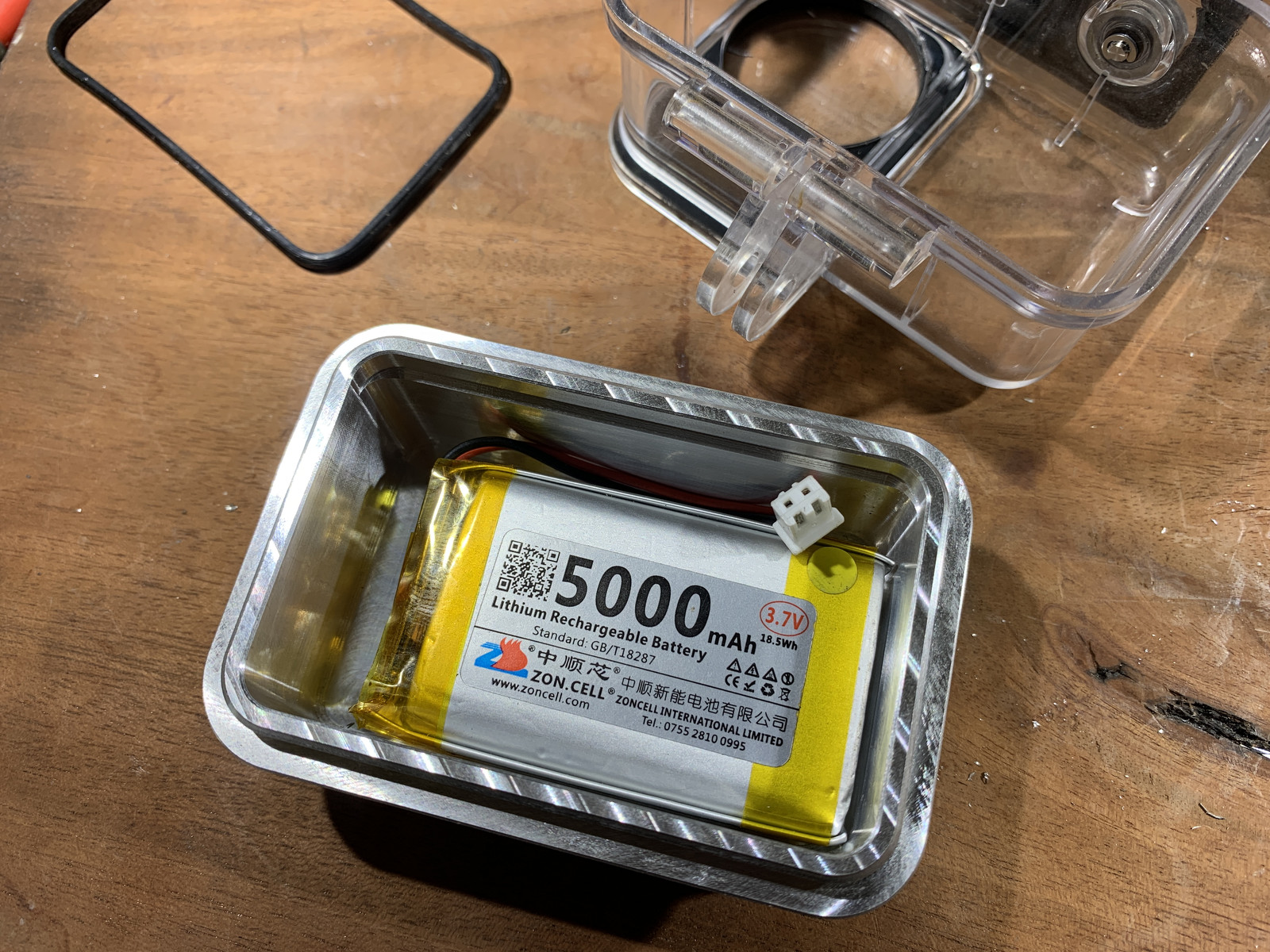
The new back is big enough that I could actually fit two 18560 batteries which would give me 7000mAh whereas the stock battery is ~1800mAh, so that would be quite the boost in run time. But I will stick with this lighter prismatic pack which is 5000mAh so about ~2.8 times more juice (more on that later):
How To Wire This
Now, in the old days, you could actually just run a bigger external battery straight to the camera's battery terminals by hacking an original battery for the interface but newer cams are too smart. I tried to use the original battery PCB but once it's been disconnected from the original battery, it goes into a lock down mode so I can't use this trick. (I may try cannibalizing a cheaper clone battery as their PCBs may have less of these protective features).
But for now, I will have to install a little booster board to take the 3.7V from the battery to 5V USB and then feed the camera power via its USB. It will go in that empty space at the end of the battery.
So, we will have a bit of losses when doing the 3.7V-5V conversion and maybe some more in the camera, too compared to if we could have fooled the camera to accept this as a normal battery.
At least the booster board is also a BMS and a charger board, so it will protect the battery and I can charge the battery through the board with any USB charger. So, the idea is - when I get my hands on that little board - to make a little 3D printed cradle for the board and battery and then those parts can pretty much live permanently in the alu housing back.
Oh, wait, the weight...
This may look heavy but it's actually not too bad. The original back "cap" weighs 32g, this one weighs 60g. So, 28g more. I wont be popping in the original battery but only this external one (otherwise, the camera will continously charge the internal battery which may lead to overheating) and the weight penalty for that is 40g, so a total increase in weight of 68g. But I have more volume, too which makes up for some of the weight increase. The approximate increase in volume is 54cm3, so in effect this whole thing only ends ups "weighing" 14g more. That's once it's fully submerged.
The side walls are 1.5mm, but I could slim them down and save some weight, especially if I made them convex - but I wanted this to be fairly easy to machine and hold in the vise so, square sides it was.
And... what did I mess up?
I felt like everything went well, pretty decent CAM programming, no weirdness, no crashes and even some pretty sweet chamfers that tapered out to nothing in the corners (took some custom sketches to help the CAM do that). But... the slitting saw I used for cutting the gasket groove turned out to be slightly oversized, so the groove ended up deeper than designed which made me really nervous. But I tested it to 4bar in my simple little test tank and no leaks. We are talking 0.15mm which is not a little to be off but I guess they have plenty of compression on those seals.
Anyhow, I learned I can't trust what the tool maker puts on the tool, I guess. I think even if this had resulted in the stock seal leaking, I could probably have saved it by finding an appropriate o-ring. Actually, using a slitting saw was an oversight. I thought I didn't have a t-slot cutter in the correct size, but I did, I just didn't remember... My t-slot cutters are on size, so would not have had that issue with those.
And some video but it pretty much just shows what I talked about above:
If any of you are super eagle-eyed, you might have noticed the housing not closing as tight at the top as at the bottom. That's because I have not yet put in the little rubber strip that sits under the clasp and aids in the last bit of closing. From memory, the GoPro housings rely on a bit of give in the clasp and hinges whereas the DJI housing have a strip of rubber that the clasp presses down on.
Not a gun, but kinda spearing related. An extended back for an Osmo Action housing so as to be able to have a bigger battery - so I don't run out of battery on longer sessions:
This is something I have wanted to do for years. I might even have been able to sell a few of them if it was not for the fact that the lastest Osmo 5/6 have really good battery life so this isn't really as needed as it might have been a year or two ago, haha.
But I don't have an Osmo 5/6 so this will be a handy upgrade as I often run out of battery during a day in the water. As for DJI's actioncams, I actually switched from GoPros when the very first orignal Osmo Action came out. Better colors, better battery life, a bit cheaper too. Same with the Osmo 3 and the equivalent GoPro of the time. I did comparison tests between those and Paralenz during the pandemic. And the GoPro colors fell apart in shallower water than the Osmo.
Anyways, enough about that. Use what works for you
This was a cool project and I didn't mess anything up at all, haha (well almost not). I did do a test print in resin to check that I had gotten the dimensions correct, especially on the seal groove (I am using the original seal from the housing).
I have a ton of pics from the machining but it's not that interesting, basically it was made from a small billet of marine grade alu and I should probably send it off for anodizing but this particular grade holds up super well even without it.
The hinge lugs were made as separate pieces. Actually dictated by the fact that the billet wasn't big enough to make them integral. But I think it would have been smart anyways as it also lets me fine tune the geometry/gaps between the front and back half of the housing by just making new lugs. That said, this first set does seem to be spot on.
That unoccupied boss in the middle is a for a little sacrificial zinc anode. Will turn it on the lathe tomorrow and then that's all the machining done.
The new back is big enough that I could actually fit two 18560 batteries which would give me 7000mAh whereas the stock battery is ~1800mAh, so that would be quite the boost in run time. But I will stick with this lighter prismatic pack which is 5000mAh so about ~2.8 times more juice (more on that later):
How To Wire This
Now, in the old days, you could actually just run a bigger external battery straight to the camera's battery terminals by hacking an original battery for the interface but newer cams are too smart. I tried to use the original battery PCB but once it's been disconnected from the original battery, it goes into a lock down mode so I can't use this trick. (I may try cannibalizing a cheaper clone battery as their PCBs may have less of these protective features).
But for now, I will have to install a little booster board to take the 3.7V from the battery to 5V USB and then feed the camera power via its USB. It will go in that empty space at the end of the battery.
So, we will have a bit of losses when doing the 3.7V-5V conversion and maybe some more in the camera, too compared to if we could have fooled the camera to accept this as a normal battery.
At least the booster board is also a BMS and a charger board, so it will protect the battery and I can charge the battery through the board with any USB charger. So, the idea is - when I get my hands on that little board - to make a little 3D printed cradle for the board and battery and then those parts can pretty much live permanently in the alu housing back.
Oh, wait, the weight...
This may look heavy but it's actually not too bad. The original back "cap" weighs 32g, this one weighs 60g. So, 28g more. I wont be popping in the original battery but only this external one (otherwise, the camera will continously charge the internal battery which may lead to overheating) and the weight penalty for that is 40g, so a total increase in weight of 68g. But I have more volume, too which makes up for some of the weight increase. The approximate increase in volume is 54cm3, so in effect this whole thing only ends ups "weighing" 14g more. That's once it's fully submerged.
The side walls are 1.5mm, but I could slim them down and save some weight, especially if I made them convex - but I wanted this to be fairly easy to machine and hold in the vise so, square sides it was.
And... what did I mess up?
I felt like everything went well, pretty decent CAM programming, no weirdness, no crashes and even some pretty sweet chamfers that tapered out to nothing in the corners (took some custom sketches to help the CAM do that). But... the slitting saw I used for cutting the gasket groove turned out to be slightly oversized, so the groove ended up deeper than designed which made me really nervous. But I tested it to 4bar in my simple little test tank and no leaks. We are talking 0.15mm which is not a little to be off but I guess they have plenty of compression on those seals.
Anyhow, I learned I can't trust what the tool maker puts on the tool, I guess. I think even if this had resulted in the stock seal leaking, I could probably have saved it by finding an appropriate o-ring. Actually, using a slitting saw was an oversight. I thought I didn't have a t-slot cutter in the correct size, but I did, I just didn't remember... My t-slot cutters are on size, so would not have had that issue with those.
And some video but it pretty much just shows what I talked about above:
If any of you are super eagle-eyed, you might have noticed the housing not closing as tight at the top as at the bottom. That's because I have not yet put in the little rubber strip that sits under the clasp and aids in the last bit of closing. From memory, the GoPro housings rely on a bit of give in the clasp and hinges whereas the DJI housing have a strip of rubber that the clasp presses down on.
Last edited:
Wrapping Up The Extended Battery Housing
As mentioned, I needed to make a little sacrificial zinc anode. It cuts like butter, so that was easy:
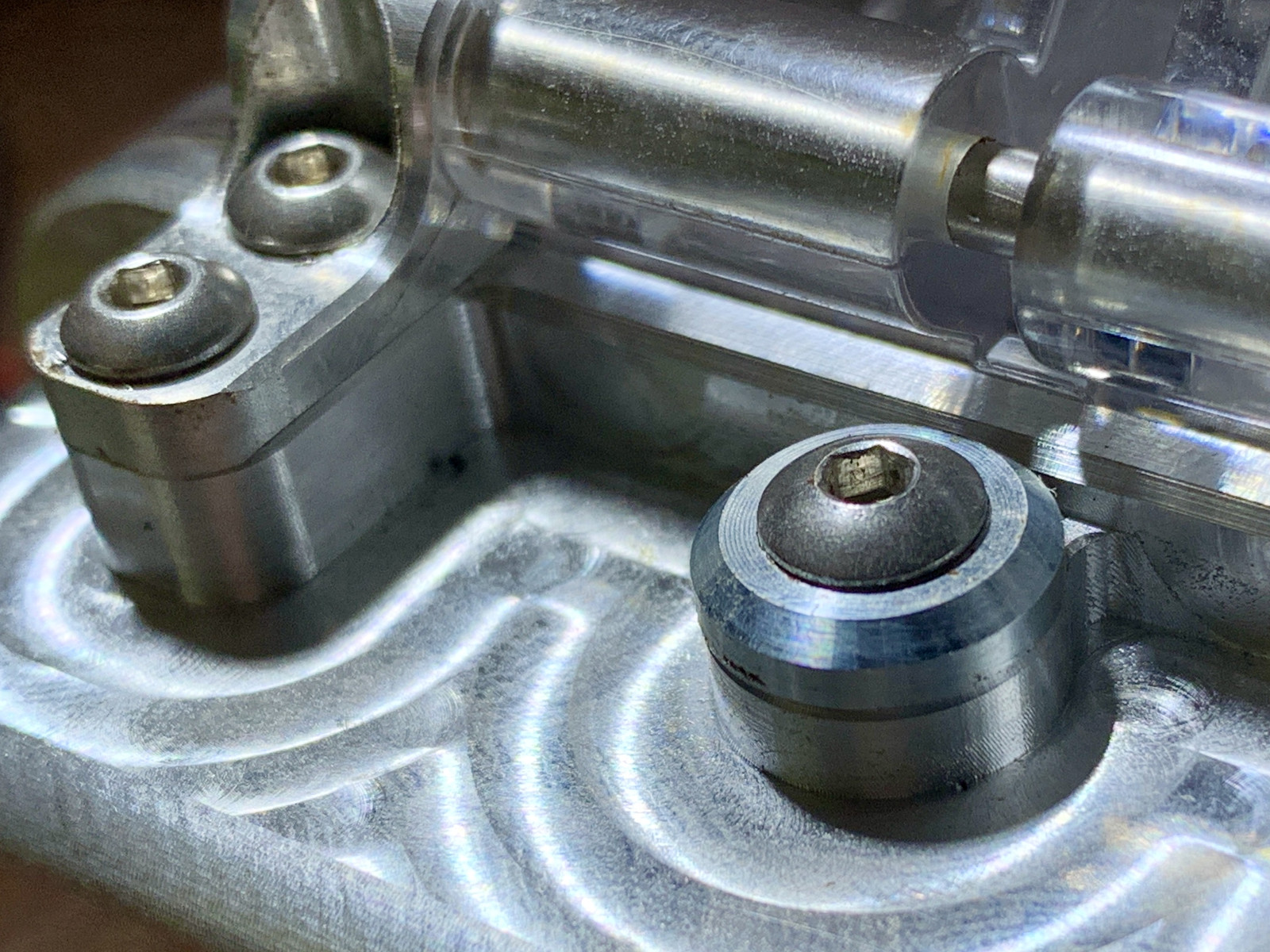
I also made a new pin for the hinge. I guess I could have used the original one but it has these oversized splines at the end that would be a push fit. In the original plastic that's fine but I think there's a risk that the pin would galvanically fuse itself to the aluminium. So, I made a new pin with screws at each end:
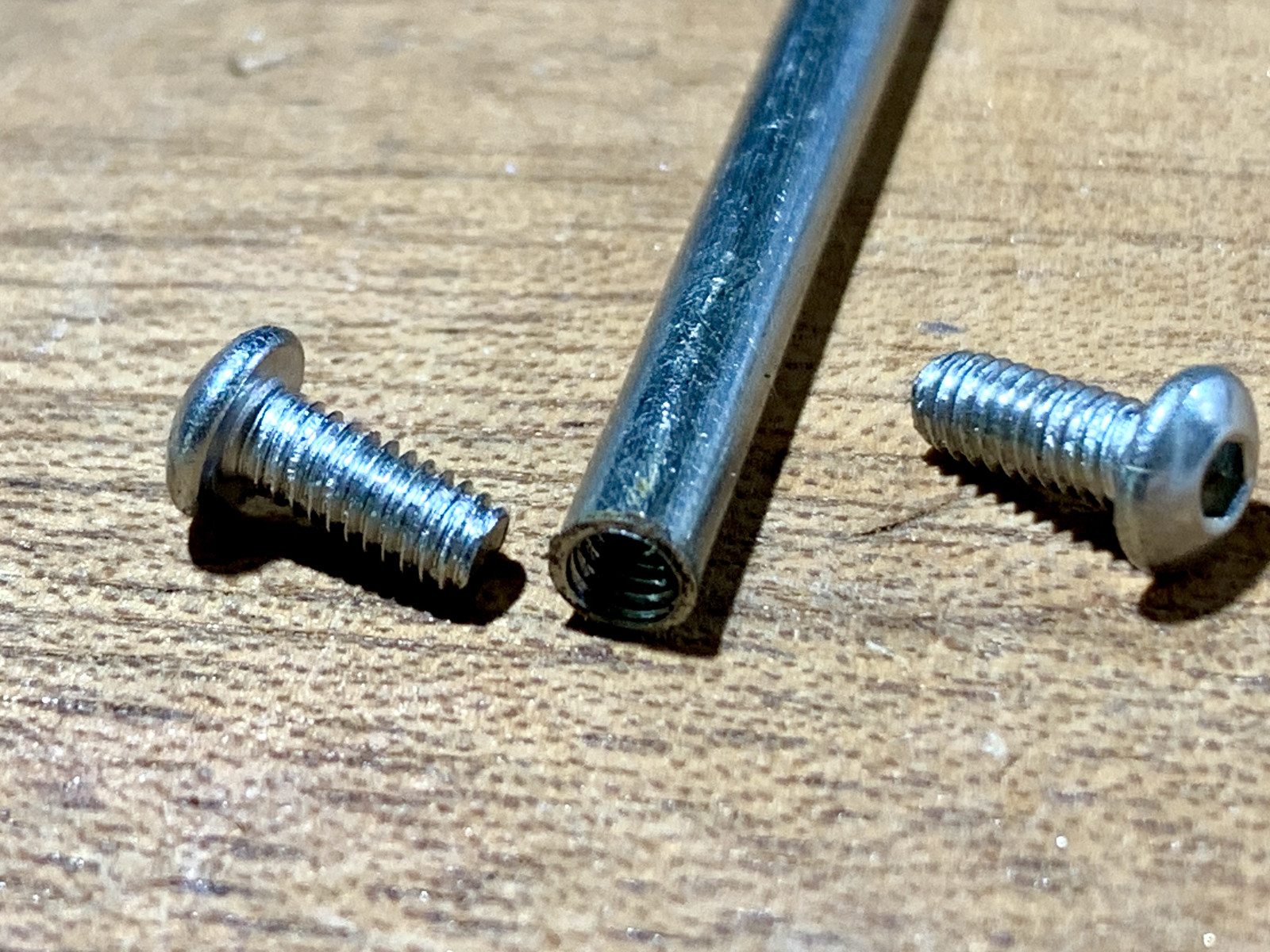
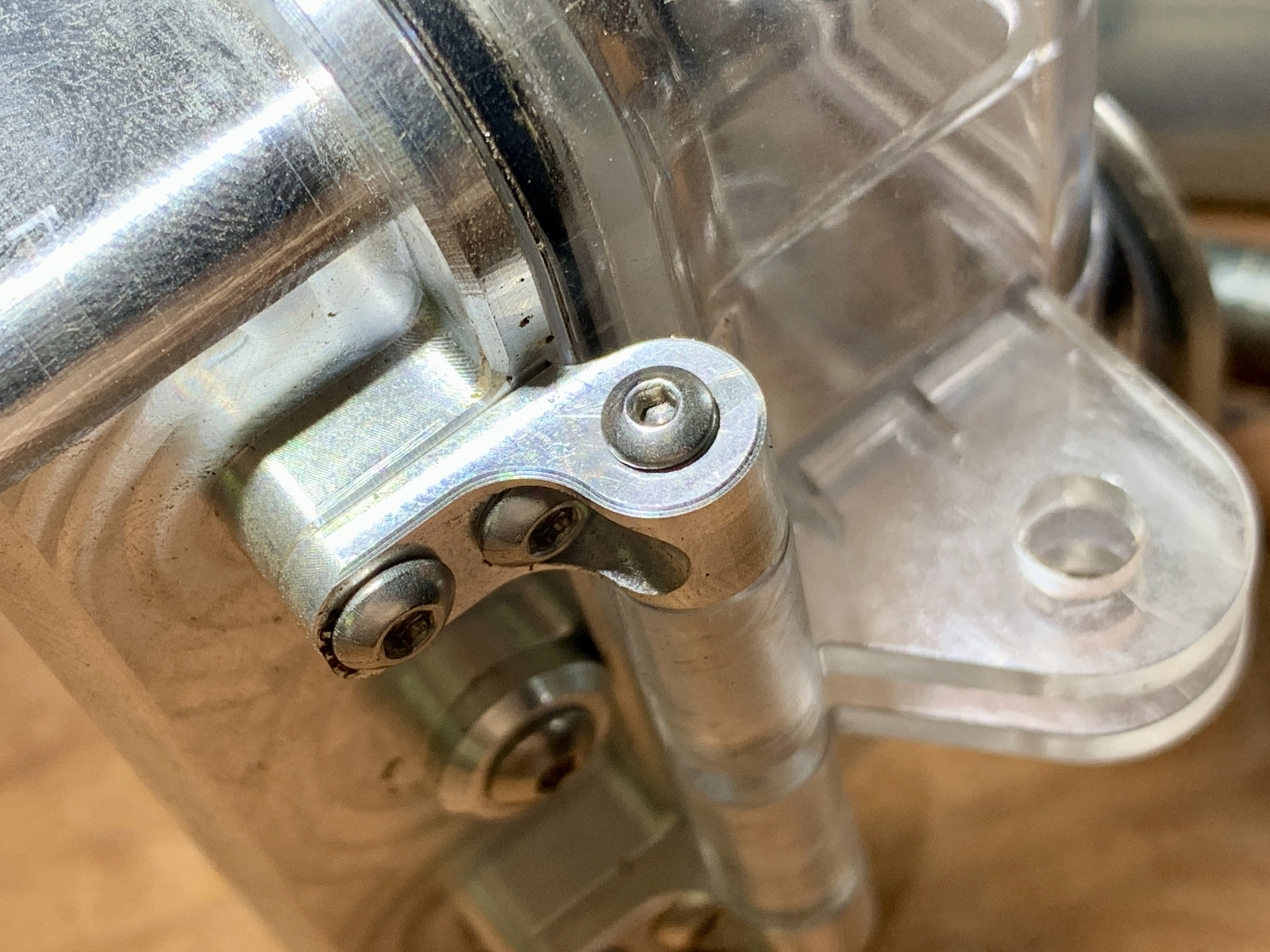
It's a ø3mm pin threaded for M2.5 screws. Went pretty easily.
Also, I talked about how there's a little rubber strip under the clasp, so I moved that over from the orginal back:
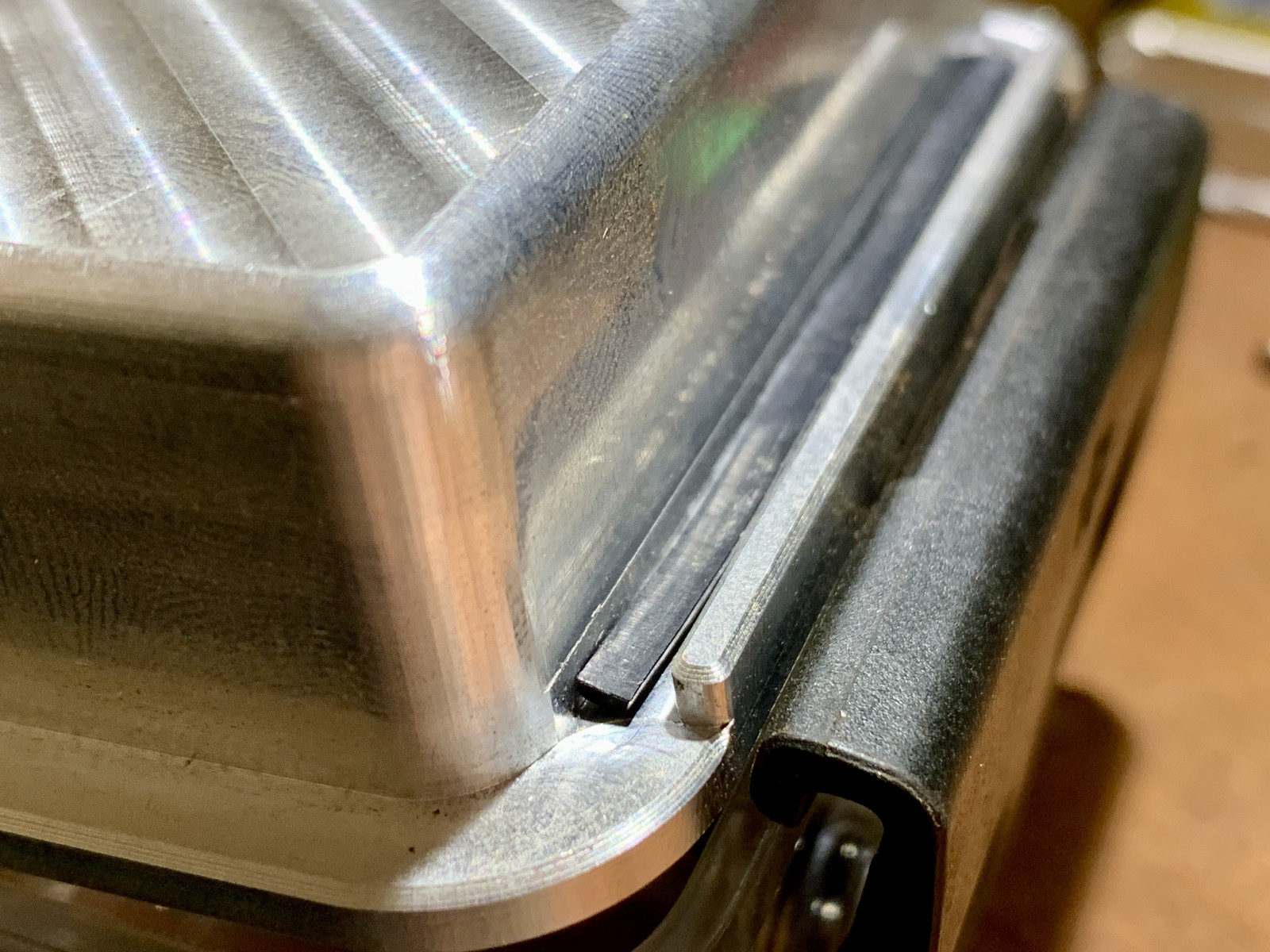
I may cut a wider one to fit my version of that clasp groove better.
Finally, I also talked how some years back, I could have wired an external battery straight to the camera's terminals. But the newer cameras need some kind of handshake with a chip on the battery so I would need the original battery board:
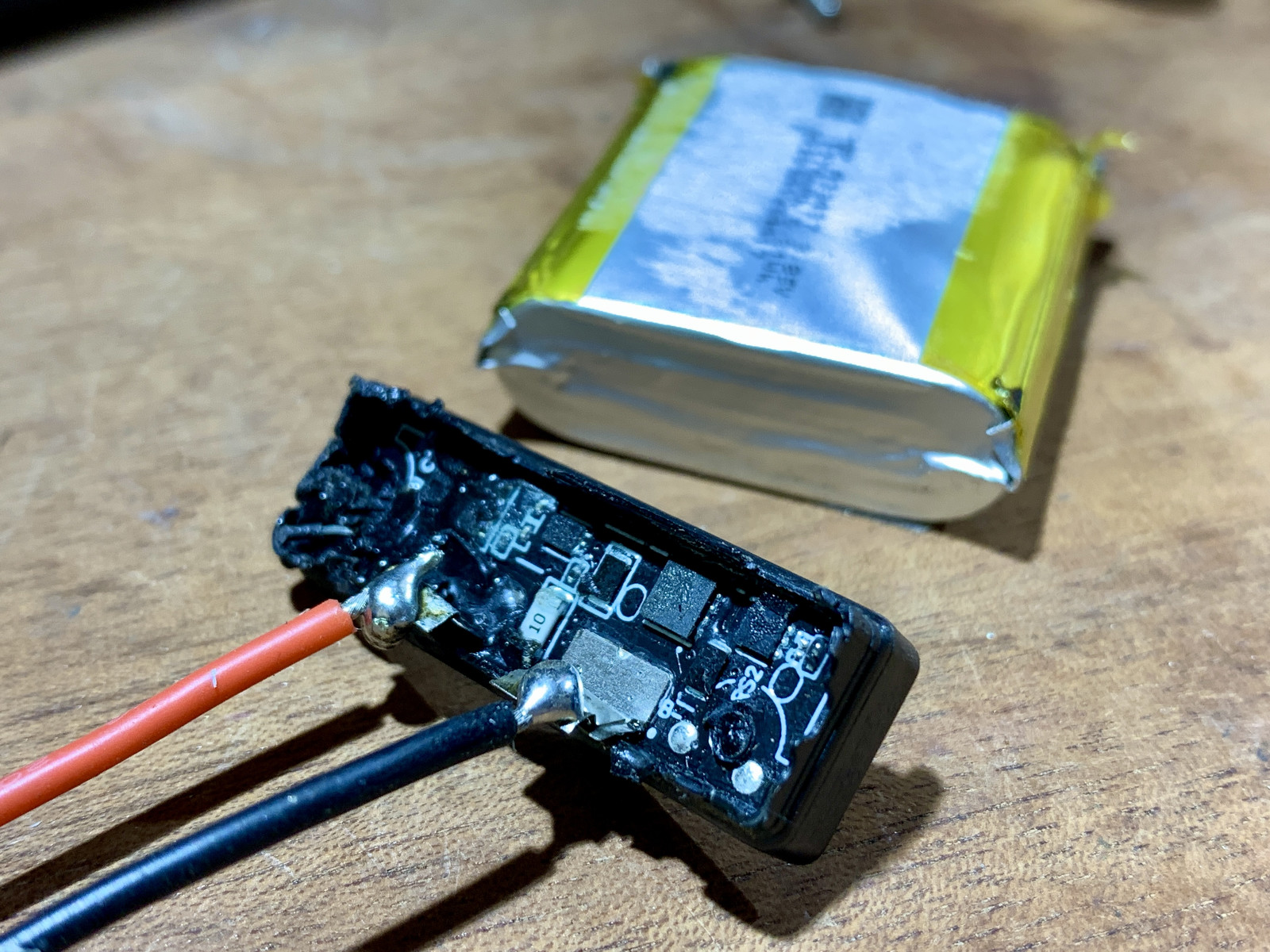
But either I fried it by accident or it can detect that the original battery was removed and it locked/killed the chip. So, even though the new bigger battery is connected to this original board, neither the camera nor the charger will accept it.
That's why I will have to do the step up to 5V USB.
There's a chance I could make this hack to a cheaper clone battery - Maybe that chip wont go into fail safe mode. Will see if I am going to bother doing that. I will try the USB first, I think.
As mentioned, I needed to make a little sacrificial zinc anode. It cuts like butter, so that was easy:
I also made a new pin for the hinge. I guess I could have used the original one but it has these oversized splines at the end that would be a push fit. In the original plastic that's fine but I think there's a risk that the pin would galvanically fuse itself to the aluminium. So, I made a new pin with screws at each end:
It's a ø3mm pin threaded for M2.5 screws. Went pretty easily.
Also, I talked about how there's a little rubber strip under the clasp, so I moved that over from the orginal back:
I may cut a wider one to fit my version of that clasp groove better.
Finally, I also talked how some years back, I could have wired an external battery straight to the camera's terminals. But the newer cameras need some kind of handshake with a chip on the battery so I would need the original battery board:
But either I fried it by accident or it can detect that the original battery was removed and it locked/killed the chip. So, even though the new bigger battery is connected to this original board, neither the camera nor the charger will accept it.
That's why I will have to do the step up to 5V USB.
There's a chance I could make this hack to a cheaper clone battery - Maybe that chip wont go into fail safe mode. Will see if I am going to bother doing that. I will try the USB first, I think.
Last edited: