


You will be interested to know that the two-stage reduction system provides air under pressure calculated for breathing on the surface. With the depth of the dive, the air density increases, and the air consumption does not change. The time it takes to fill the lungs depends on the air density and can increase with the depth of the dive. For comfortable breathing, you have to stretch out your inhalation.
A device is needed that can regulate the pressure and air supply throughout the inhalation in accordance with the hydrostatic pressure of the water.
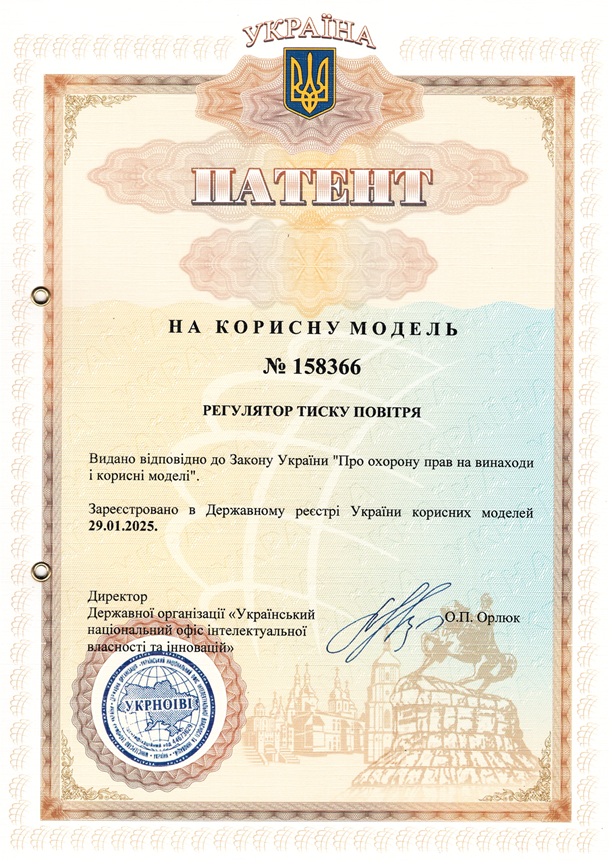
A patent has been received for a three-stage high-pressure air regulator. The main difference is the installation air pressure of 1 bar and the presence of an atmospheric chamber.
Unfortunately, the text of the patent is in Ukrainian. I will describe the principle of operation.
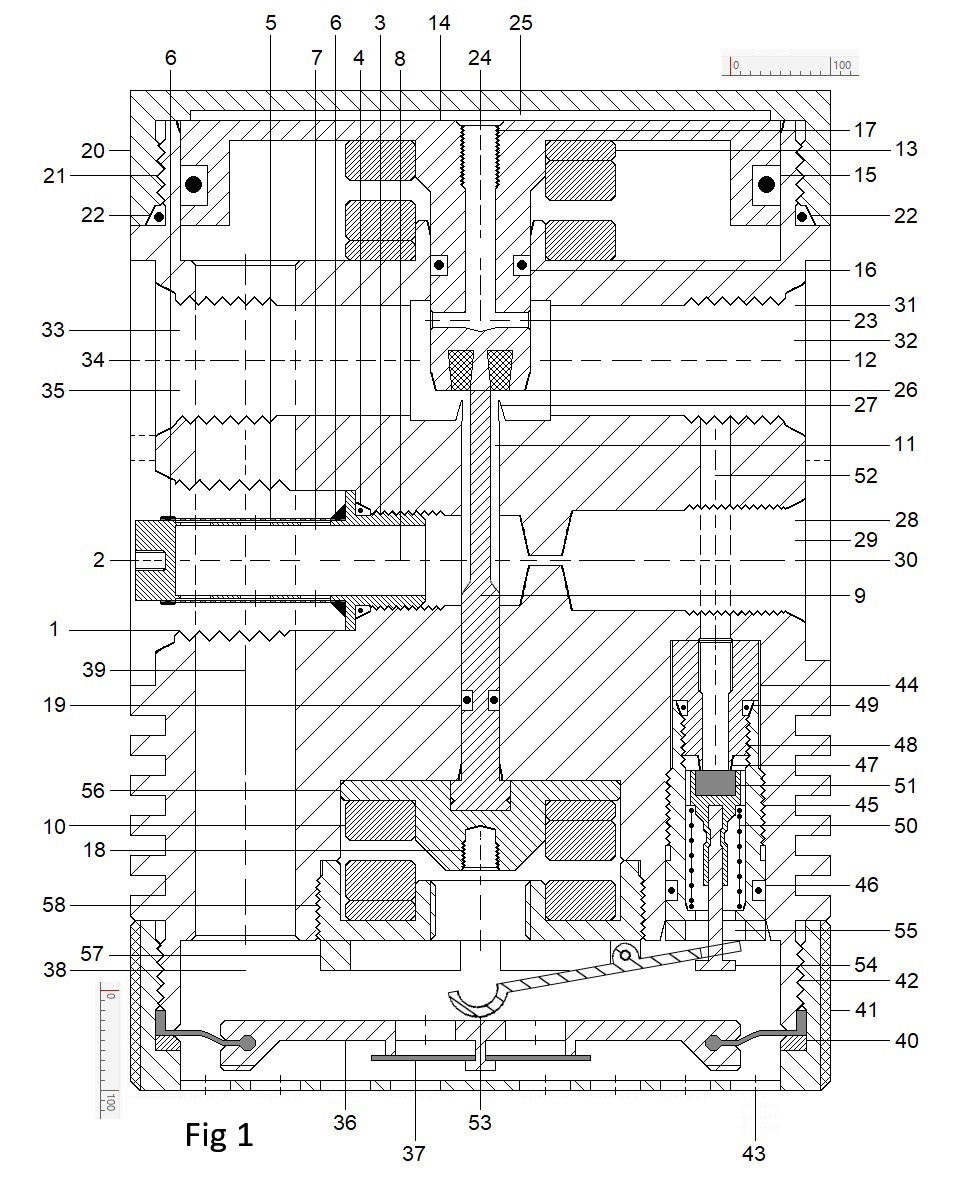
The high-pressure air regulator contains two reduction stages in one housing. The first reduction stage is of the piston type. (14) The second reduction stage is of the diaphragm type. (36). The regulator is attached to the cylinder and reduces the high air pressure of 230 bar to the set air pressure on the surface of 1 bar. The diaphragm (36) separates the atmospheric chamber (38)from the water. When in contact with water, the diaphragm (36) bends towards lower pressure and presses the lever (53) of the air valve.(54) Air enters the atmospheric chamber (38) and through the air channel (39) enters under the piston. (14) The air pressure in the atmospheric chamber (38) equalizes with the external water pressure. The increased pressure in the atmospheric chamber (38) lifts the piston. (14) The air entering the piston chamber (25) increases the set pressure by the immersion depth. At a depth of 10 meters, air is supplied for inhalation at a pressure of 2 bar. At a depth of 50 meters, air is supplied for inhalation at a pressure of 6 bar.
Main characteristics of WL 50.
Maximum air pressure 230 bar.
Minimum air pressure 50 bar.
Set air pressure on the surface 1 bar.
Maximum diving depth 50 meters, with a pressure in the cylinder of50 atm.
Air flow at a depth of 50 meters up to 10 m/s.
The sketch is provided for review.
To avoid plagiarism, I do not offer a diagram of a third stage breathing regulator in which the air supply during inhalation corresponds to the hydrostatic pressure of water, but a high-pressure air regulator with maximum characteristics.
Main characteristics of WL 500
Maximum air pressure 430 bar
Minimum air pressure 50 bar.
Set air pressure on the surface 1 bar.
Maximum diving depth 500 meters, with a pressure in the cylinder of 50 atm.
Air flow on the territory from 500 meters to 10 m/s.
I will provide all sketches to interested companies.
A device is needed that can regulate the pressure and air supply throughout the inhalation in accordance with the hydrostatic pressure of the water.
A patent has been received for a three-stage high-pressure air regulator. The main difference is the installation air pressure of 1 bar and the presence of an atmospheric chamber.
Unfortunately, the text of the patent is in Ukrainian. I will describe the principle of operation.
The high-pressure air regulator contains two reduction stages in one housing. The first reduction stage is of the piston type. (14) The second reduction stage is of the diaphragm type. (36). The regulator is attached to the cylinder and reduces the high air pressure of 230 bar to the set air pressure on the surface of 1 bar. The diaphragm (36) separates the atmospheric chamber (38)from the water. When in contact with water, the diaphragm (36) bends towards lower pressure and presses the lever (53) of the air valve.(54) Air enters the atmospheric chamber (38) and through the air channel (39) enters under the piston. (14) The air pressure in the atmospheric chamber (38) equalizes with the external water pressure. The increased pressure in the atmospheric chamber (38) lifts the piston. (14) The air entering the piston chamber (25) increases the set pressure by the immersion depth. At a depth of 10 meters, air is supplied for inhalation at a pressure of 2 bar. At a depth of 50 meters, air is supplied for inhalation at a pressure of 6 bar.
Main characteristics of WL 50.
Maximum air pressure 230 bar.
Minimum air pressure 50 bar.
Set air pressure on the surface 1 bar.
Maximum diving depth 50 meters, with a pressure in the cylinder of50 atm.
Air flow at a depth of 50 meters up to 10 m/s.
The sketch is provided for review.
To avoid plagiarism, I do not offer a diagram of a third stage breathing regulator in which the air supply during inhalation corresponds to the hydrostatic pressure of water, but a high-pressure air regulator with maximum characteristics.
Main characteristics of WL 500
Maximum air pressure 430 bar
Minimum air pressure 50 bar.
Set air pressure on the surface 1 bar.
Maximum diving depth 500 meters, with a pressure in the cylinder of 50 atm.
Air flow on the territory from 500 meters to 10 m/s.
I will provide all sketches to interested companies.