I agree that most people, in competition stress, hyperventilate without even knowing it. As much as an hour before the performance, their nervousness causes them to start breathing more deeply. This happened to Lena at Vertical Blue 2011, result = unexpected BO. The next day she realized the problem and forced herself to breathe normally for 1 hour before. Result = easy dive to the same depth, even got tangled with the lanyard on the bottom, still no problem.


Guest viewing limit reached
- You have reached the maximum number of guest views allowed
- Please register below to remove this limitation
- Already a member? Click here to login
-
Welcome to the DeeperBlue.com Forums, the largest online community dedicated to Freediving, Scuba Diving and Spearfishing. To gain full access to the DeeperBlue.com Forums you must register for a free account. As a registered member you will be able to:
- Join over 47,943+ fellow diving enthusiasts from around the world on this forum
- Participate in and browse from over 531,990+ posts.
- Communicate privately with other divers from around the world.
- Post your own photos or view from 7,455+ user submitted images.
- All this and much more...
You can gain access to all this absolutely free when you register for an account, so sign up today!
You are using an out of date browser. It may not display this or other websites correctly.
You should upgrade or use an alternative browser.
You should upgrade or use an alternative browser.
Relaxation vs. Pre-dive stress for max performances
- Thread starter tcrusson
- Start date
Thread Status: Hello
, There was no answer in this thread for more than 90 days.
It can take a long time to get an up-to-date response or contact with relevant users.
It can take a long time to get an up-to-date response or contact with relevant users.

As was mentioned I think there are different kinds of stress, and indeed different days where stress is good, and some where an strange calm is good.
My examples:
1. Spearing session: calm is good. Going out to get some fish near my house. Suited up and walked down to beach. Half down the walk I stopped because something was strange: I felt an incredible relaxed calm state, and just new this was going to work out well in the water. To repeat: it felt so strange and good I stopped in my tracks! Sure enough, this session (cold water. deep. thick suit) produced the best and most comfortable bottom times ever. From 1:30 to 1:45 average dives, to 2:15 to 2:30 (a big % increase)
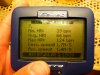
2. Line Dive Session: Stress is good. 3 years ago, still quite a rookie, breathing up for a dive and heart almost jumping out of my wetsuit. Cool divers watching me. Me knowing I was a rookie. Look at the watch. From an incredible 124BPM to 39BPM in one dive. The gradient was so steep. The dive was easy
3. Lines Session Good and Bad Stress. 2011: VB. He we had mixed results. Some dives felt so easy, others felt so hard, same breathe up, same warm up. Thinking back now, the differences where type of stress (all dives were stressful). Good stress: being the first diver on the first day of the comp. Everyone worried (crew, saftey, divers) but I new I could do the dive and loved it. Later in the comp. less stressed crew and environment, better weather, worse dives: why, because I knew I had a weakness (EQ in this case) and no matter how good the "good stress" was this problem would crop up a certain point. It did. Bad dive. To sum up: stress only works well if you KNOW you can do the dive.
My examples:
1. Spearing session: calm is good. Going out to get some fish near my house. Suited up and walked down to beach. Half down the walk I stopped because something was strange: I felt an incredible relaxed calm state, and just new this was going to work out well in the water. To repeat: it felt so strange and good I stopped in my tracks! Sure enough, this session (cold water. deep. thick suit) produced the best and most comfortable bottom times ever. From 1:30 to 1:45 average dives, to 2:15 to 2:30 (a big % increase)
2. Line Dive Session: Stress is good. 3 years ago, still quite a rookie, breathing up for a dive and heart almost jumping out of my wetsuit. Cool divers watching me. Me knowing I was a rookie. Look at the watch. From an incredible 124BPM to 39BPM in one dive. The gradient was so steep. The dive was easy
3. Lines Session Good and Bad Stress. 2011: VB. He we had mixed results. Some dives felt so easy, others felt so hard, same breathe up, same warm up. Thinking back now, the differences where type of stress (all dives were stressful). Good stress: being the first diver on the first day of the comp. Everyone worried (crew, saftey, divers) but I new I could do the dive and loved it. Later in the comp. less stressed crew and environment, better weather, worse dives: why, because I knew I had a weakness (EQ in this case) and no matter how good the "good stress" was this problem would crop up a certain point. It did. Bad dive. To sum up: stress only works well if you KNOW you can do the dive.
Attachments

Kars is right here. I wrote about the hyperventilation induced depletion of oxygen stores here on DB often, but do not mind opening the topic again. We are speaking especially about non-hemoglobin oxygen stores, such as myoglobin (muscles) or neuroglobin (in brain), that do not take part on the gas exchange directly, but are rather supplied with the oxygen by the blood flow.Kars, why do you reckon hyperventilation reduces O2 stores? I know Eric has speculated on it, but that's rather different from saying it definitely does. And presumably you didn't say it for same reason he did??
As Eric already wrote earlier in this thread, the hyperventilation induces a strong shift of the Bohr disassociation curve. It means the oxygen is bound to the hemoglobin stronger than normally, which has the consequence that it cannot be easily discharged where it is needed. In other words, it creates a paradox - the blood is full of oxygen but keeps is so well (like a greedy rich man holding on his money) that the tissue, and the secondary oxygen stores starve. This effect is well known and documented also in scientific literature (see for example http://www.biomed.cas.cz/physiolres/pdf/56/56_57.pdf or http://jap.physiology.org/cgi/content/full/102/4/1565)
And there is another effect at an acute hyperventilation that would lead to depletion of oxygen stores in the brain - the hyperventilation induced hypocapnia (low CO2) triggers strong constriction of the carotid arteries supplying the brain, which together with the shift of the Bohr curve leads to cerebral hypoxemia, and hence also to the depletion of the oxygen stores in the brain.
And finally, hypocapnia (the consequence of hyperventilation) reduces the hypoxic tolerance - you certainly know that with low CO2, you black out earlier than you would normally. So, here we could also tell that hyperventilation reduces the usable oxygen stores even in hemoglobin.
Here we come back to the question of stress - generally the release of stress hormones has positive effect on the performance - finally it is their exact purpose. The problem is, as I mentioned in my initial post in this thread, and as Eric wrote above too, that stress induces also subconscious hyperventilation, which then indeed can have a very negative effect and seriously harm your performance. If you are nervous since a few hours, and ventilate a bit deeper than normally, you will remove so much CO2 from your body, that you won't be able to compensate it even if you have a very precise breathing pre-dive protocol.
Last edited:


Similar to Matt, conditions in competition are usually even better than in training, except for the stress factor.
In all other sports, there are people that are good at dealing with stress and those that aren't. Think of 'Big Game Players' - those that excel when the pressure is on. I am not one of those people, in freediving or other sport.
It's something that can be worked on, but I think this comes down to psychological factors primarily.
In all other sports, there are people that are good at dealing with stress and those that aren't. Think of 'Big Game Players' - those that excel when the pressure is on. I am not one of those people, in freediving or other sport.
It's something that can be worked on, but I think this comes down to psychological factors primarily.
Any idea about the effect on total O2 stores though Trux? You'd need to balance the reduction in muscular O2 with the increase in venous and alveolar O2. There's also the question of intensity and duration. Just seemed like a big generalisation to me. Mild, brief HV would probably increase total O2 stores while intense HV over several minutes could well reduce them. Then you've got the claims that deliberate hypoventilation will increase total O2 stores, which I'm a bit sceptical about.
We all know HV makes plenty of your O2 store inaccessible and that it's a bad thing, but that's not the question.
Edit: ahh, this is what I was after: http://jap.physiology.org/content/102/4/1565/F4.large.jpg
Looks like HV gave the subject a net deficit after about 10 minutes. Prior to that it closely balanced, with HV slightly increasing stores between about 6-8 minutes. Thanks for posting that link.
We all know HV makes plenty of your O2 store inaccessible and that it's a bad thing, but that's not the question.
Edit: ahh, this is what I was after: http://jap.physiology.org/content/102/4/1565/F4.large.jpg
Looks like HV gave the subject a net deficit after about 10 minutes. Prior to that it closely balanced, with HV slightly increasing stores between about 6-8 minutes. Thanks for posting that link.
Last edited:
Hi Dave, I do not think one should under ventilate until Official top, actually I do hyperventilate the last few breaths before diving under. I do this in order to have more O2 in the lungs, not to lower the CO2.
For static I can feel my limbs and mind 'light up' when under ventilating. With some practice it got better and faster. I'm not entirely sure how much is mental and how much is physical. Normally I breath - from a old bad habit, stress, astma - also through my mouth, hence I think hyperventilation is or used to be being close to normal for me. Breathing very slow through the nose, at a certain pace, helped me to prepare for static*. Though now I breath much slower than 'Jane and Joe Average'. Sure I think the effect is not very big, but I think it is of benefit. More testing is needed, measurements are needed.
How much is the difference between under ventilating, normal ventilation and hyperventilation preparation? Well I cannot give you numbers. But I suspect, like others here, the stress induced hyperventilation has helped to reduce performances and red cards - by changing the bodies internal environment, changing phases, reactions, feelings, making self judgement difficult. Another thing that our freediving scientist can research.
I'm sure some have tried doing a max with much hyperventilation? How does that compare to a normal ventilation max, and perhabs under ventilation max dives?
* I really had an amazing static in 2006, with a 20min+ under ventilation preparation laying face up in the pool. I had high expectations (NR). After the few purge breaths and inhale, packing and rolling over I had an incredible itch in my throat. After trying to ignore it for a minute or so I remembered a suggestion, I swallowed some water. Instead of reduced itching it got worse! it was so bad I was involuntary swallowing from the reflex. I thought of quitting - what I rarely do in competition -, but than decided to see where it would go. Ignoring the itch I focussed my mind on a point in my brain, and relaxed there as the swallowing continued.. The taps came suddenly and I was surprised how easy it was, oh and I had no contractions too! Normally I have these from 2'30"on. 6'came, it was easy, my head was very clear. Surfaced at 6'45" as agreed beforehand very clean, pb. Amazing mental journey. A mix of underventilation, expectations, unexpected extra stress, dropping expectations, focussing on some other place in my mind, being woke up surprised, being very calm, comfortable and confident to the end of the dive.
Kars
For static I can feel my limbs and mind 'light up' when under ventilating. With some practice it got better and faster. I'm not entirely sure how much is mental and how much is physical. Normally I breath - from a old bad habit, stress, astma - also through my mouth, hence I think hyperventilation is or used to be being close to normal for me. Breathing very slow through the nose, at a certain pace, helped me to prepare for static*. Though now I breath much slower than 'Jane and Joe Average'. Sure I think the effect is not very big, but I think it is of benefit. More testing is needed, measurements are needed.
How much is the difference between under ventilating, normal ventilation and hyperventilation preparation? Well I cannot give you numbers. But I suspect, like others here, the stress induced hyperventilation has helped to reduce performances and red cards - by changing the bodies internal environment, changing phases, reactions, feelings, making self judgement difficult. Another thing that our freediving scientist can research.
I'm sure some have tried doing a max with much hyperventilation? How does that compare to a normal ventilation max, and perhabs under ventilation max dives?
* I really had an amazing static in 2006, with a 20min+ under ventilation preparation laying face up in the pool. I had high expectations (NR). After the few purge breaths and inhale, packing and rolling over I had an incredible itch in my throat. After trying to ignore it for a minute or so I remembered a suggestion, I swallowed some water. Instead of reduced itching it got worse! it was so bad I was involuntary swallowing from the reflex. I thought of quitting - what I rarely do in competition -, but than decided to see where it would go. Ignoring the itch I focussed my mind on a point in my brain, and relaxed there as the swallowing continued.. The taps came suddenly and I was surprised how easy it was, oh and I had no contractions too! Normally I have these from 2'30"on. 6'came, it was easy, my head was very clear. Surfaced at 6'45" as agreed beforehand very clean, pb. Amazing mental journey. A mix of underventilation, expectations, unexpected extra stress, dropping expectations, focussing on some other place in my mind, being woke up surprised, being very calm, comfortable and confident to the end of the dive.
Kars
Last edited:
Matt, thanks for this very detailed response, and it got me thinking a fair bit. One element in particular: big swims following stress, even though they are done without warm-ups, are really much easier for me as contractions start way later. This could definitely be a result of stress induced hyperventilation (as mentioned by Trux). However, hypoxia starts later, which wouldn't make any sense in that context... Unless there is another factor playing when trying big swims without pre-dive stress. The one that jumps to mind is stress DURING the dive, which I only get if I was relaxed BEFORE the dive.
That would mean that if I could relax during the dive without any form of pre-dive stress, it would lead to less hyperventilation, so I should be able to swim further. Maybe one way to achieve this would be, like Matt, to try max swims fairly often. But I've tried this approach a few times, and it always ended up with the symptoms of over-training.
I guess there are also other factors to take into account, such as:
- MDR: Seb Murat demonstrated a correlation between stress and the HR drop. Maybe some of the negative effects of HV are offset by a lower HR. But maybe it doesn't work like that with everyone. My intuition is that the more you do big swims, the less this will actually work, as your brain cannot reasonably be triggering survival mode for something you do so regularly. But I'm pulling this theory out of my arse.
- People's tolerance to stress, as mentioned by Chris.
So:
- high stress => (+) lower HR during the swim (-) HV
- Low stress => (-) higher HR during the swim (+) no HV
OK, I'm definitely confused now.
That would mean that if I could relax during the dive without any form of pre-dive stress, it would lead to less hyperventilation, so I should be able to swim further. Maybe one way to achieve this would be, like Matt, to try max swims fairly often. But I've tried this approach a few times, and it always ended up with the symptoms of over-training.
I guess there are also other factors to take into account, such as:
- MDR: Seb Murat demonstrated a correlation between stress and the HR drop. Maybe some of the negative effects of HV are offset by a lower HR. But maybe it doesn't work like that with everyone. My intuition is that the more you do big swims, the less this will actually work, as your brain cannot reasonably be triggering survival mode for something you do so regularly. But I'm pulling this theory out of my arse.
- People's tolerance to stress, as mentioned by Chris.
So:
- high stress => (+) lower HR during the swim (-) HV
- Low stress => (-) higher HR during the swim (+) no HV
OK, I'm definitely confused now.
Well, I am collecting information and studies about hyperventilation and related topics since a long time, but did not see yet any appraisal that would be really complete. Besides the data in the studies linked above, there is also the calculation of Dr. Peter Lindholm (http://diss.kib.ki.se/2002/91-7349-314-7/thesis.pdf). It demonstrates the increase of O2 in lungs and in blood after hyperventilation and searches the balance with the decreased hypoxic tolerance. Also Dr. Lindholh comes to the conclusion that prolonged hyperventilation leads to reduced performance, and that keeping the CO2 as high as possible would be optimal.Any idea about the effect on total O2 stores though Trux?
Unfortunately, the calculation of Dr. Lindholm is very simplified - it does not take in account the above mentioned myoglobin or neuroglobin, the influence of hyperventilation on the heart rate and the basal metabolism, the effect of depletion of free calcium (muscle tension), the influence of hyperventilation on Diving Response (this was disputed by Dr. Johan Andersson here in another thread, but I am still persuaded that there is an important link). And it does not take in account many other aspects. Additionally, the calculation is seriously flawed - I have somewhere a corrected version with a more realistic data, and with a fixed algorithm. The gain by a mild hyperventilation is then very much smaller than shown in Dr. Lindholm's thesis.
That told, mild hyperventilation may still offer some advantage, but the problem is finding the balance. Everyone hyperventilates prior the performance already without even realizing it. And when you try finding the balance in training, once you go to a competition, it is worthless, because you will very likely hyperventilate (even if you attempt not to) during the hours before your start. And even if you control your breathing carefully, you may be still hyperventilating - not by breathing but by relaxation. Hyperventilation is not only the increasing of the ventilation over the needs, but also the opposite way - by decreasing the metabolism (due to the relaxation). So knowing and keeping your standard breathing pattern is not very helpful.
For the control of hyperventilation, it might be better monitoring your blood pH. If I interpret the rules correctly, using monitoring devices prior the performance is currently not forbidden, although I think that when it is forbidden during the performance, it should better apply for the preparation too. So that might be a way to find the optimal and consistent breath-up.
Last edited:
This seems to offer a nice bit of empirical info: http://jap.physiology.org/content/102/4/1565/F4.large.jpg
See the bottom graph - total O2 pretty much identical. As a freediver it seems reasonable to assume that breathing rate doesn't do anything to total O2 stores in either direction; and that you're better off just focusing on pH, as you say. Of course, HV is still the devil...
Caption, for context:
"Relative HHb, oxyhemoglobin and/or oxymyoglobin (HbO2), and total hemoglobin and/or myoglobin (Hbtot) concentration during rest, exercise, and recovery during normal breathing (control) and controlled voluntary hyperventilation. Time 0 is the start of hyperventilation in Hyp."
Sorry 'bout the derail...
See the bottom graph - total O2 pretty much identical. As a freediver it seems reasonable to assume that breathing rate doesn't do anything to total O2 stores in either direction; and that you're better off just focusing on pH, as you say. Of course, HV is still the devil...
Caption, for context:
"Relative HHb, oxyhemoglobin and/or oxymyoglobin (HbO2), and total hemoglobin and/or myoglobin (Hbtot) concentration during rest, exercise, and recovery during normal breathing (control) and controlled voluntary hyperventilation. Time 0 is the start of hyperventilation in Hyp."
Sorry 'bout the derail...
Last edited:
I think you guys are missing the point on the oxygen storage effects. Neuroglobin and myoglobin are probably not important, after all myoglobin will not even release its O2 unless under extreme hypoxia.
It doesn't matter how much oxygen you have stored to start the apnea, what matters is your energy deficit. If you hyperventilate, your peripheral tissues become hypoxic, and when they lack O2, they first burn their stored ATP and creatine phosphate, and when these are depleted, lactic acid accumulates. The lack of ATP and creatine phosphate and the accumulation of lactic acid all over the body is an energy deficit.
Now, you could theoretically start the dive with a high storage of O2. But if you have a big energy deficit in the sense of an absence of ATP and creatine phosphate, and you have accumulated lactic acid all over your body, then once you start the apnea, your so-called HIGH oxygen reserve will be RAPIDLY depleted as it regenerates the creatine phosphate and ATP, and clears and neutralizes the lactic acid, producing CO2 in the process.
So, for maximum apnea, we need
High O2 storage, high creatine phosphate and high ATP levels
Low energy deficit (no lactic acid)
Hyperventilating will probably increase the O2 storage in the blood and lungs, but it will create such a large deficit in terms of accumulated lactic acid that in the end your net result is worse.
It doesn't matter how much oxygen you have stored to start the apnea, what matters is your energy deficit. If you hyperventilate, your peripheral tissues become hypoxic, and when they lack O2, they first burn their stored ATP and creatine phosphate, and when these are depleted, lactic acid accumulates. The lack of ATP and creatine phosphate and the accumulation of lactic acid all over the body is an energy deficit.
Now, you could theoretically start the dive with a high storage of O2. But if you have a big energy deficit in the sense of an absence of ATP and creatine phosphate, and you have accumulated lactic acid all over your body, then once you start the apnea, your so-called HIGH oxygen reserve will be RAPIDLY depleted as it regenerates the creatine phosphate and ATP, and clears and neutralizes the lactic acid, producing CO2 in the process.
So, for maximum apnea, we need
High O2 storage, high creatine phosphate and high ATP levels
Low energy deficit (no lactic acid)
Hyperventilating will probably increase the O2 storage in the blood and lungs, but it will create such a large deficit in terms of accumulated lactic acid that in the end your net result is worse.

 . How you know this all Eric?
Hi Watts/Eric/Dave,
I'm interested in your thoughts on mental stress levels, and how significant they are compared to physiological stress levels. How would you expect your max dive capacity (say in terms of distance to blackout) to vary under the following circumstances:
1. Max Dynamic in Training/Max Dynamic while trying to set record in competition.
2. Max Dynamic all equipment in place/ Max dynamic with leaking noseclip or flooding goggles.
3. Max Dynamic on full inhale/ Max dynamic on exhale.
For example - with you guys would 3 give a more significant change to the DR than 2 or 1 (as it would with me).
Phil C
I'm interested in your thoughts on mental stress levels, and how significant they are compared to physiological stress levels. How would you expect your max dive capacity (say in terms of distance to blackout) to vary under the following circumstances:
1. Max Dynamic in Training/Max Dynamic while trying to set record in competition.
2. Max Dynamic all equipment in place/ Max dynamic with leaking noseclip or flooding goggles.
3. Max Dynamic on full inhale/ Max dynamic on exhale.
For example - with you guys would 3 give a more significant change to the DR than 2 or 1 (as it would with me).
Phil C
I did my P.B mostly during competitions. The longest dives were very often also the most unpleasant. I got early contractions and heavy legs very soon, probably for high pre-competition stress.
Also, during the dive I was fighting with myself to do not give up.This mental "approach" usually last till the 80% of the final covered distance. After this point, the possibility to do a "good job" is closer and closer, and though contractions gets stronger and legs even heavyer, from a mental point of wiew the hard part has already gone..
I think a small qtity of stress is needed, but it has to be controled.
Also, during the dive I was fighting with myself to do not give up.This mental "approach" usually last till the 80% of the final covered distance. After this point, the possibility to do a "good job" is closer and closer, and though contractions gets stronger and legs even heavyer, from a mental point of wiew the hard part has already gone..
I think a small qtity of stress is needed, but it has to be controled.