


Since I am setting out to make my own handle, trigger and possibly barrel I have been trying to figure out the exact geometry of the "classic Italian trigger" and especially how much of an offset the sear lever has in the barrel.
We know that the sear pivots around a pin that sits a bit below the center line of the barrel - but what we will try to figure out in this thread is, just how much lower? And what governs it?
Also, this is a rehash of my investigation into this from my very long Mirage build-log but that was inconclusive and I thought the subject deserved its own thread in case some day, someone else comes looking for this info.
We are talking about the classic sears in this pic:
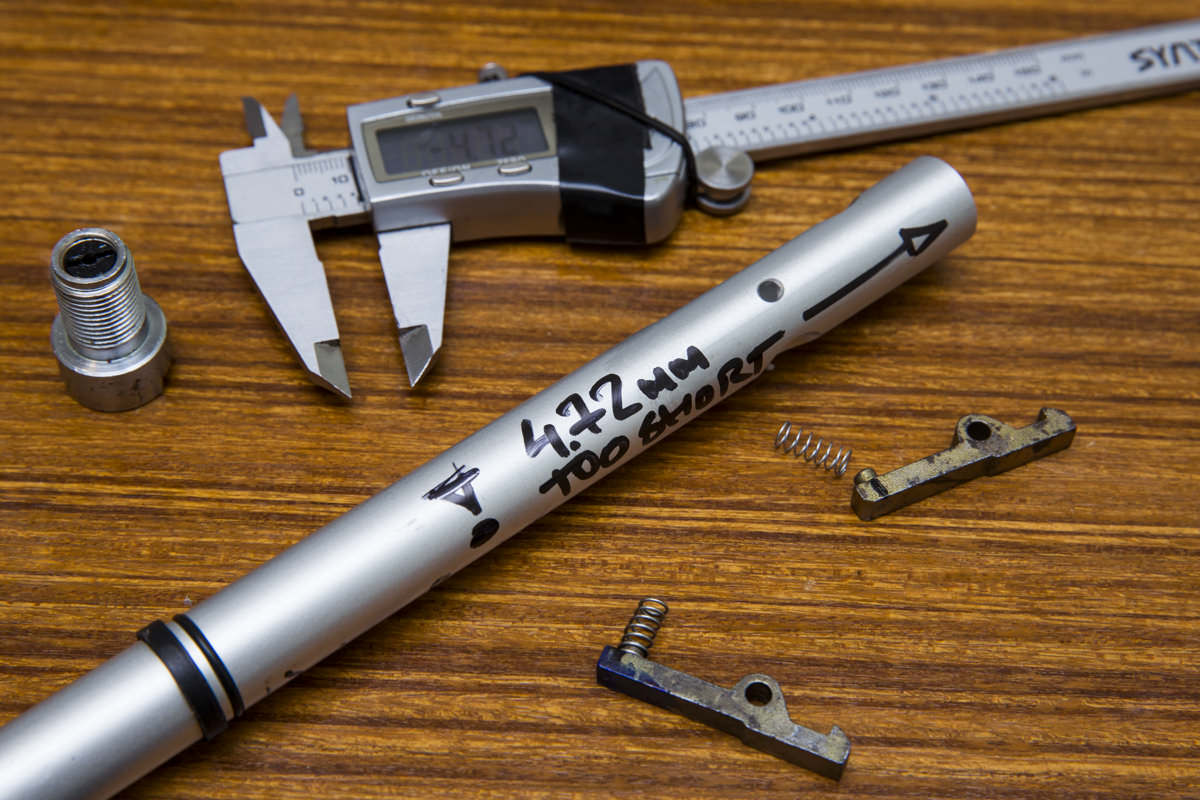
(Disregard the notes on the barrel - it's from a modification I did so a Salvi barrel would fit in a Mares handle and it was the only pic I could find showing the sear levers)
I modeled the sear as carefully as I could:
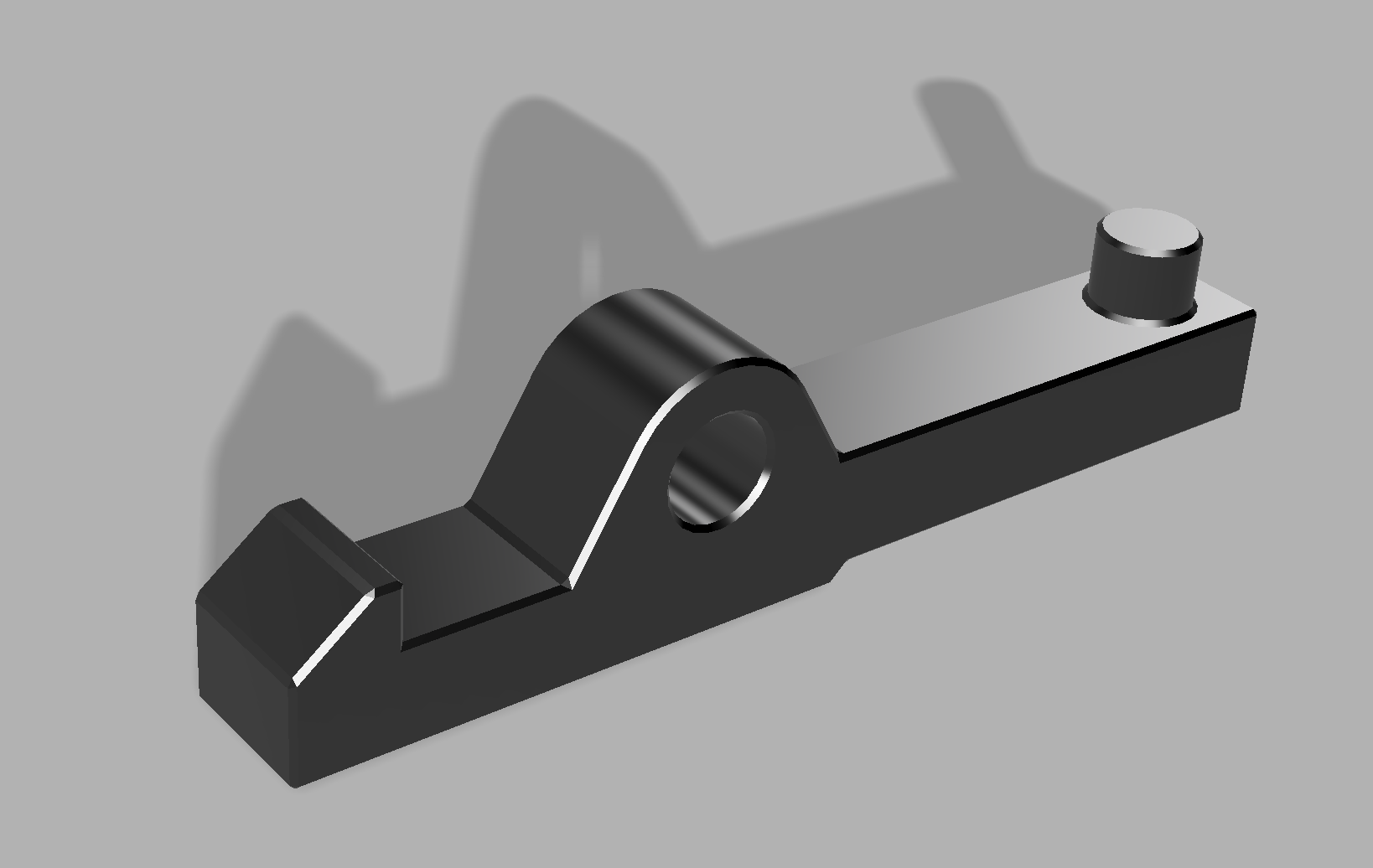
One important assumption - and I will tripple check this soon - but as far as I could measure, the top edge of the hook sits at the same height as the pivot point:
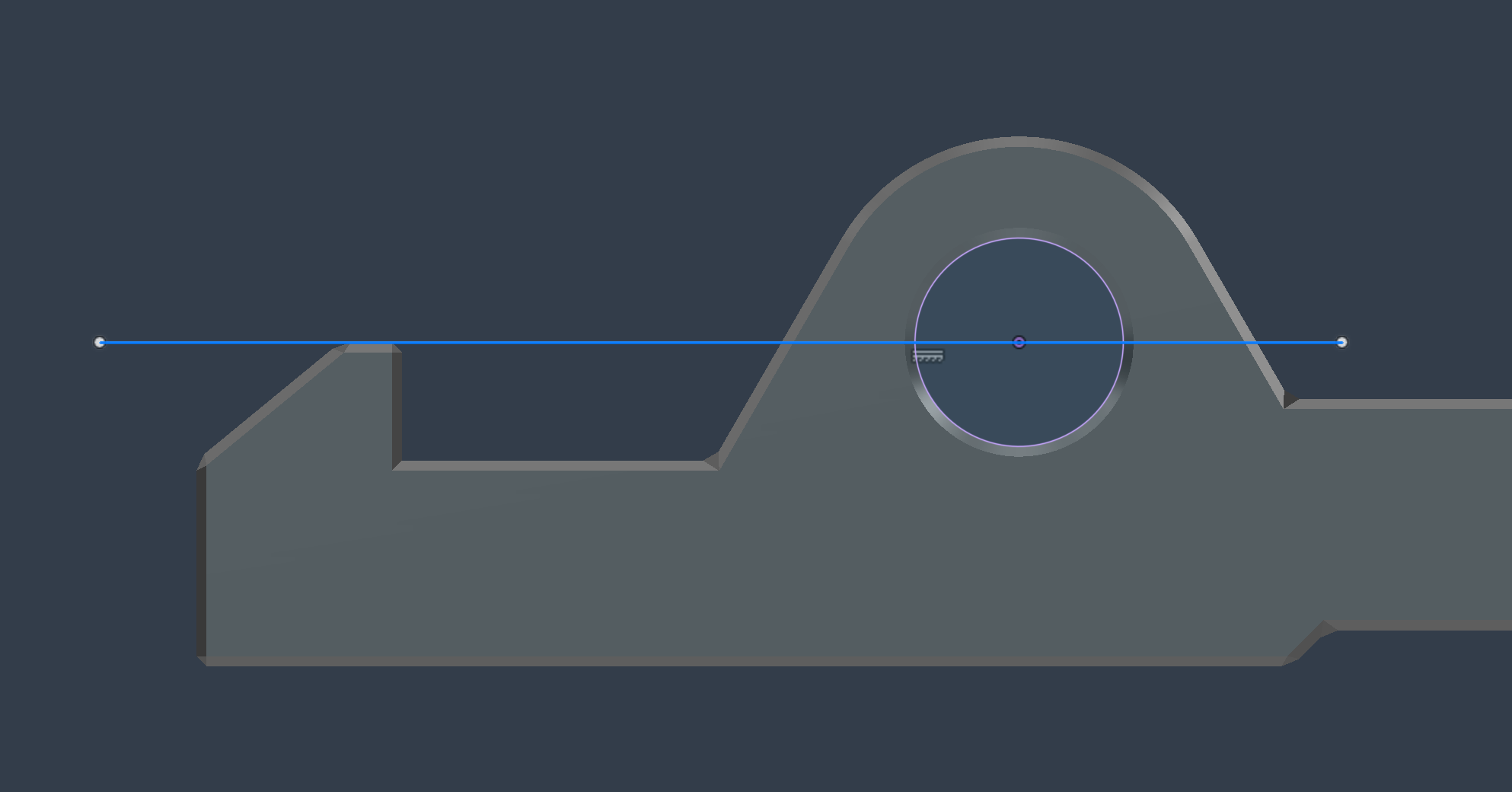
Another assumption I am making is that the sear was designed to sit horizontally when cocked (under load). Judging from some older posts by Pete, this would be ideal.
The simplest I can think of is that the old Italians intended for the sear to touch the stem of the piston tang and to have maximum engagement. Like so:
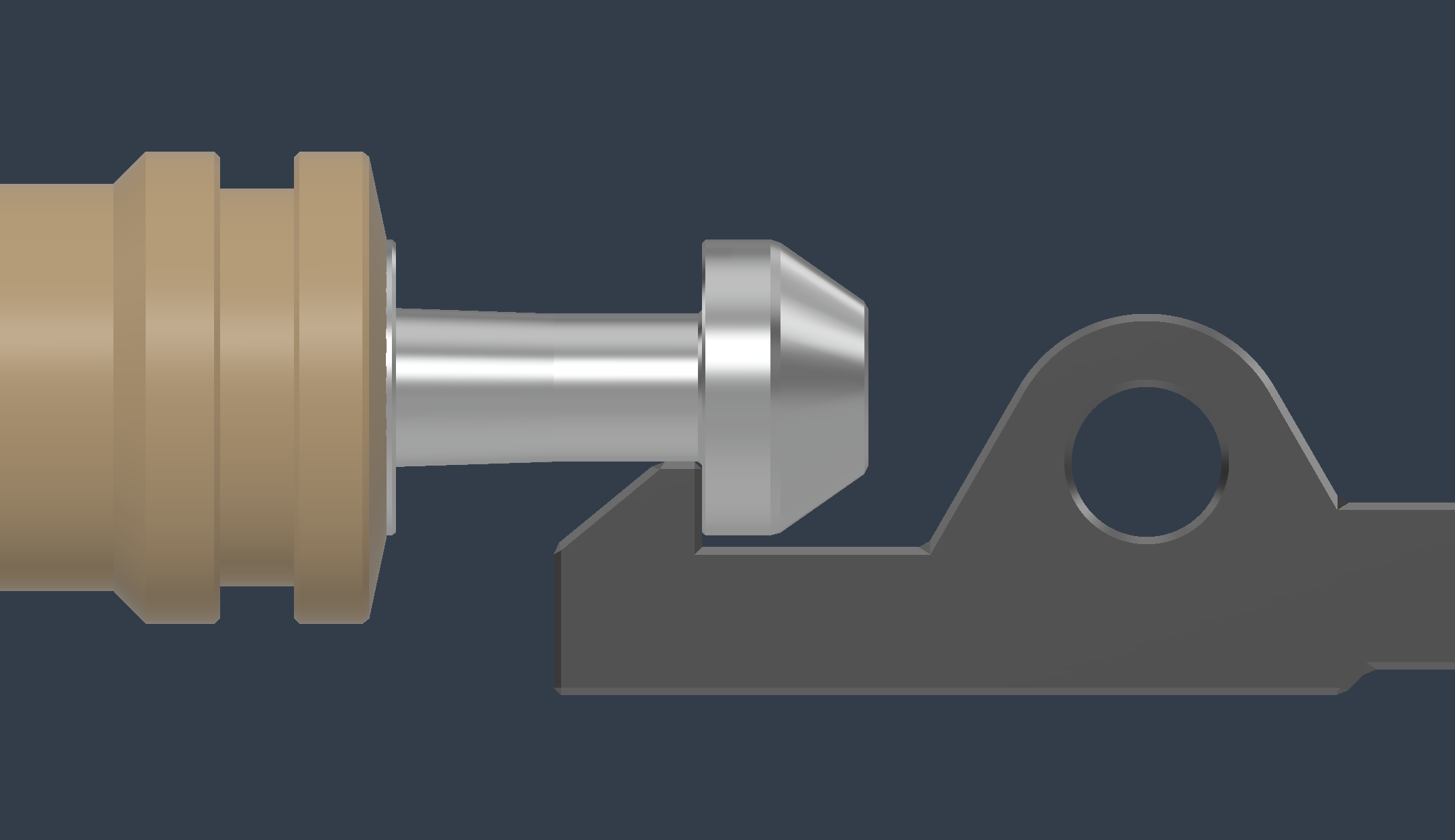
And if those assumptions are correct, then it would be the diameter of that stem that dictates the offset from center. A thicker stem would mean the sear has to sit lower in the barrel.
And it would all be as simple as the offset being half of the stem diameter.
Let me add some measurements to make that more clear:
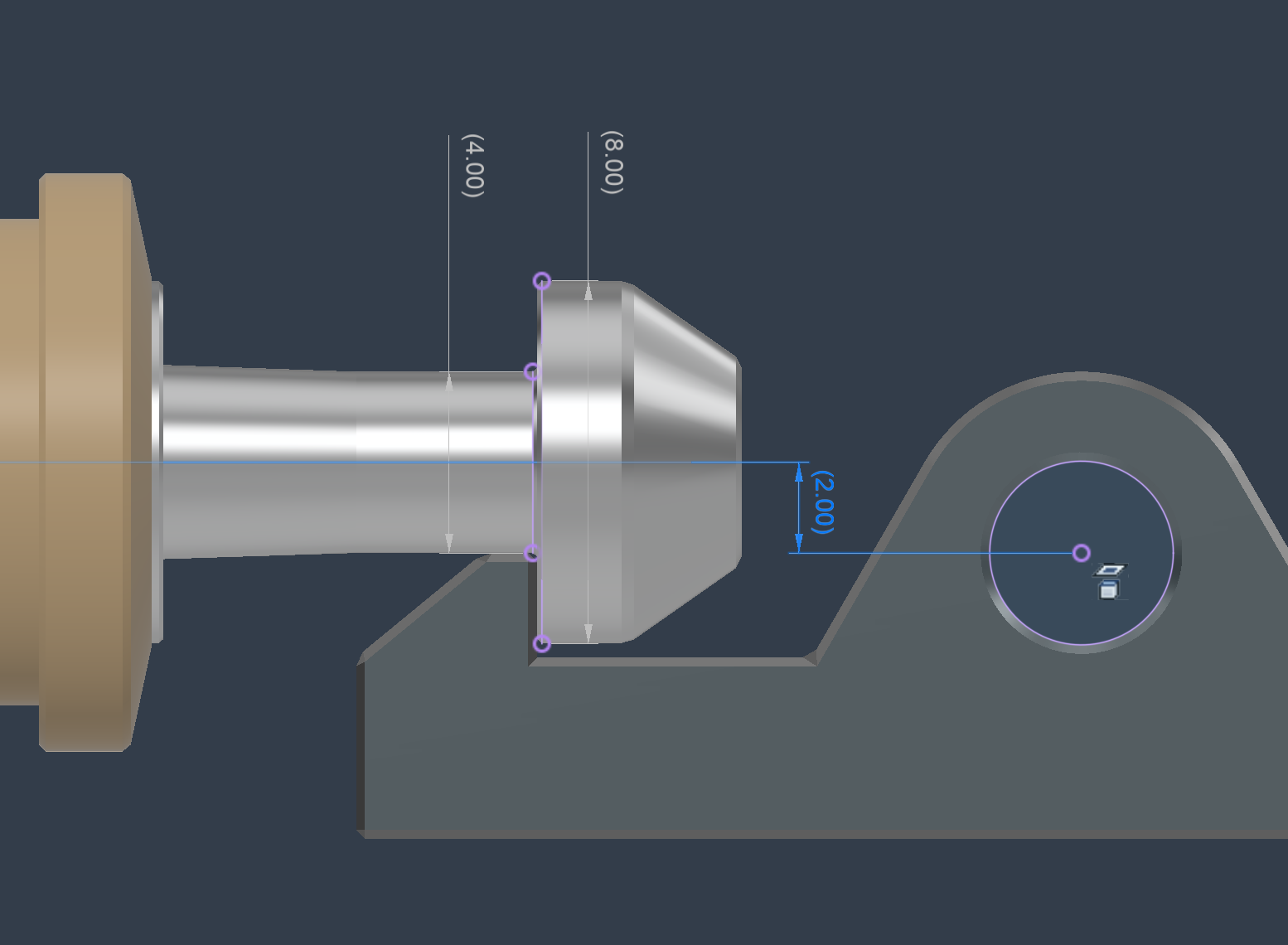
As you can tell, I made the tang stem 4mm and the flange 8mm but here's the thing, I don't actually know if 4/8mm was the standard intended?
I don't have any old stock pistons on hand here to measure and my newer, more optimized pistons have thinner stems and flanges.
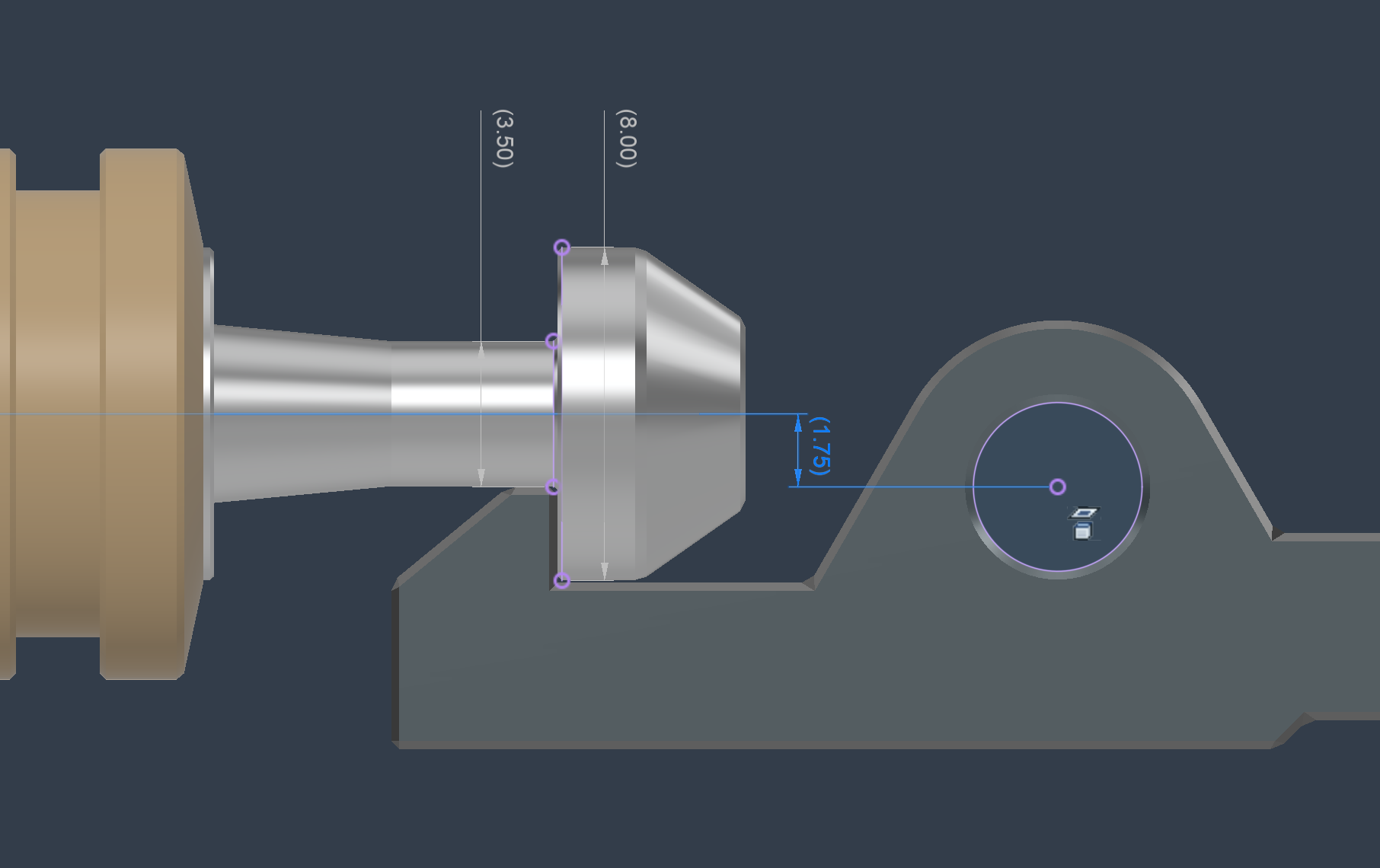
Let's for now assume that another standard stem size could be 3.5mm. Then the offset would be 1.75mm and it would look like this:
So, let me ask for a bit of help:
If any of you have some older stock Mares, Seac, ScubaPro, etc pistons and calipers on hand, could you please check the stem diameter and the flange, too? (So, the 3.5/8mm dimensions in the example pic just above).
And of course, also point out if my thinking up until now is flawed.
In a later post, I will probably get into how thinner stems and flanges on custom pistons start affecting the geometry, but doing that now would just confuse matters.
For now, I am interested in whether we can nail down the original design intent
We know that the sear pivots around a pin that sits a bit below the center line of the barrel - but what we will try to figure out in this thread is, just how much lower? And what governs it?
Also, this is a rehash of my investigation into this from my very long Mirage build-log but that was inconclusive and I thought the subject deserved its own thread in case some day, someone else comes looking for this info.
We are talking about the classic sears in this pic:
(Disregard the notes on the barrel - it's from a modification I did so a Salvi barrel would fit in a Mares handle and it was the only pic I could find showing the sear levers)
I modeled the sear as carefully as I could:
One important assumption - and I will tripple check this soon - but as far as I could measure, the top edge of the hook sits at the same height as the pivot point:
Another assumption I am making is that the sear was designed to sit horizontally when cocked (under load). Judging from some older posts by Pete, this would be ideal.
The simplest I can think of is that the old Italians intended for the sear to touch the stem of the piston tang and to have maximum engagement. Like so:
And if those assumptions are correct, then it would be the diameter of that stem that dictates the offset from center. A thicker stem would mean the sear has to sit lower in the barrel.
And it would all be as simple as the offset being half of the stem diameter.
Let me add some measurements to make that more clear:
As you can tell, I made the tang stem 4mm and the flange 8mm but here's the thing, I don't actually know if 4/8mm was the standard intended?
I don't have any old stock pistons on hand here to measure and my newer, more optimized pistons have thinner stems and flanges.
Let's for now assume that another standard stem size could be 3.5mm. Then the offset would be 1.75mm and it would look like this:
So, let me ask for a bit of help:
If any of you have some older stock Mares, Seac, ScubaPro, etc pistons and calipers on hand, could you please check the stem diameter and the flange, too? (So, the 3.5/8mm dimensions in the example pic just above).
And of course, also point out if my thinking up until now is flawed.
In a later post, I will probably get into how thinner stems and flanges on custom pistons start affecting the geometry, but doing that now would just confuse matters.
For now, I am interested in whether we can nail down the original design intent
Last edited:
